Spout & Sink
Kitchen faucets, from the spec sheet up
Nine times out of ten the faucet that fails you is the one that did not fit — wrong hole count, wrong reach, wrong finish for your water. Start with the measurements and the rest gets easy.
A kitchen faucet is four decisions wearing one price tag: how it mounts, how far it reaches, how it sprays, and what the surface does after two years of hard water. Brand is fifth at best. Two faucets from the same manufacturer at the same price can differ by an inch and a half of spout reach, which is the difference between rinsing a roasting pan comfortably and fighting it every night.
Mounting holes. Your sink or countertop is already drilled, and that drilling is not negotiable without a new sink or a diamond bit. One hole, two holes, three holes at four-inch centers, or three at eight-inch centers — count them, then buy to match. A single-hole faucet covers a three-hole sink with an escutcheon (a deck plate), which is why most single-hole faucets ship with one. The reverse is impossible.
Spout height and spout reach. Height is deck to outlet and decides pot clearance. Reach is the horizontal distance from the faucet body to the center of the water stream, and decides where that water lands. A tall faucet with short reach puts water at the back of the bowl. A long-reach faucet over a shallow sink splashes. On a wide double bowl, reach wins; on a deep single bowl with a low upper cabinet, height wins.
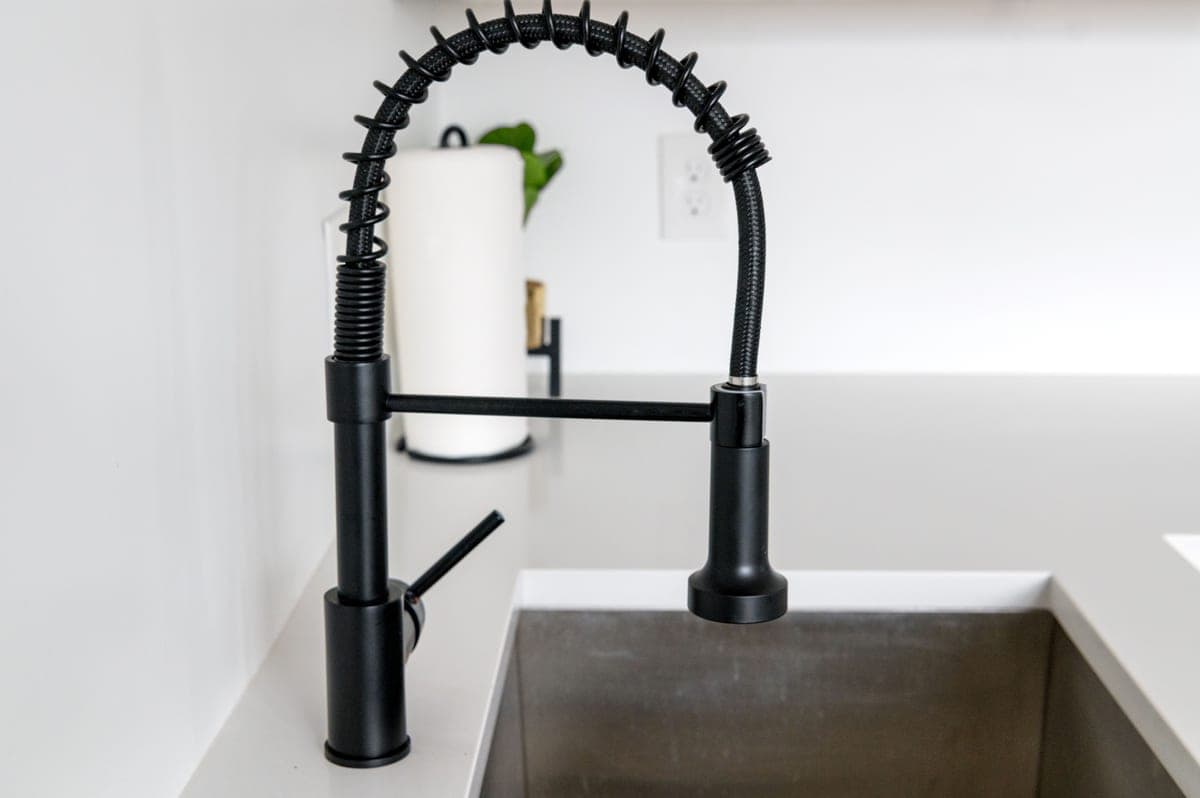
Spray mechanism. A pull-down wand comes out of the spout and points down into the sink. A pull-out wand comes forward out of a lower spout and points wherever you aim it. A side sprayer is a separate head in its own deck hole. A pull-down suits a deep bowl and a tall arc; a pull-out suits a shallow bowl, a low window sill, and filling buckets on the floor.
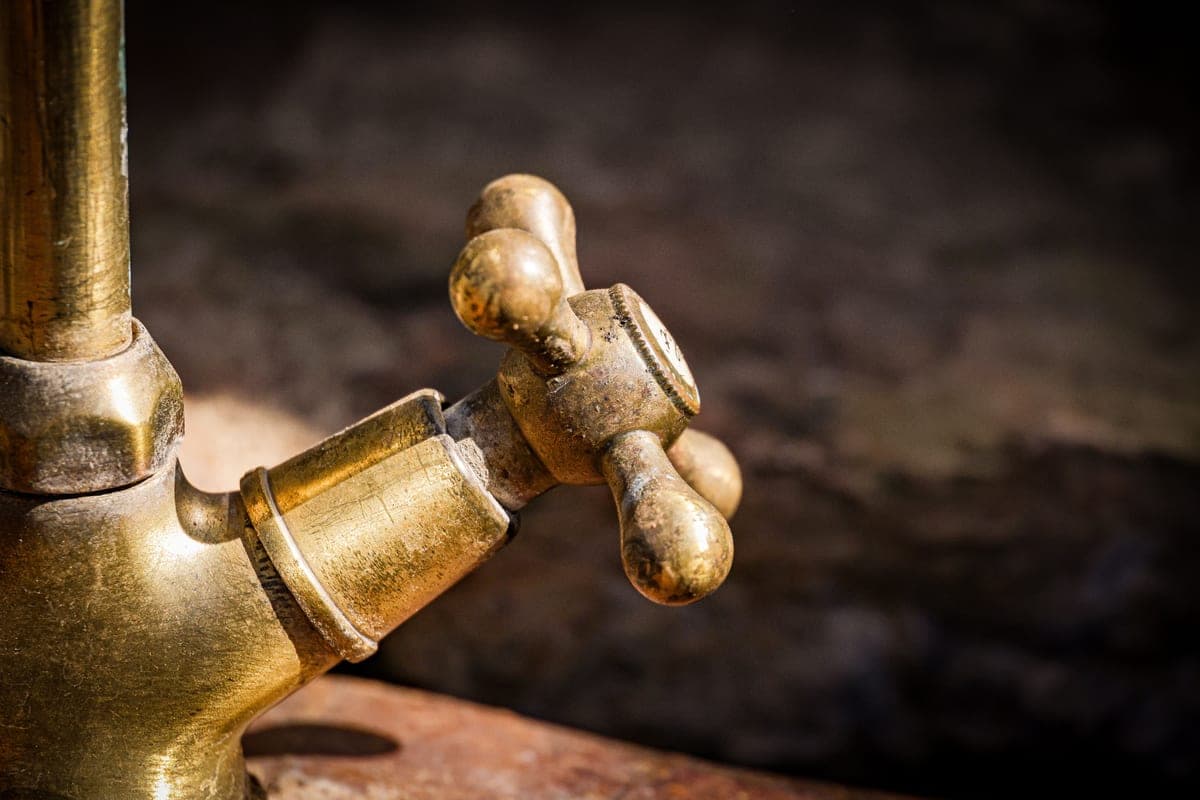
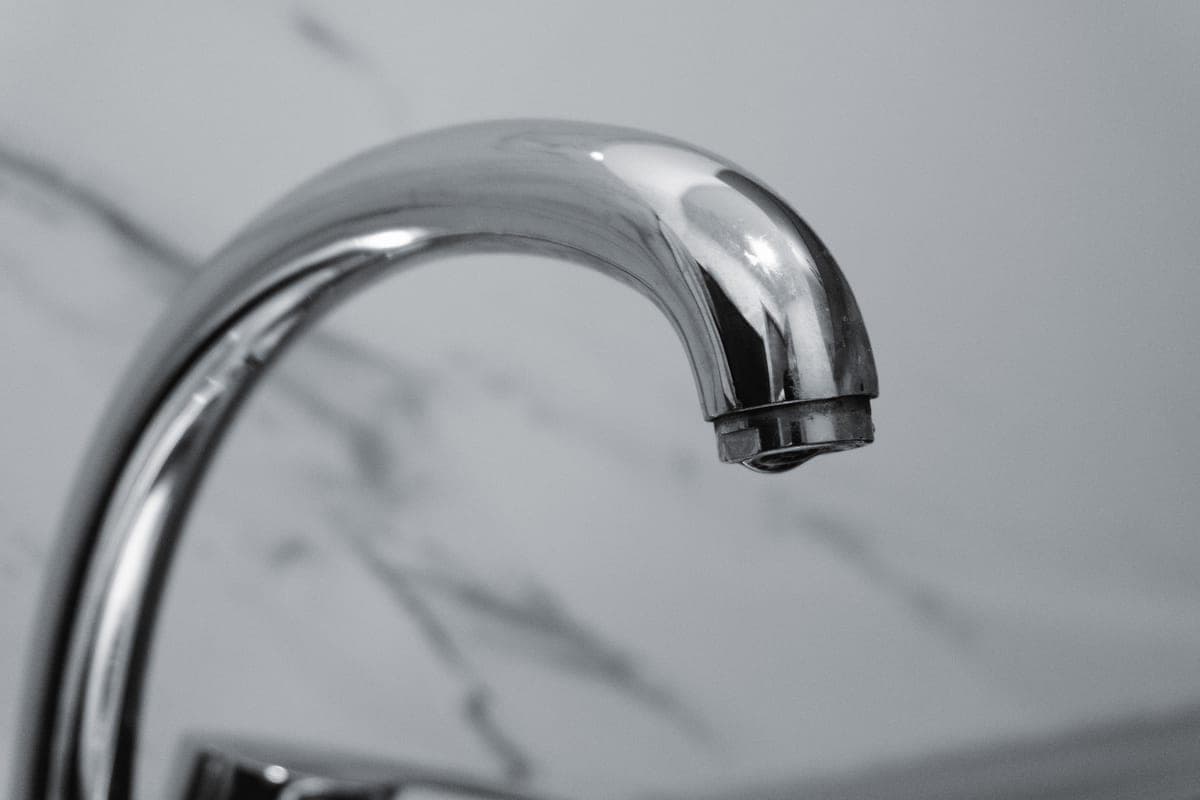
Finish. This is the only one of the four that is about how the faucet looks *and* how much of your life you spend wiping it. Polished chrome shows every water spot and cleans in one pass. Brushed nickel and stainless hide spots. Matte black hides water and shows limescale as white dust. Unlacquered brass is a living finish that will change color, on purpose, and is the wrong choice for anyone who wants it to stay put.
Most mid-priced kitchen faucets have a zinc-alloy body with a brass or plastic waterway inside. Solid brass costs more and lasts longer, and above roughly the mid-market it is what you are paying for. But the body is rarely what fails. The valve is. A ceramic-disc cartridge is the standard, and the useful question is not which brand made it but whether you can buy a replacement in five years for twelve dollars and fit it with a hex key.
Two manufacturers have built their warranties around that idea from different directions. Delta's Diamond Seal keeps water off the valve, and Moen sells cartridges for faucets it discontinued a decade ago. Both are more useful than any spec on the box. Our faucet cartridges explained page covers how to identify the one already under your handle, which is the first thing to know when a faucet drips.
Kitchen faucets sold in the US are rated in gallons per minute, and you will see 1.5, 1.8 and occasionally 2.2 gpm. Higher is not better; it is mostly a question of which standard the model was certified to and which state it is sold in. California and Colorado cap kitchen faucets at 1.8 gpm, and the EPA's WaterSense program sets tighter voluntary limits for bathroom faucets than for kitchen ones. In practice a 1.5 gpm faucet with a well-designed aerator feels stronger than a 1.8 gpm faucet with a cheap one, because perceived strength is about velocity and pattern rather than volume.
What matters more: whether the faucet has a boost mode. Kohler's Boost raises flow by 30% while you hold a button, and Moen's Power Boost concentrates the stream. Both let you fill a pot at a usable rate without the faucet being rated high all the time.
Touchless, and the one thing nobody tells you
Sensor faucets divide into single-sensor and dual-sensor designs, and the division matters far more than the brand. A single sensor above the spout responds to a deliberate wave. A dual-sensor faucet also watches the area in front of the spout, so it starts when you reach across the deck for a dish towel. If you have read a review complaining that a touchless faucet "turns on by itself", you have read a review of a dual-sensor faucet.
The second thing: battery models need no outlet and no electrician, which makes them a genuine retrofit. The manual handle still works when the batteries die, so the failure mode is an inconvenience rather than a dead kitchen. We would not fit a touchless faucet in a household that cooks rarely, and we would fit one in any kitchen that handles raw chicken weekly. Our touchless roundup names the ones worth the electronics.
No independent laboratory publishes durability or finish-wear testing for residential kitchen faucets. Nobody grades how a brushed nickel coating looks after five years of dishwasher steam, because nobody funds that test. So on every faucet page here you will find manufacturer specifications with a source link, reasoning from those specifications, and an explicit note where the number you want does not exist. What you will not find is a decibel reading, a spray-force figure, or a lifespan estimate that we made up to fill the gap.