Kitchen Faucets
Touch vs touchless kitchen faucets
One needs a deliberate tap, the other needs nothing at all — and each one's strength is exactly the other's weakness. Here is which to buy for which kitchen.
Disclosure: we earn a commission if you buy through the Amazon links on this page, at no extra cost to you. Commission never decides a verdict or a ranking position — read our editorial policy and affiliate disclosure.
How we assessed these: we compared published manufacturer specifications, read from each maker's own page or spec sheet and linked at every figure. We have not tested these faucets and we do not own them. Where a manufacturer does not publish a number, the page says so rather than estimating it.
Short answer
Touch faucets start when you tap the spout or handle with any part of your arm; touchless faucets start when a sensor sees your hand. Touch cannot false-trigger but still gets the spout dirty. Touchless is genuinely contact-free but can start unprompted on dual-sensor models. Buy touch for general cooking; buy touchless if you handle raw meat weekly.
These two are sold side by side and described almost identically, which is unhelpful, because they fail in opposite directions. The choice is not about which is more advanced — it is about which failure mode you would rather live with.
| Touch | Touchless | |
|---|---|---|
| How it starts | Tap anywhere on the spout or handle | Wave a hand at a sensor |
| Can it false-trigger | No — it needs physical contact | Yes on dual-sensor models; rarely on single-sensor |
| Do your hands touch it | Yes, but with a wrist or forearm | No |
| Raw-meat prep | Adequate — contamination moves to the spout | The reason to buy one |
| Power | Batteries; Delta publishes 2 years on AA, 5 on C | Batteries, or mains with a GFCI outlet below |
| Sets temperature | No — the handle still does | No — the handle still does |
| Works if the electronics die | Yes, as a manual faucet | Yes, as a manual faucet |
| Extra parts that can fail | Sensor board, solenoid, batteries | Sensor board, solenoid, batteries |
The case for touch
Capacitive sensing through the faucet body means nothing projects into the room, so nothing near the sink starts the water. That eliminates the single most-reported complaint about sensor faucets. Delta also publishes what almost nobody else does — a battery life figure, in years, with a C-cell option that roughly doubles it — and an automatic shut-off after four minutes.
The limitation is honest and obvious: you are touching the faucet. With raw chicken on your hands, you have moved the problem from the handle to the spout rather than removed it.
The case for touchless
It is the only one of the two that is actually hands-free, which is the entire point when your hands are contaminated or covered in flour. The critical specification is sensor count: a single sensor above the spout responds to a deliberate wave, while a dual-sensor faucet also watches the space in front of it and will start when you reach across the deck.
The second decision is power. A battery model retrofits anywhere. A mains model needs an unswitched GFCI outlet under the sink within five feet of the control box — Kohler publishes exactly that for the Sensate — and if that outlet does not exist, an electrician is part of the price.
Quick picks
Tap any row to jump to the full write-up. There are no scores here because we run no test lab — how picks are chosen is published in full on our methodology page.
| # | Product | Best for | Our read | Price |
|---|---|---|---|---|
| 1 |  Delta Leland Touch2O 9178T Best touch | Messy hands without sensor false starts | Tap to start, published battery life, auto shut-off | Check price on Amazon #ad Affiliate link · We publish no price; Amazon shows the current one |
| 2 | 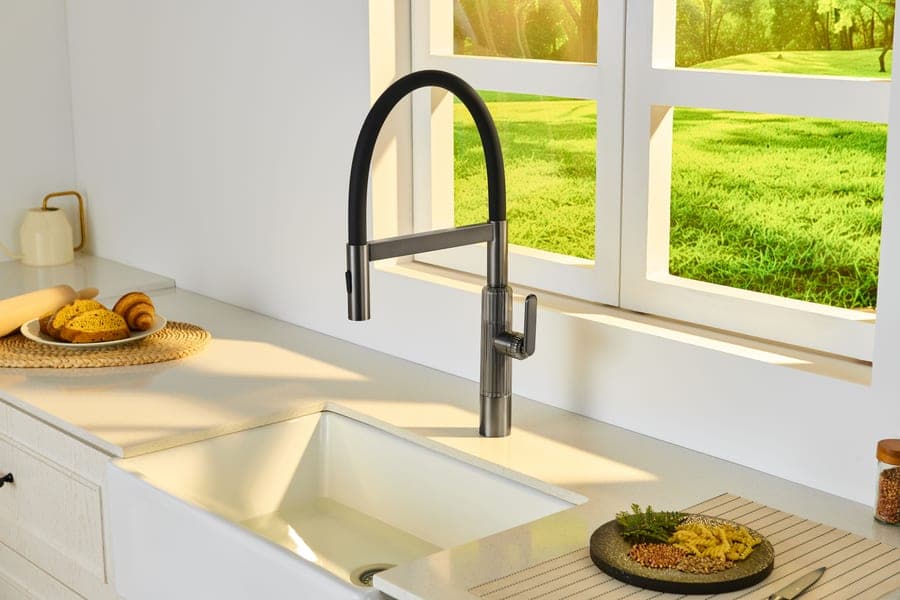 Moen Arbor MotionSense Wave 7594EW Best touchless | Raw-meat prep and messy hands | Single sensor, battery powered, no outlet needed | Check price on Amazon #ad Affiliate link · We publish no price; Amazon shows the current one |
| 3 | 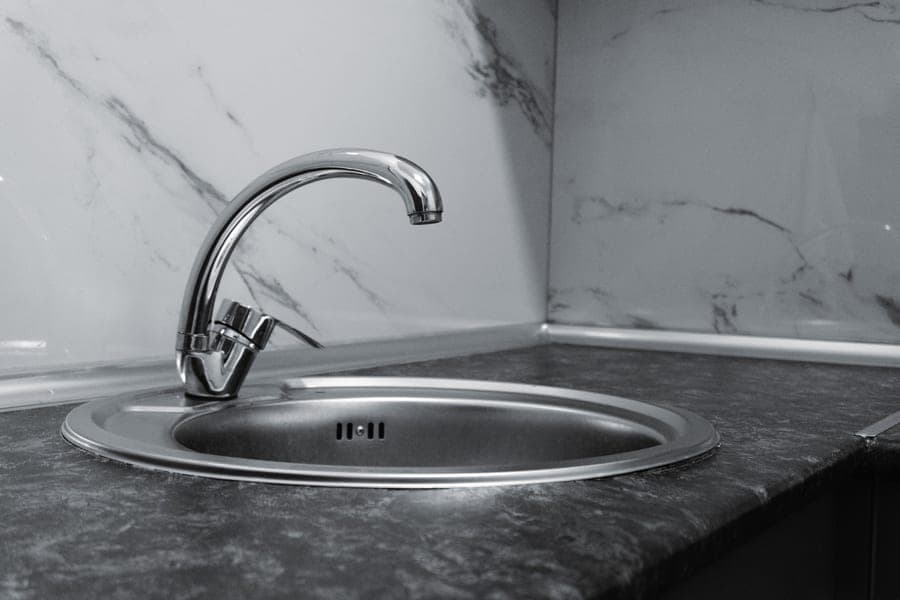 Kohler Sensate K-72218 Best touchless sensor | Kitchens with an outlet under the sink | 20 ms response, but needs a GFCI outlet below | Check price on Amazon #ad Affiliate link · We publish no price; Amazon shows the current one |
What neither one does
Neither sets the temperature. On both, the handle position decides the mix, so a tap or a wave gives you whatever the handle was left at. Voice and app temperature control exist on a small number of higher-end faucets and are a different product category with more to go wrong.
Neither is maintenance-free either: both add a sensor board, a solenoid valve and a battery pack to a damp cabinet. That is the shared cost of the category, and it is the reason touchless vs manual is worth reading before you commit to electronics at all.
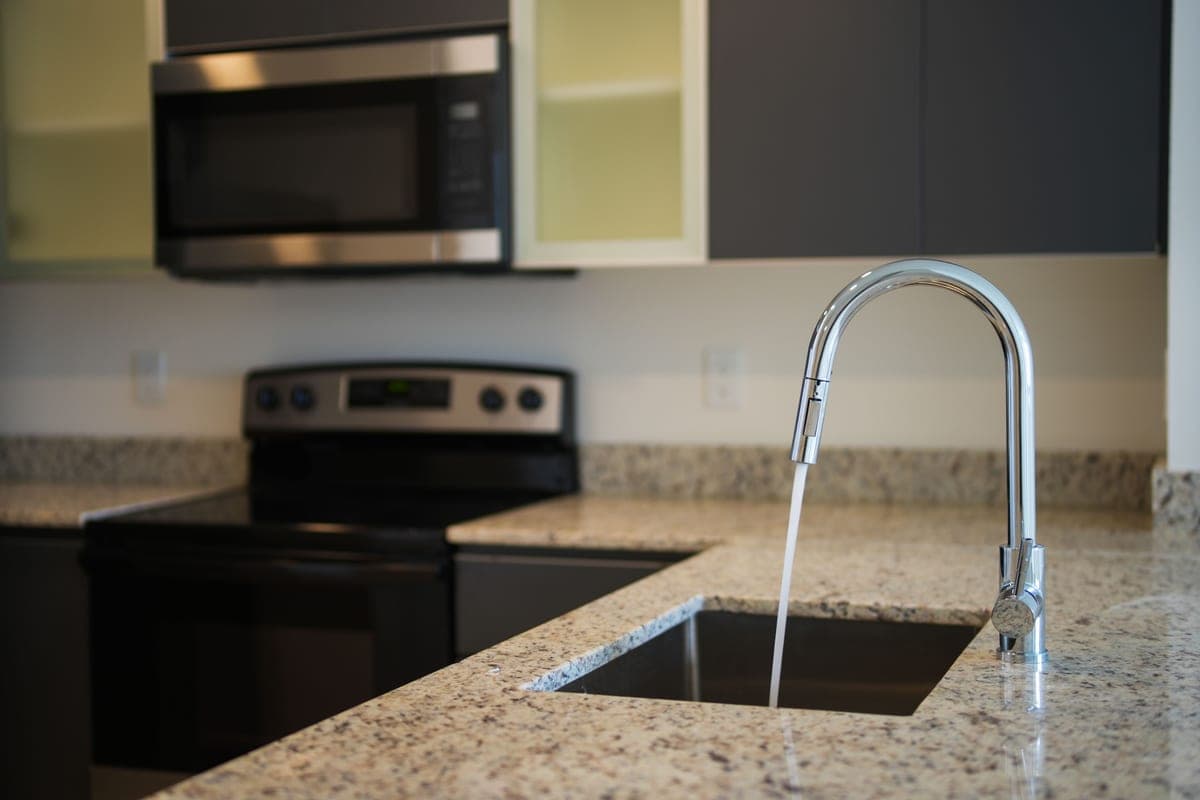
Photograph shows the product category, not this specific unit. We do not republish manufacturer product photography.
1. Best touch
Delta Leland Touch2O 9178T
Delta · Best for messy hands without sensor false starts
The touch faucet to buy, and the clearest illustration of why touch beats touchless for most people: you tap anywhere on the spout or handle with a wrist, a forearm or the back of a hand, so there is no sensor deciding whether you meant it. It is the same Leland body as the manual version, with TempSense showing water temperature, a four-minute auto shut-off, and a battery life Delta actually publishes.
Published specifications
- Activation
- Tap anywhere on the spout or handle (Touch2O) source
- Flow rate
- 1.8 gpm source
- Spout height
- 7-7/8" deck to outlet source
- Spout reach
- 9-13/64" source
- Overall height
- 14-7/8" source
- Battery
- Six AA (included) for up to 2 years, or six C for up to 5 years source
- Safety
- Automatic shut-off after four minutes of running source
- Valve
- Diamond Seal, rated at twice the industry standard source
- Mounting
- Single hole, 1-3/8"; deck plate included source
What works
- Tap activation cannot false-trigger the way a proximity sensor can — you have to make contact
- Delta publishes battery life in years rather than leaving it unstated, and a C-cell option doubles it
- TempSense LED tells you the water temperature before your hands are in it
- Four-minute auto shut-off is a genuine safeguard if a sleeve brushes the spout
What does not
- Touch means contact, so the faucet still gets dirty — it is a hygiene win for the handle, not for the spout
- 1.8 gpm rather than the 1.5 most competitors now ship
- Electronics in a wet cabinet remain more to fail than a plain cartridge
Skip it if
Skip it if what you actually want is no contact at all — with raw chicken on your hands, a wave-activated touchless faucet is the better tool.
#ad Affiliate link · We publish no price; Amazon shows the current one
Raw specifications: Delta’s own page for the Delta Leland Touch2O 9178T.
Photograph shows the product category, not this specific unit. We do not republish manufacturer product photography.
2. Best touchless
Moen Arbor MotionSense Wave 7594EW
Moen · Best for raw-meat prep and messy hands
The honest touchless pick, because it is a single-sensor faucet rather than a dual-sensor one. Dual-sensor faucets trigger when you reach across the deck; a single wave sensor above the spout does not. It runs on six AA batteries, so there is no electrician and no outlet needed, and the manual handle still works if the batteries die.
Published specifications
What works
- Single sensor, so reaching for a dish towel does not start the water
- Battery power means it installs like an ordinary faucet — no outlet, no electrician
- The manual handle still works, so a dead battery is an inconvenience rather than a failure
- Same Arbor body as the manual 7594, so the spout geometry is a known quantity
What does not
- Batteries are a consumable a manual faucet does not have
- Sensor faucets put electronics in a wet environment, which is more to fail than a cartridge
- Moen publishes no battery-life figure we can quote, so we will not estimate one
Skip it if
Skip it if you cook rarely and mostly want a faucet that still works in fifteen years with a $12 cartridge — buy the manual Arbor.
#ad Affiliate link · We publish no price; Amazon shows the current one
Raw specifications: Moen’s own page for the Moen Arbor MotionSense Wave 7594EW.
Photograph shows the product category, not this specific unit. We do not republish manufacturer product photography.
3. Best touchless sensor
Kohler Sensate K-72218
Kohler · Best for kitchens with an outlet under the sink
The mains-powered touchless faucet, and the tradeoff against a battery model is worth understanding before you choose. Kohler's Response sensor reacts in 20 milliseconds — quick enough that it does not feel like waiting — but it needs an unswitched 120 V outlet under the sink, within five feet, on a GFCI-protected circuit. If that outlet already exists, this is the better sensor. If it does not, an electrician is part of the price.
Published specifications
- Flow rate
- 1.5 gpm at 60 psi source
- Spout reach
- 8-7/16" source
- Sensor
- Response technology, responds within 20 milliseconds source
- Power
- Unswitched 120 V AC outlet below the sink, within 5 ft of the control box source
- Circuit
- One circuit, GFCI protected source
- Sprayhead
- Two function: aerated stream and Sweep spray source
- Docking
- DockNetik magnetic docking source
What works
- A 20-millisecond sensor response is the difference between touchless feeling useful and feeling like a gimmick
- Mains power means no batteries to change, ever
- Kohler publishes the electrical requirement plainly in its spec sheet, which is more than most sensor faucets do
- DockNetik magnetic docking, the same mechanism as the manual Simplice
What does not
- Needs an unswitched GFCI outlet under the sink — if there is not one, add an electrician to the budget
- Mains-powered electronics under a sink are a failure point a manual faucet does not have
- 8-7/16" reach is mid-range; the manual Simplice reaches further for less money
Skip it if
Skip it if there is no outlet under your sink. The battery-powered Moen does the same job with no wiring at all.
#ad Affiliate link · We publish no price; Amazon shows the current one
Raw specifications: Kohler’s own page for the Kohler Sensate K-72218.
The verdict
Buy touch if you want a faucet that only ever runs when you meant it to, and if your hands are usually dirty rather than contaminated — flour, soil, grease. The Delta Leland Touch2O is the one we would fit, and the published battery life and four-minute auto shut-off are the reasons.
Buy touchless if you handle raw meat weekly, if someone in the house has grip or mobility difficulty that makes a lever awkward, or if children wash their hands more willingly when it is a game. Buy single-sensor — the Moen Arbor MotionSense Wave if there is no outlet under the sink, the Kohler Sensate if there is.
Buy neither if you cook occasionally. The manual version of the same faucet has one moving part that fails, a cartridge you can still buy in fifteen years, and nothing to power.
What to take away
- Touch cannot false-trigger; touchless is genuinely contact-free. Pick the failure you can live with.
- On touchless, sensor count decides everything — buy single-sensor.
- Mains touchless needs an unswitched GFCI outlet under the sink; battery models do not.
- Neither controls temperature, and both must work manually when the battery dies.
How we sourced this page
Every figure on this page came from one of the following. Where a manufacturer or an independent lab does not publish a number, we say so rather than estimate it.
Common questions
- What is the difference between touch and touchless faucets?
- A touch faucet starts when you physically tap it anywhere on the spout or handle. A touchless faucet starts when a sensor detects your hand without contact. Touch cannot be triggered accidentally from across the deck; touchless keeps your hands off the faucet entirely.
- Which is more reliable, touch or touchless?
- Nobody publishes comparative failure data, so an honest answer is that we do not know. Both add the same components — a sensor board, a solenoid and a battery pack — to a wet cabinet, and both should keep working as manual faucets when those fail.
- Do touch faucets work if the power goes out?
- Yes — they run on batteries rather than mains, and the handle works manually regardless. Mains-powered touchless faucets lose their sensor in an outage but also keep manual operation.
- Is a touchless faucet worth it over a touch faucet?
- If you regularly handle raw meat, yes: contact-free is the point, and touch does not deliver it. For general cooking the touch faucet is the more predictable tool, because it never starts on its own.
More in Kitchen Faucets
Nine times out of ten the faucet that fails you is the one that did not fit — wrong hole count, wrong reach, wrong finish for your water. Start with the measurements and the rest gets easy.
Read next
Best touch faucet
Best touch faucets
Tap-to-start faucets compared, why they cannot false-trigger, and the published battery life nobody else states.
Best touchless faucet
Best touchless faucets
Touchless faucets compared on sensor arrangement and power source — the two specs that decide whether hands-free is useful.
Head to head
Touchless vs manual
The honest cost-of-ownership comparison: what a sensor buys you, what it costs you, and who should skip it.
Best kitchen faucet
Best kitchen faucets
Five faucets covering the different jobs a kitchen faucet does, ranked on sourced specifications rather than brand.
Guide
Faucet cartridges explained
The four valve types, how to identify yours without guessing, and what a replacement cartridge really costs.
Found something out of date, or a figure you can source better than we did? Tell us — corrections get read first. Our methodology explains how picks are made, and contact is one click away.