Kitchen Faucets
The best kitchen faucets for hard water
Hard water attacks a faucet in two separate places, and only one of them is about the finish. Choose for both and the faucet stops looking tired after six months.
Disclosure: we earn a commission if you buy through the Amazon links on this page, at no extra cost to you. Commission never decides a verdict or a ranking position — read our editorial policy and affiliate disclosure.
How we assessed these: we compared published manufacturer specifications, read from each maker's own page or spec sheet and linked to the source on every figure. We have not lab-tested these faucets and we do not own them. Where a figure does not exist publicly, the page says so rather than estimating it.
Short answer
Hard water damages a faucet in two places: white spotting on the outside of the finish, and calcium scale building inside the aerator and spray head. A satin finish such as Moen's Spot Resist Stainless fixes the first; a spray head with wipeable rubber nubs rather than a fine screen fixes the second. Neither requires a water softener.
If your glasses come out of the dishwasher cloudy and the kettle furs up in a month, you have hard water, and the faucet decision changes. Not because hard water damages the valve — it rarely does — but because it makes the faucet look and perform worse in two ways that a specification sheet never mentions.
Quick picks
Tap any row to jump to the full write-up. There are no scores here because we run no test lab — how picks are chosen is published in full on our methodology page.
| # | Product | Best for | Our read | Price |
|---|---|---|---|---|
| 1 | 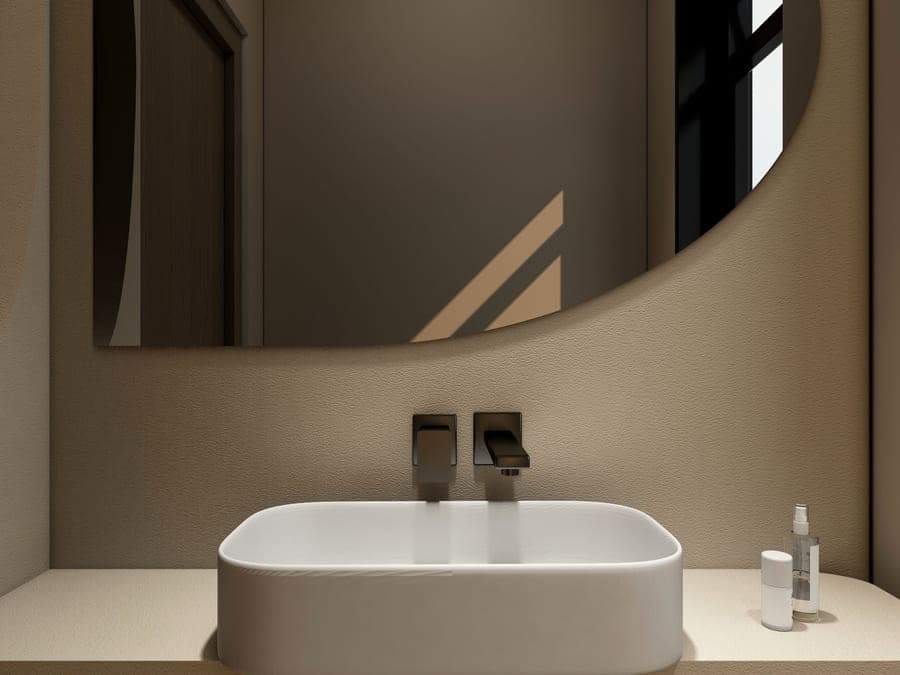 Moen Arbor 7594 Best finish for hard water | Deep pots and hard-water kitchens | Spot Resist finish is the single most useful hard-water feature | Check price on Amazon #ad Affiliate link · We publish no price; Amazon shows the current one |
| 2 |  Delta Leland 9178-AR-DST Best spray head for scale | Most kitchens, one or three holes | Rubber nubs wipe clean; no aerator screen to descale | Check price on Amazon #ad Affiliate link · We publish no price; Amazon shows the current one |
| 3 | 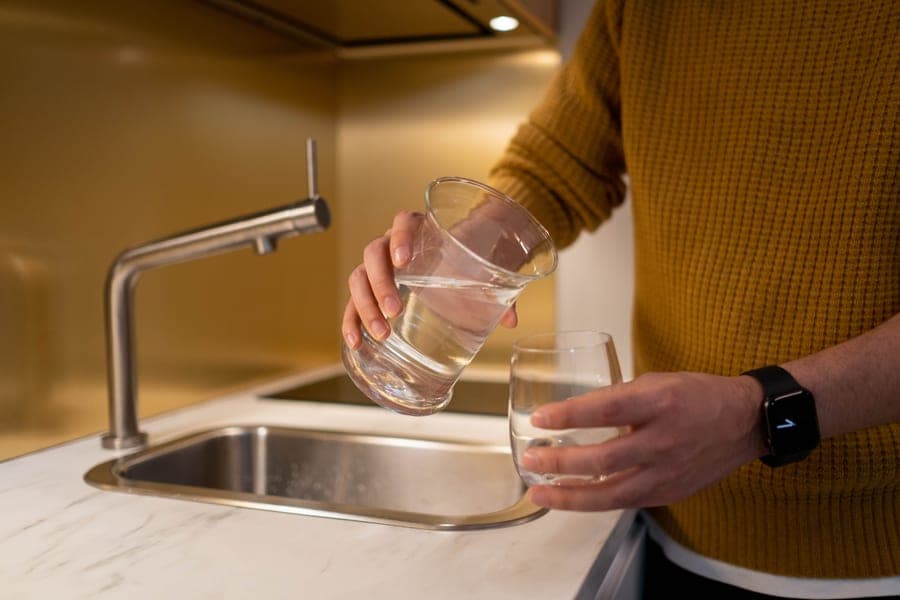 PUR PLUS faucet mount filtration system Best add-on, with one caveat | Standard non-wand faucets | Cheap filtration, but it will not fit a pull-down wand | Check price on Amazon #ad Affiliate link · We publish no price; Amazon shows the current one |
Problem one: spotting on the finish
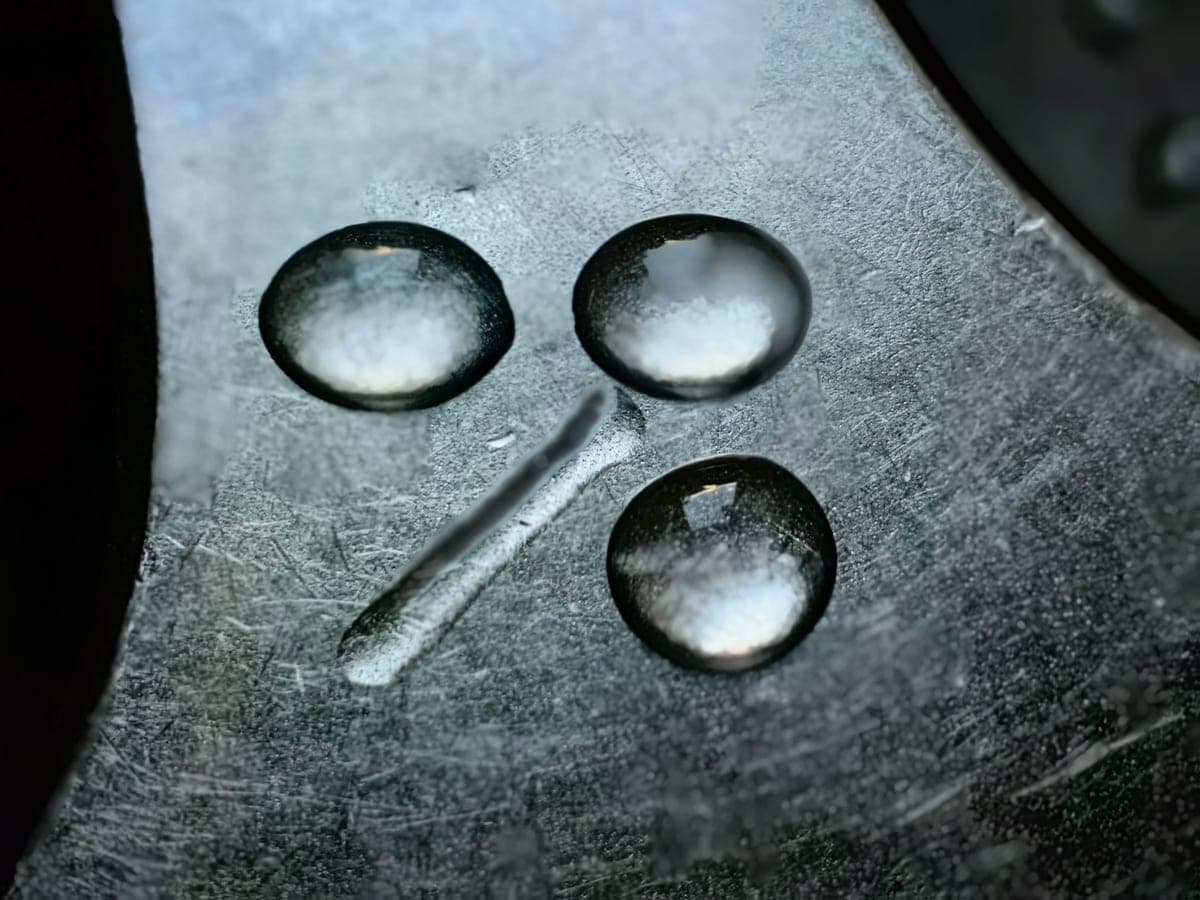
What you see as a water spot is the mineral left behind when a droplet evaporates. On polished chrome, which is a mirror, every one of those deposits is visible from across the room. On a satin or brushed finish, the microscopic texture scatters light and the same deposit largely disappears. This is why brushed nickel and stainless finishes are the standing recommendation for hard-water kitchens, and why the branded spot-resist coatings — which are hydrophobic layers over a satin finish — are worth the small premium.
Matte black is a partial answer: it hides the water but shows dried limescale as pale dust. Unlacquered brass is not an answer at all, though it is an interesting choice — it is designed to change with exposure, so hard water simply becomes part of the patina. Our finishes page covers each one, and which finish hides water spots ranks them on exactly this.
Problem two: scale inside the spray head
This is the one that actually degrades performance, and it is the one nobody shops for. Scale builds up in two places: the aerator screen at the spout tip, and the tiny jets in the spray head. A blocked aerator shows up as a weak, uneven stream; blocked jets show as a spray with a few stronger streaks and dead spots.
The engineering answer is a spray face made of flexible rubber nubs instead of a drilled metal plate: Delta calls it Touch-Clean and Moen's Power Clean heads use the same principle. Scale cannot bond firmly to flexible rubber, so a thumb wiped across the face clears it. It is a genuinely better mechanism than any coating, and it costs nothing extra.
Photograph shows the product category, not this specific unit. We do not republish manufacturer product photography.
1. Best finish for hard water
Moen Arbor 7594
Moen · Best for deep pots and hard-water kitchens
The pull-down to buy if you want the taller arc and a finish that hides water spots. Its 8-1/4" spout height is about half an inch more clearance than the Leland, which is the difference between washing a stock pot and fighting one. The tradeoff is reach: 7-7/8" against 9-3/16", so it works closer to the back of the bowl.
Published specifications
What works
- The 8-1/4" spout height is genuine pot clearance, not decorative arc
- Power Boost concentrates the stream for filling and rinsing without raising the rated flow
- Spot Resist Stainless is the single most useful finish choice in a hard-water house
- Reflex docking has been in Moen's line long enough that replacement wands are easy to find
What does not
- Reach is 7-7/8", over an inch shorter than the Leland — on a wide double bowl you will notice
- Moen publishes no independent noise or durability measurement, and neither do we
- The spot-resist coating is a finish, not armor; abrasive cleaners still dull it
Skip it if
Skip it if you have a wide double-bowl sink and want one faucet to reach both drains comfortably — buy reach instead of height.
#ad Affiliate link · We publish no price; Amazon shows the current one
Raw specifications: Moen’s own page for the Moen Arbor 7594.
Photograph shows the product category, not this specific unit. We do not republish manufacturer product photography.
2. Best spray head for scale
Delta Leland 9178-AR-DST
Delta · Best for most kitchens, one or three holes
The pull-down we would fit in most kitchens, because the two parts that usually fail first on a pull-down are the two Delta engineered around: the docking mechanism and the valve. MagnaTite pulls the wand back into the spout with a magnet instead of relying on a friction collar, and Diamond Seal keeps water off the valve. It ships with a deck plate, so it covers a three-hole sink or mounts through one.
Published specifications
What works
- MagnaTite docking is a magnet, not a friction fit — a wand that stops seating is the most common pull-down complaint, and a magnet does not wear the way a plastic collar does
- Spout reach of 9-3/16" clears the far side of a standard 22-inch front-to-back sink
- Diamond Seal keeps water off the valve, which is what the lifetime warranty is really protecting
- Deck plate in the box, so a three-hole sink needs no extra part
What does not
- 1.8 gpm is higher than the 1.5 gpm most competitors now ship, which matters if your area caps flow rate
- Zinc body rather than brass — normal at this price, but this is not a forever faucet
- No independent lab publishes durability figures for this model, so we cannot tell you how the finish looks at year five
Skip it if
Skip it if your sink is a shallow bar sink: at 14-7/8" overall the arc will splash in a basin under about seven inches deep.
#ad Affiliate link · We publish no price; Amazon shows the current one
Raw specifications: Delta’s own page for the Delta Leland 9178-AR-DST.
Photograph shows the product category, not this specific unit. We do not republish manufacturer product photography.
3. Best add-on, with one caveat
PUR PLUS faucet mount filtration system
PUR · Best for standard non-wand faucets
The cheapest honest answer to filtered water at the kitchen sink, with one hard limitation to know before buying: it clamps to the spout of a standard faucet and will not fit a pull-down or pull-out wand. If your faucet has a wand, an under-sink system or a dedicated filtered-water faucet is the only route.
Published specifications
What works
- Certified lead reduction for roughly the cost of two months of bottled water
- Installs in minutes with no tools and no plumbing
- Filter change is a twist, and the housing tells you when it is due
- Reversible: it comes back off and leaves the faucet as it was
What does not
- Does not fit pull-down or pull-out faucets — the most common kitchen faucet type sold today
- It hangs off the end of the spout, which is visually obvious
- 100 gallons is roughly three months for a small household and much less for a large one
Skip it if
Skip it if your kitchen faucet has a pull-down wand. It will not fit, and no adapter makes it fit.
#ad Affiliate link · We publish no price; Amazon shows the current one
What about filtration?
A faucet-mount filter improves taste and, with a certified cartridge, reduces lead — but it does not soften water, and it will not stop spotting or scale. It is also physically incompatible with the most popular faucet type sold today: it clamps onto a standard spout tip, and a pull-down wand has nowhere for it to clamp. That limitation is stated plainly on the product listing, and it catches a lot of people out.
If what you want is genuinely better water rather than a better-looking faucet, the honest options are an under-sink system with its own dedicated tap or a whole-house softener. Both are out of scope for a faucet page, and both are worth pricing before you buy a faucet you hope will solve the problem. Our filtered water faucets page covers the routes in order of cost.
What to take away
- A satin or spot-resist finish solves the visible half of the hard-water problem; polished chrome makes it worse.
- A rubber-nub spray face solves the performance half, because scale cannot bond to flexible rubber.
- Descale the aerator you already have in vinegar before assuming the faucet is finished.
- Faucet-mount filters do not soften water, and they do not fit pull-down wands at all.
How we sourced this page
Every figure on this page came from one of the following. Where a manufacturer or an independent lab does not publish a number, we say so rather than estimate it.
Common questions
- Does hard water damage kitchen faucets?
- Not usually the valve, which is sealed. What hard water does is leave visible mineral deposits on the finish and build scale inside the aerator and spray head, which weakens and distorts the flow. Both are cosmetic-to-mechanical rather than structural, and both are reversible with vinegar.
- What faucet finish is best for hard water?
- A satin or brushed finish — brushed nickel, stainless, or a branded spot-resist coating over one of those. The texture scatters light so mineral deposits are far less visible. Polished chrome is the worst choice because it is a mirror, and every deposit shows.
- How do I remove limescale from a kitchen faucet?
- Unscrew the aerator and soak it in white vinegar for an hour, then rinse. For the spray head, wipe a thumb across a rubber-nub face, or hold a vinegar-soaked cloth against a metal one for twenty minutes. Do not use an abrasive cream on a brushed finish — it polishes the texture unevenly and leaves a shiny patch that never matches.
- Will a water softener stop faucet spotting?
- Yes, because it removes the minerals that cause spotting before the water reaches the faucet. It is also far more expensive than choosing a satin finish, so it is worth doing for the dishwasher, the kettle and the pipework rather than for the faucet alone.
More in Kitchen Faucets
Nine times out of ten the faucet that fails you is the one that did not fit — wrong hole count, wrong reach, wrong finish for your water. Start with the measurements and the rest gets easy.
Read next
Guide
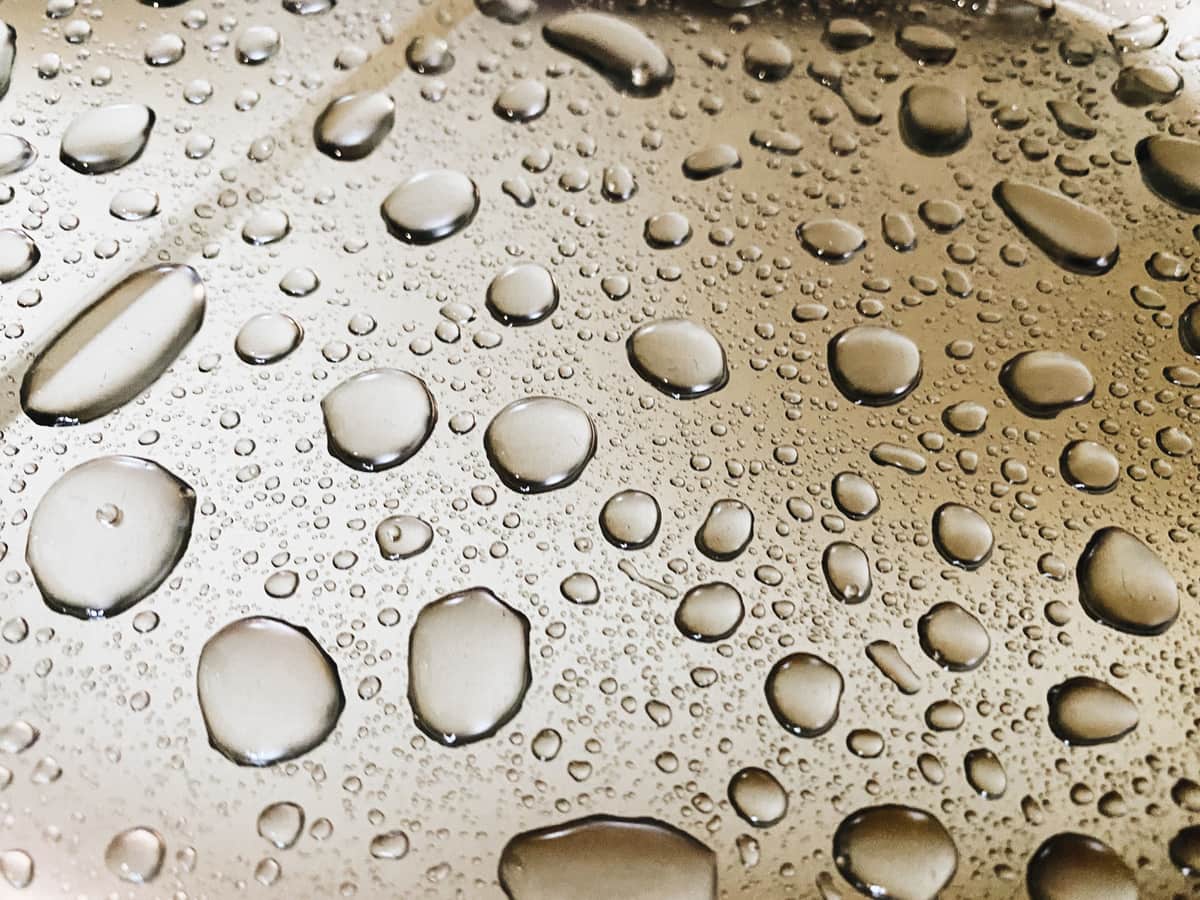
Which finish hides water spots
A ranked answer to the hard-water finish question, and why texture rather than brand decides what you see.
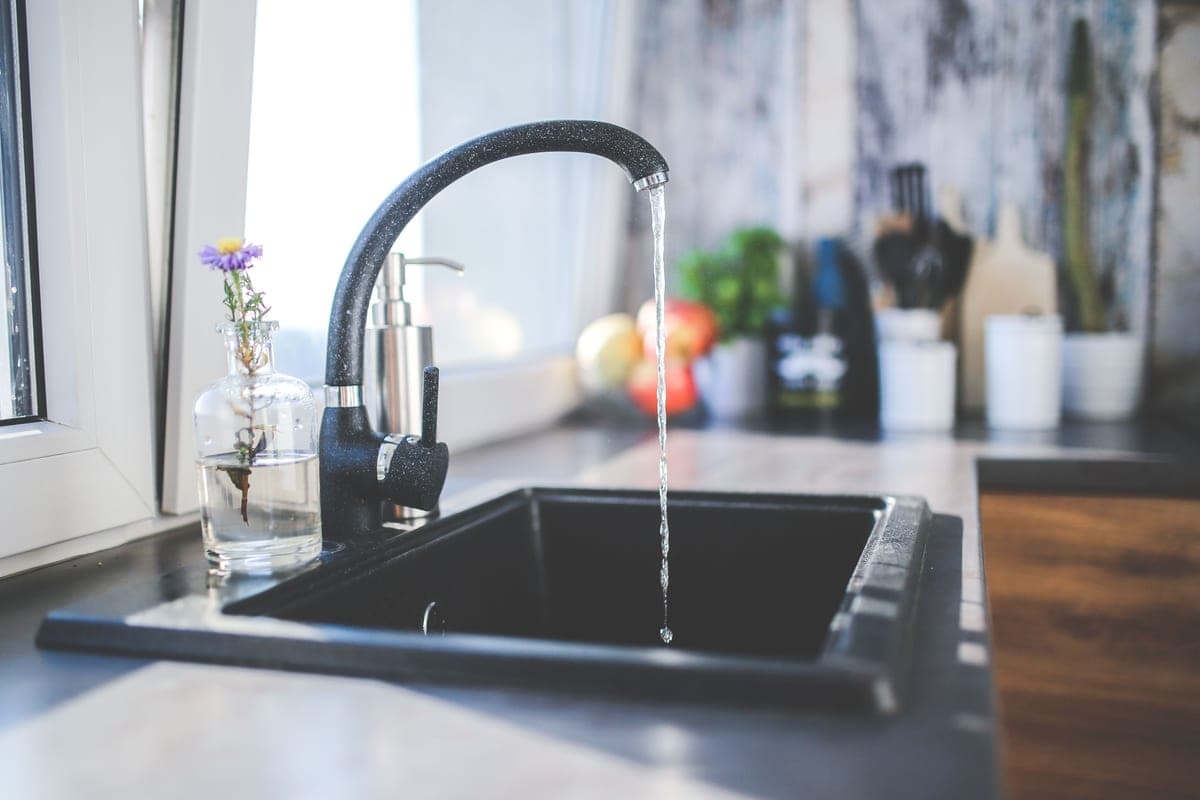
Best filtered water setup
Best filtered water faucets
Three routes to filtered water at the sink, in cost order — and the fitment problem that catches most pull-down owners out.
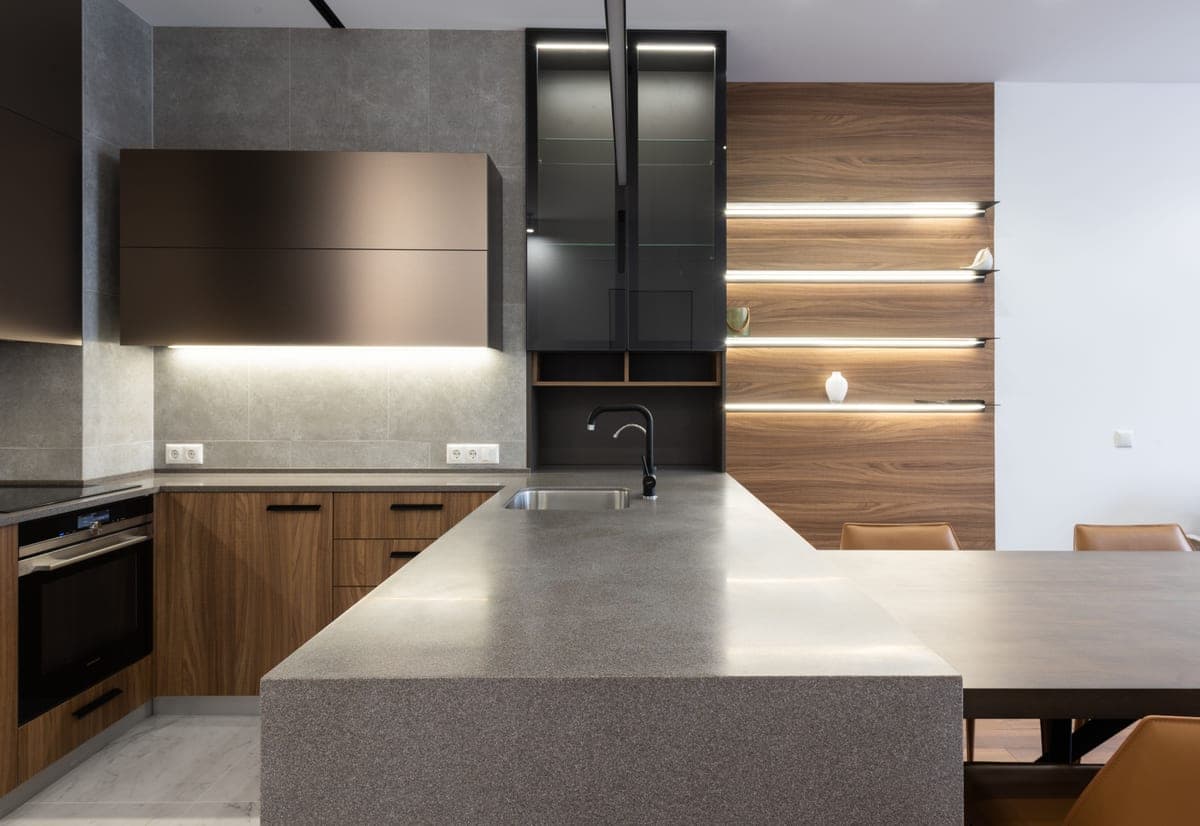
Guide
Faucet finishes
Every mainstream finish compared on what it hides, what it shows, and whether it is a plating, a PVD coating or living metal.
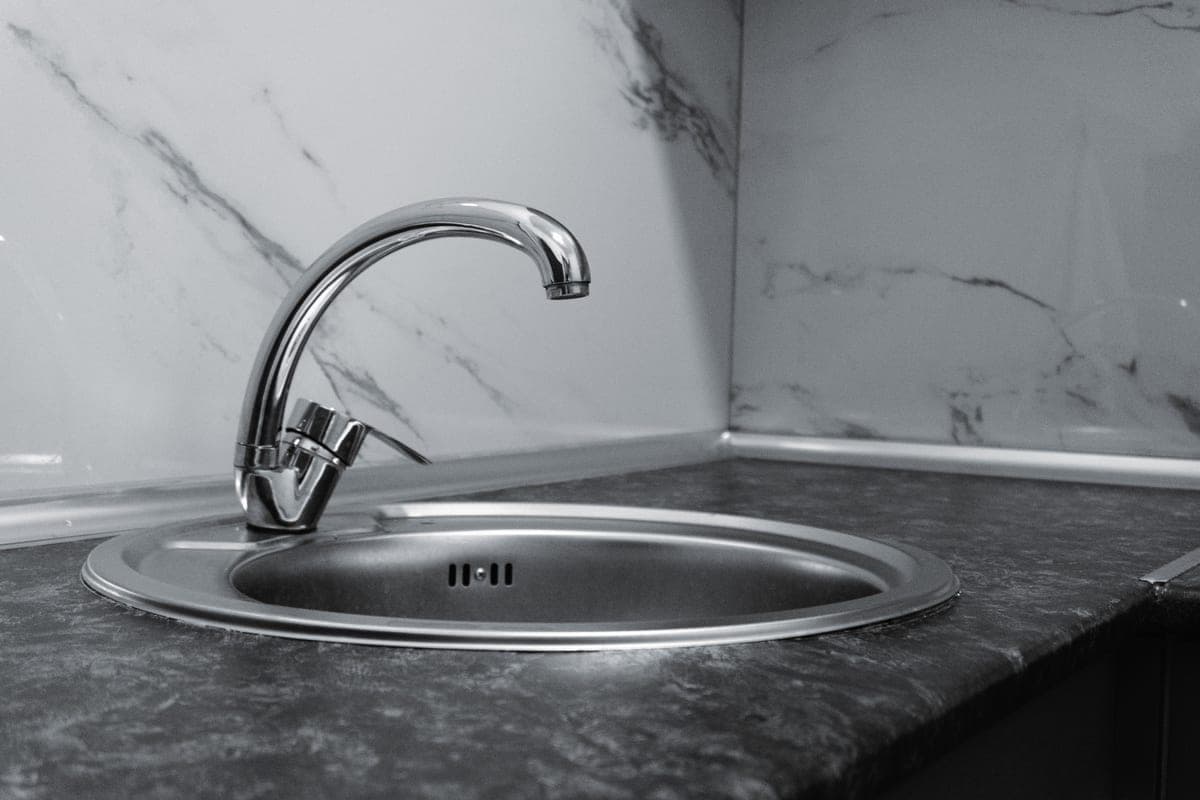
Best kitchen faucet
Best kitchen faucets
Five faucets covering the different jobs a kitchen faucet does, ranked on sourced specifications rather than brand.

How to
Clean a stainless steel sink
The weekly method, what causes brown marks, and the products that permanently damage a brushed finish.
Found something out of date, or a figure you can source better than we did? Tell us — corrections get read first. Our methodology explains how picks are made, and contact is one click away.