Kitchen Sinks
16 gauge vs 18 gauge kitchen sink
One number, twelve thousandths of an inch, and an industry built on overstating what it buys. Here is what gauge actually changes, and what fixes the noise instead.
Disclosure: we earn a commission if you buy through the Amazon links on this page, at no extra cost to you. Commission never decides a verdict or a ranking position — read our editorial policy and affiliate disclosure.
How we assessed these: gauge thicknesses here are standard sheet-metal values, and every product figure comes from the manufacturer's own published specification with a source link. We have not performed any dent, flex or noise testing ourselves, and we are not aware of any independent lab that publishes such testing for residential sinks — where a comparison would need that data, we say so.
Short answer
16 gauge is thicker. Stainless steel gauge runs inversely to thickness: 16-gauge sheet is about 0.0625 inches and 18-gauge about 0.05, so 16-gauge is roughly 25% thicker. That buys dent resistance and less flex when you lean on the basin. It does not, on its own, buy quiet — sound-deadening pad coverage does that, and it is a separate specification.
This is the most-asked question in kitchen sinks and the worst-served, because most of the pages answering it are published by companies with a particular thickness to sell. So: the arithmetic first, then what it actually means at the sink, then when 18-gauge is the correct choice rather than a compromise.
| Gauge | Approximate thickness | Relative to 18-gauge |
|---|---|---|
| 16 | 0.0625 in (1.59 mm) | About 25% thicker |
| 18 | 0.0500 in (1.27 mm) | Baseline |
| 20 | 0.0375 in (0.95 mm) | About 25% thinner — builder-grade |
These are standard sheet-metal gauge values for stainless steel. A sink's stated gauge refers to the sheet it was formed from.
What the extra thickness genuinely does
Dent resistance. The most common way a stainless sink gets damaged is a dropped cast-iron pan, and thicker steel deforms less. That is a straightforward materials consequence, not a marketing claim.
Less flex. Press the base of an 18-gauge basin with your thumb and you can usually feel it give slightly; on 16-gauge you cannot. This matters much more than it sounds in one specific case — a workstation sink, where accessories rest on the rim and any flex travels straight into whatever you are cutting.
A firmer feel at the rim. On an undermount sink the rim is supported by clips and adhesive rather than sitting on the counter, so thicker steel gives a more solid edge to lean on. This is perceptual rather than structural, and it is real.
What gauge does not do: quiet
This is the claim that needs breaking. A bare 16-gauge basin still rings, because ringing is a resonance problem rather than a thickness problem — thicker steel changes the frequency more than it changes the volume. What actually stops a stainless sink drumming is mass-damping material bonded to the outside of the basin: pads, and a sprayed undercoating.
The specification to look for, then, is not gauge but pad coverage. Kraus publishes NoiseDefend coverage of over 80% of the basin on the Kore, plus a non-toxic undercoating, and that combination is what makes a stainless sink sound dull rather than bright. A manufacturer that advertises 16-gauge and says nothing about damping is advertising the cheaper half of the answer.
Quick picks
Tap any row to jump to the full write-up. There are no scores here because we run no test lab — how picks are chosen is published in full on our methodology page.
| # | Product | Best for | Our read | Price |
|---|---|---|---|---|
| 1 | 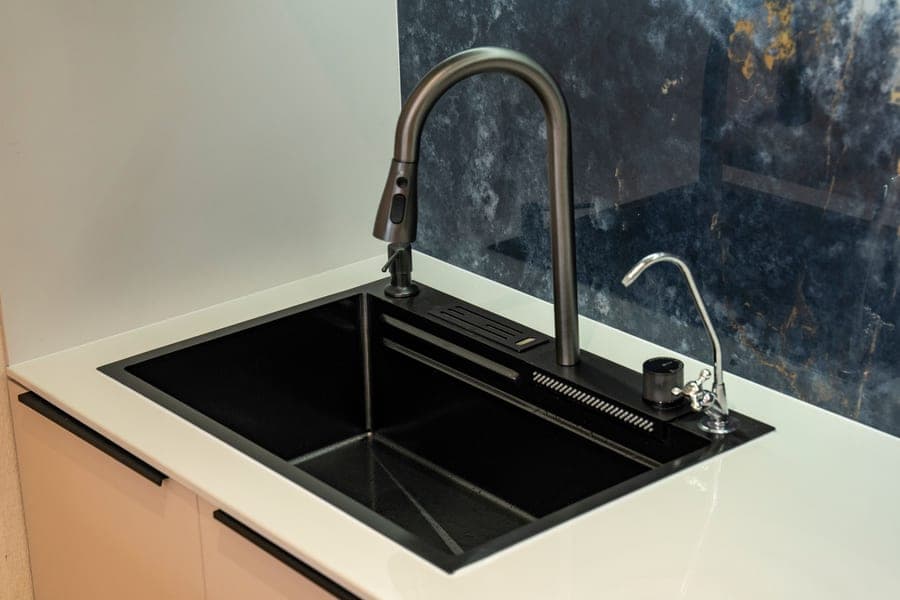 Kraus Kore KWU110-30 workstation sink Best 16-gauge sink | Small kitchens that need counter space | 16-gauge plus pads over 80% of the basin | Check price on Amazon #ad Affiliate link · We publish no price; Amazon shows the current one |
| 2 |  Blanco Diamond Silgranit super single Best way out of the argument | Hard water and visible sinks | Composite is quiet by mass, with no gauge at all | Check price on Amazon #ad Affiliate link · We publish no price; Amazon shows the current one |
| 3 |  Kohler Duostrainer K-8801 Best drain either way | Replacing a failed sink drain | Brass body, fits 3-1/2 and 4 inch outlets | Check price on Amazon #ad Affiliate link · We publish no price; Amazon shows the current one |
When 18 gauge is the right choice
- A drop-in sink. The flange rests on the countertop along its whole perimeter, which supports the basin in a way an undermount's clips do not. Flex is much less noticeable.
- A rental or a flip. 18-gauge with good pad coverage looks and sounds better than 16-gauge with none, and it costs less.
- A small or secondary bowl. A bar or prep sink has less unsupported area, so thickness matters less.
- When the budget is fixed and the choice is between 16-gauge undamped and 18-gauge well damped. Take the damping. You will hear the difference daily and feel the thickness rarely.
And when 16 gauge earns its price
- Workstation sinks, without exception. Accessories on the rim transmit flex to your hands.
- Large single bowls, 30 inches and up, where there is a lot of unsupported span.
- Undermount installations, where the rim is not resting on anything.
- Heavy cookware households. If cast iron and stoneware live in your sink regularly, thickness is the insurance.
The numbers manufacturers do not publish
There is no independent laboratory publishing comparative dent-resistance or noise measurements for residential kitchen sinks. Nobody drops a standard weight from a standard height onto 16- and 18-gauge basins and publishes the result. So while the materials reasoning above is sound, we cannot give you a figure for how much harder a 16-gauge sink is to dent — and anybody who does is producing that number from nowhere.
What we can tell you is that gauge is verifiable on a spec sheet, pad coverage is verifiable when the manufacturer publishes it, and a knuckle test is free. Those three will get you a better sink than any ranking will.
A note on 304 and T-304
Alongside gauge you will see the steel grade: 304 stainless, sometimes written T-304, and sometimes with a ratio like 18/10 or 18/8 (chromium to nickel). Grade 304 with reasonable nickel content resists corrosion well and is what a good kitchen sink is made from. A sink advertised on gauge with no grade stated is withholding half the specification. The Kraus Kore publishes both, which is the standard to hold others to.
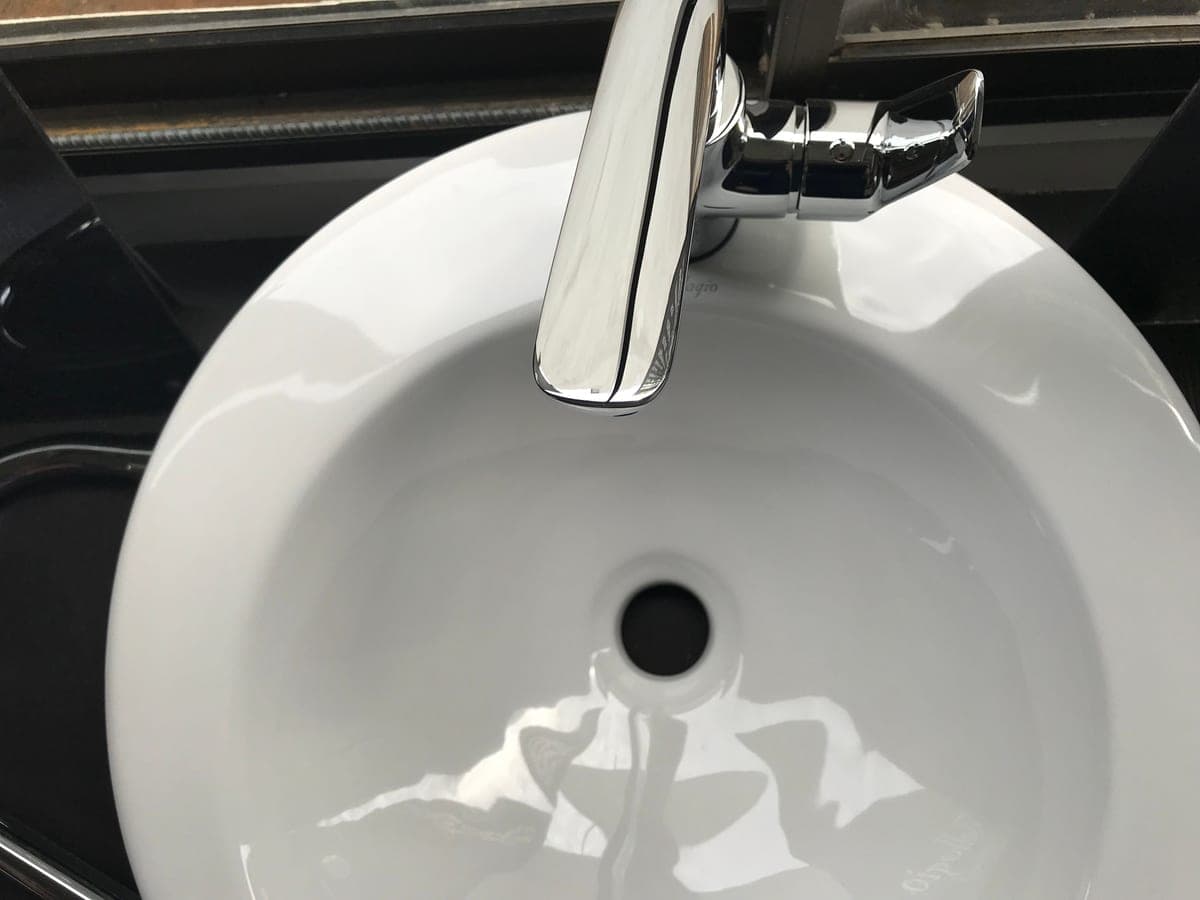
Photograph shows the product category, not this specific unit. We do not republish manufacturer product photography.
1. Best 16-gauge sink
Kraus Kore KWU110-30 workstation sink
Kraus · Best for small kitchens that need counter space
The workstation sink we would buy, and the clearest case for 16-gauge steel anywhere in this category: a ledge sink is the one configuration where basin flex is genuinely audible, because accessories rest on the rim and transmit it. Ten inches deep, rear-offset drain, and the grid, mat, board and strainer are in the box rather than a $200 upsell.
Published specifications
- Overall size
- 30" x 19" source
- Bowl size
- 28" x 16" source
- Bowl depth
- 10" source
- Gauge
- 16-gauge stainless steel source
- Minimum cabinet
- 33" left to right, 24" front to back source
- Drain
- Rear offset, 3-1/2" opening source
- Sound damping
- NoiseDefend pads covering over 80% of the basin, plus undercoating source
- Warranty
- Kraus limited lifetime source
What works
- The integrated ledge turns a 30-inch sink into prep counter, the best single trade available in a small kitchen
- Rear-offset drain leaves usable cabinet space under the front of the sink
- Genuine 16-gauge with pads over 80% of the basin — gauge and damping do different jobs, and this sink has both
- A 3-1/2" drain opening takes a standard disposal flange with no adapter
What does not
- Needs a 33-inch cabinet for a 30-inch sink — measure before ordering
- A 10-inch deep bowl is a long reach for a shorter person
- The accessories are the reason to buy it and also the reason it costs more than a plain undermount
Skip it if
Skip it if your run of counter is already generous — you would be paying for prep space you do not need, and a plain 18-gauge undermount will serve.
#ad Affiliate link · We publish no price; Amazon shows the current one
Raw specifications: Kraus’s own page for the Kraus Kore KWU110-30 workstation sink.
Photograph shows the product category, not this specific unit. We do not republish manufacturer product photography.
2. Best way out of the argument
Blanco Diamond Silgranit super single
Blanco · Best for hard water and visible sinks
The granite composite sink that answers the material's usual objection. Silgranit is up to 80% ground granite in an acrylic binder, and what it does better than stainless is hide everything: no water spots, no visible scratch pattern, no dent from a dropped pan. What it does worse is take a screaming-hot pan straight off the burner.
Published specifications
What works
- Hides limescale and water spotting better than any stainless finish — the reason to choose it in hard water
- Color runs through the material, so a scratch does not expose a different substrate
- Quieter than stainless without added pads, because the mass does the damping
- A 9-1/2" bowl is deep enough to lay a sheet pan flat
What does not
- Composite is not stainless: thermal shock is a real limit, so a very hot pan goes on a trivet
- Light colors show tea and turmeric staining more than dark ones
- Blanco publishes no thermal-limit figure, so we will not print one
Skip it if
Skip it if you routinely dump hot pans and boiling stock straight into the sink. Stainless tolerates that; composite is the wrong tool for it.
#ad Affiliate link · We publish no price; Amazon shows the current one
Photograph shows the product category, not this specific unit. We do not republish manufacturer product photography.
3. Best drain either way
Kohler Duostrainer K-8801
Kohler · Best for replacing a failed sink drain
The permanent answer rather than the drop-in one: a full basket-strainer assembly with the tailpiece included, so it replaces the drain hardware instead of sitting in it. The basket both catches debris and holds water for soaking, which is the pair of jobs a silicone mesh screen cannot do.
Published specifications
What works
- Brass body rather than plated steel, which is what makes a drain assembly last
- Tailpiece included, so the install is one part rather than three
- The stopper seals well enough to soak a pan, which a mesh screen cannot
- Fits both 3-1/2" and 4" outlets, covering nearly every stainless sink
What does not
- It is a drain replacement, not an accessory — budget thirty minutes and plumber's putty
- Finish matching to a faucet is approximate across brands
- Overkill if your existing drain is sound and you only want to catch peelings
Skip it if
Skip it if your drain works and you only want to keep food out of the disposal. Buy the silicone screen and keep the difference.
#ad Affiliate link · We publish no price; Amazon shows the current one
Raw specifications: Kohler’s own page for the Kohler Duostrainer K-8801.
Composite: the way out of the argument
Granite composite has no gauge, because it is not sheet metal. Its walls are thick and dense, so it is quiet without pads, and it hides scratches and water spotting in a way no stainless finish manages. Blanco publishes Silgranit as up to 80% ground natural granite in an acrylic composite, with a 9-1/2-inch bowl on the Diamond super single.
The tradeoff is thermal: composite does not want a pan straight off the burner, where stainless does not care. If the gauge question is really a noise question, composite answers it more completely than 16-gauge steel does — see granite composite vs stainless steel.
What to take away
- 16 gauge is 0.0625 inches, 18 gauge is 0.05 — roughly 25% thicker, and gauge runs inversely to thickness.
- Thickness buys dent resistance and less flex. It does not buy quiet; pad coverage does.
- Ask for pad coverage as a percentage, and use the knuckle test in a showroom.
- 16 gauge is genuinely worth it on workstation, large single-bowl and undermount sinks. On a drop-in, well-damped 18 gauge is the better buy.
How we sourced this page
Every figure on this page came from one of the following. Where a manufacturer or an independent lab does not publish a number, we say so rather than estimate it.
Common questions
- Is 16 gauge or 18 gauge sink thicker?
- 16 gauge is thicker. Sheet-metal gauge runs inversely to thickness, so 16-gauge stainless is about 0.0625 inches and 18-gauge about 0.05 inches — roughly 25% more material. That difference shows up as dent resistance and less flex, not as quietness.
- Does a 16 gauge sink make less noise?
- Only marginally on its own. Ringing is resonance, and what damps it is mass-loaded pad material bonded to the outside of the basin plus a sprayed undercoating. A 16-gauge sink with no pads will ring; an 18-gauge sink with pads over most of the basin will not. Ask for pad coverage, not just gauge.
- Is 18 gauge stainless steel sink good enough?
- For a drop-in sink, a small bowl, or a rental, yes — especially with good sound damping, which matters more day to day. For a workstation sink, a large single bowl or an undermount installation, 16 gauge is the better choice because there is more unsupported span.
- What does T-304 stainless steel mean?
- Grade 304 stainless, an austenitic alloy with roughly 18% chromium and 8 to 10% nickel, which is the standard corrosion-resistant grade for kitchen sinks. A sink that states its gauge but not its grade is only telling you half the specification.
- Will a 16 gauge sink still dent?
- Yes. Thicker steel deforms less under the same impact, but a heavy cast-iron pan dropped from height will mark either gauge. A bottom grid is the practical protection, and it comes in the box with better sinks.
More in Kitchen Sinks
Three specifications settle almost every kitchen sink question: how thick the steel is, how it meets the counter, and what it is made of. Get those right and brand barely matters.
Read next

Guide
Sink materials compared
Five materials compared on heat, impact, noise and repairability, with the honest failure mode of each one.
Best undermount sink
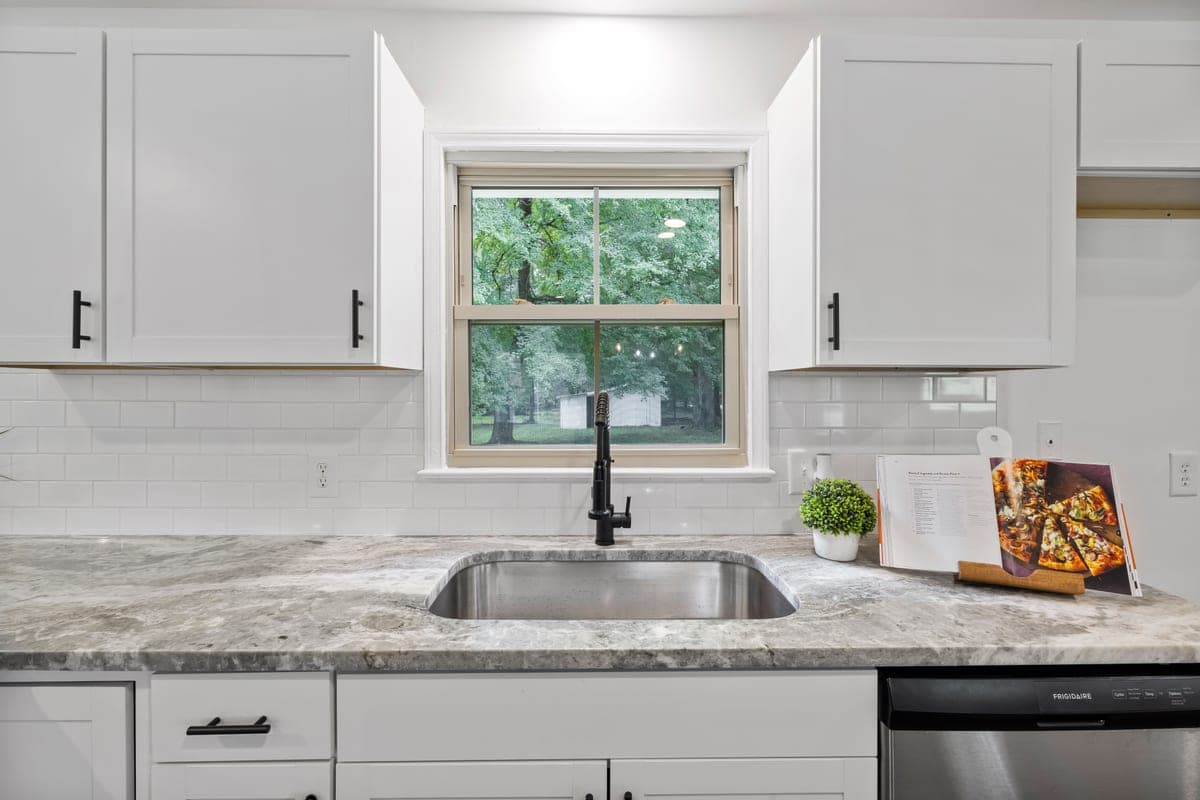
Best undermount sinks
Undermount picks by material, and the countertop question that decides whether an undermount sink is possible in your kitchen.
Head to head
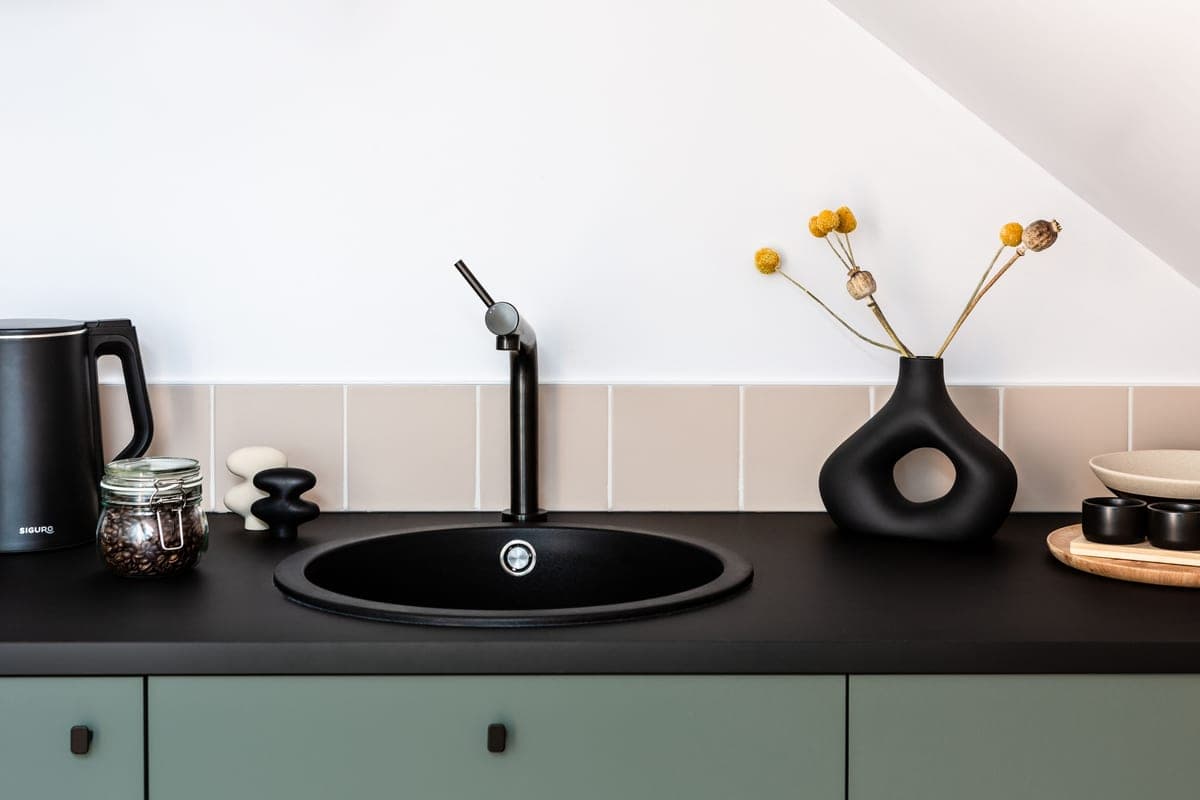
Granite composite vs stainless
Two materials that fail in opposite ways: heat tolerance against appearance. Plus what quartz composite actually is.

Guide
Sink sizes and cabinet fit
The cabinet-to-sink arithmetic, the four measurements to take, and how a disposal changes the numbers.

Guide
Kitchen sink brands
Brands ranked on what they publish — gauge, pad coverage, minimum cabinet size, warranty — rather than on reputation.
Quietest disposal
Quietest disposals
Disposal noise is two problems with two different fixes. One is a specification; the other costs a few dollars.
Found something out of date, or a figure you can source better than we did? Tell us — corrections get read first. Our methodology explains how picks are made, and contact is one click away.