Kitchen Faucets
The best touchless kitchen faucets, decided by sensor and power
Two specifications separate a touchless faucet you love from one you disable: how many sensors it has, and whether it runs on batteries or mains power.

Disclosure: we earn a commission if you buy through the Amazon links on this page, at no extra cost to you. Commission never decides a verdict or a ranking position — read our editorial policy and affiliate disclosure.
How we assessed these: we compared published manufacturer specifications — flow rate, spout height and reach, mounting options, docking mechanism and warranty — read from each maker's own page or spec sheet, and we link every figure to its source. We have not lab-tested any of these faucets and we do not own them. Where a number you would want does not exist publicly, we say so instead of estimating it.
Short answer
Buy a single-sensor touchless faucet, not a dual-sensor one: dual sensors watch the area in front of the spout and start the water when you reach across the deck for a towel. The Moen Arbor MotionSense Wave is single-sensor and runs on six AA batteries, so it retrofits with no electrician. Kohler's Sensate has the faster sensor but needs a GFCI outlet under the sink.
Touchless faucets have one genuinely excellent use case and one badly-understood specification. The use case: you are handling raw chicken, or your hands are covered in flour, and you want water without touching a handle that you will then have to clean. That is a real problem and a sensor solves it properly.
The specification is sensor count, and it is the difference between the reviews that say "never going back" and the reviews that say "it turns on by itself".
Quick picks
Tap any row to jump to the full write-up. There are no scores here because we run no test lab — how picks are chosen is published in full on our methodology page.
| # | Product | Best for | Our read | Price |
|---|---|---|---|---|
| 1 | 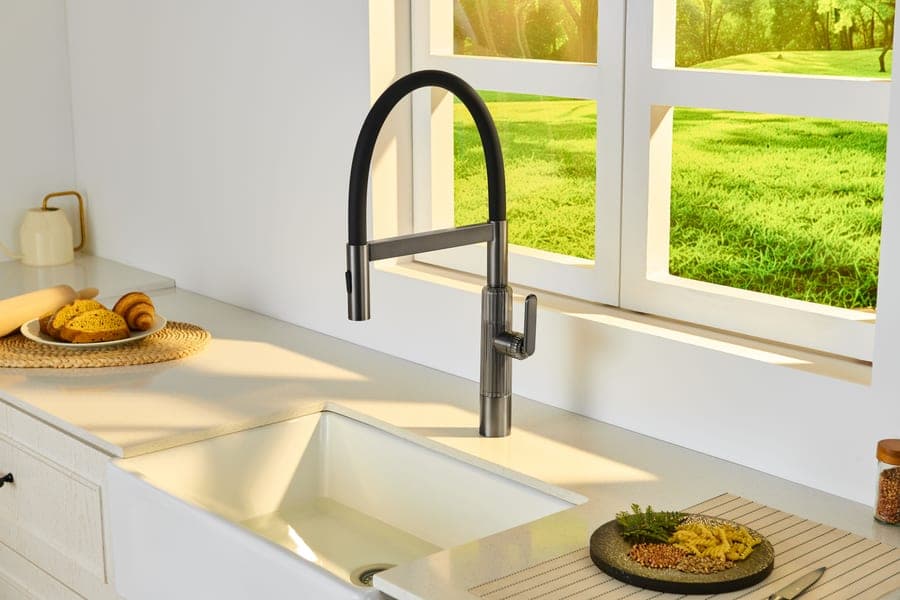 Moen Arbor MotionSense Wave 7594EW Best touchless overall | Raw-meat prep and messy hands | Single sensor and battery power — no wiring, no false starts | Check price on Amazon #ad Affiliate link · We publish no price; Amazon shows the current one |
| 2 | 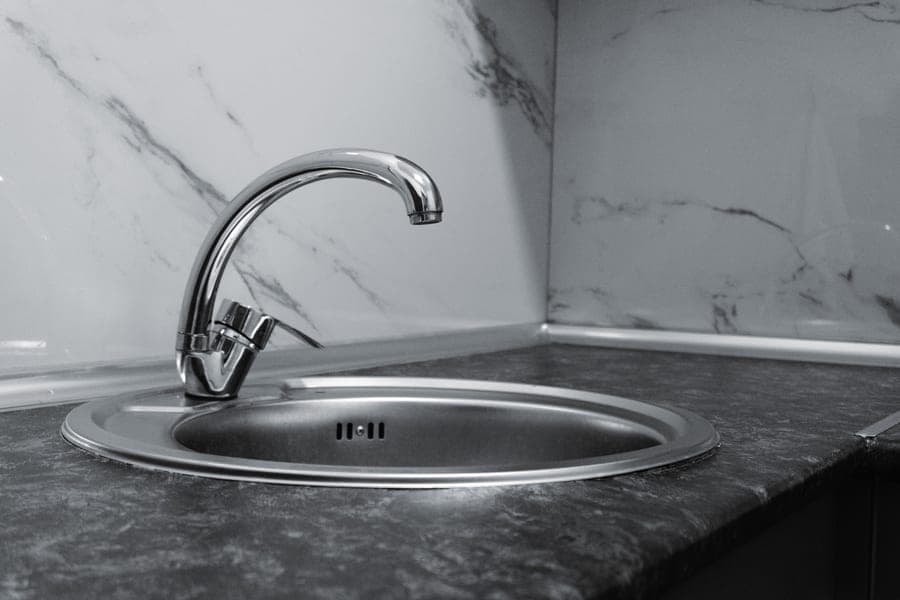 Kohler Sensate K-72218 Best sensor response | Kitchens with an outlet under the sink | 20 ms response, but needs a GFCI outlet under the sink | Check price on Amazon #ad Affiliate link · We publish no price; Amazon shows the current one |
| 3 |  Moen Arbor 7594 The manual version, for comparison | Deep pots and hard-water kitchens | Same spout, no electronics, half the failure points | Check price on Amazon #ad Affiliate link · We publish no price; Amazon shows the current one |
Single sensor or two: the whole argument
A single-sensor faucet has one detector, usually on the top or front of the spout, and it responds to a deliberate wave. A dual-sensor faucet adds a second detector that watches the space under and in front of the spout, so any hand entering that zone starts the water. On paper the second sensor is convenience — hold a glass under the spout and it fills. In a working kitchen it means the faucet starts when you reach for a dish cloth, when you scrape a plate over the sink, and when a child leans on the counter.
If you read a complaint about a touchless faucet running unprompted, you are almost always reading about a dual-sensor model. Both of our picks here are single-sensor designs, which is not a coincidence.
Batteries or mains: a real fork in the road
Battery-powered sensor faucets (the Moen uses six AA cells) install exactly like an ordinary faucet. No outlet, no electrician, no permit conversation. Mains-powered faucets need an unswitched 120 V outlet under the sink on a GFCI-protected circuit — Kohler publishes that requirement plainly in the Sensate spec sheet, including the five-foot limit from the control box. If that outlet already exists, mains power is the better option because there is nothing to replace. If it does not, add the cost of an electrician to the faucet.
Photograph shows the product category, not this specific unit. We do not republish manufacturer product photography.
1. Best touchless overall
Moen Arbor MotionSense Wave 7594EW
Moen · Best for raw-meat prep and messy hands
The honest touchless pick, because it is a single-sensor faucet rather than a dual-sensor one. Dual-sensor faucets trigger when you reach across the deck; a single wave sensor above the spout does not. It runs on six AA batteries, so there is no electrician and no outlet needed, and the manual handle still works if the batteries die.
Published specifications
What works
- Single sensor, so reaching for a dish towel does not start the water
- Battery power means it installs like an ordinary faucet — no outlet, no electrician
- The manual handle still works, so a dead battery is an inconvenience rather than a failure
- Same Arbor body as the manual 7594, so the spout geometry is a known quantity
What does not
- Batteries are a consumable a manual faucet does not have
- Sensor faucets put electronics in a wet environment, which is more to fail than a cartridge
- Moen publishes no battery-life figure we can quote, so we will not estimate one
Skip it if
Skip it if you cook rarely and mostly want a faucet that still works in fifteen years with a $12 cartridge — buy the manual Arbor.
#ad Affiliate link · We publish no price; Amazon shows the current one
Raw specifications: Moen’s own page for the Moen Arbor MotionSense Wave 7594EW.
Photograph shows the product category, not this specific unit. We do not republish manufacturer product photography.
2. Best sensor response
Kohler Sensate K-72218
Kohler · Best for kitchens with an outlet under the sink
The mains-powered touchless faucet, and the tradeoff against a battery model is worth understanding before you choose. Kohler's Response sensor reacts in 20 milliseconds — quick enough that it does not feel like waiting — but it needs an unswitched 120 V outlet under the sink, within five feet, on a GFCI-protected circuit. If that outlet already exists, this is the better sensor. If it does not, an electrician is part of the price.
Published specifications
- Flow rate
- 1.5 gpm at 60 psi source
- Spout reach
- 8-7/16" source
- Sensor
- Response technology, responds within 20 milliseconds source
- Power
- Unswitched 120 V AC outlet below the sink, within 5 ft of the control box source
- Circuit
- One circuit, GFCI protected source
- Sprayhead
- Two function: aerated stream and Sweep spray source
- Docking
- DockNetik magnetic docking source
What works
- A 20-millisecond sensor response is the difference between touchless feeling useful and feeling like a gimmick
- Mains power means no batteries to change, ever
- Kohler publishes the electrical requirement plainly in its spec sheet, which is more than most sensor faucets do
- DockNetik magnetic docking, the same mechanism as the manual Simplice
What does not
- Needs an unswitched GFCI outlet under the sink — if there is not one, add an electrician to the budget
- Mains-powered electronics under a sink are a failure point a manual faucet does not have
- 8-7/16" reach is mid-range; the manual Simplice reaches further for less money
Skip it if
Skip it if there is no outlet under your sink. The battery-powered Moen does the same job with no wiring at all.
#ad Affiliate link · We publish no price; Amazon shows the current one
Raw specifications: Kohler’s own page for the Kohler Sensate K-72218.
Photograph shows the product category, not this specific unit. We do not republish manufacturer product photography.
3. The manual version, for comparison
Moen Arbor 7594
Moen · Best for deep pots and hard-water kitchens
The pull-down to buy if you want the taller arc and a finish that hides water spots. Its 8-1/4" spout height is about half an inch more clearance than the Leland, which is the difference between washing a stock pot and fighting one. The tradeoff is reach: 7-7/8" against 9-3/16", so it works closer to the back of the bowl.
Published specifications
What works
- The 8-1/4" spout height is genuine pot clearance, not decorative arc
- Power Boost concentrates the stream for filling and rinsing without raising the rated flow
- Spot Resist Stainless is the single most useful finish choice in a hard-water house
- Reflex docking has been in Moen's line long enough that replacement wands are easy to find
What does not
- Reach is 7-7/8", over an inch shorter than the Leland — on a wide double bowl you will notice
- Moen publishes no independent noise or durability measurement, and neither do we
- The spot-resist coating is a finish, not armor; abrasive cleaners still dull it
Skip it if
Skip it if you have a wide double-bowl sink and want one faucet to reach both drains comfortably — buy reach instead of height.
#ad Affiliate link · We publish no price; Amazon shows the current one
Raw specifications: Moen’s own page for the Moen Arbor 7594.
What touchless does not fix
It does not set the temperature. On both faucets here the handle still controls hot and cold, so a wave starts water at whatever mix the handle is set to. If you leave the handle on hot, the sensor gives you hot. Some higher-end models add a voice or app temperature control; that is a different product category and a different set of things to go wrong.
It also does not clean the faucet. A sensor faucet still gets a hand on it every time you adjust temperature, so the handle still needs wiping — the win is that you can start and stop water without touching anything, which covers the raw-meat case precisely.
Who should buy the manual version instead
We have listed the manual Moen Arbor as the third pick deliberately. If you cook rarely, if nobody in the house handles raw meat regularly, or if your priority is a faucet that will still be working in fifteen years with a twelve-dollar cartridge, the manual version of the same faucet is the better buy. Electronics in a wet cabinet are more to go wrong than a ceramic disc, and they are the part with no spare-parts channel in a decade.
If you are weighing it up, our touchless vs manual comparison puts the two side by side on cost of ownership rather than features.
What to take away
- Single sensor, not dual. This is the specification that decides whether you keep the faucet switched on.
- Battery power retrofits anywhere; mains power needs an unswitched GFCI outlet under the sink within five feet.
- The handle must still work manually — check before buying, because that is the failure plan.
- Touchless does not control temperature: the handle setting still decides what a wave gives you.
How we sourced this page
Every figure on this page came from one of the following. Where a manufacturer or an independent lab does not publish a number, we say so rather than estimate it.
Common questions
- Do touchless kitchen faucets need electricity?
- Some do and some do not. Battery models run on AA cells inside the cabinet and install like an ordinary faucet. Mains models need an unswitched 120 V outlet under the sink on a GFCI-protected circuit — Kohler's Sensate spec sheet states it must be within five feet of the control box. Check which type you are buying before you order.
- Why does my touchless faucet turn on by itself?
- Almost always because it has two sensors and the second one watches the space in front of the spout, so reaching across the deck triggers it. Some models let you disable the second sensor; on others the only fix is not buying a dual-sensor faucet in the first place.
- How long do the batteries last in a touchless faucet?
- Manufacturers rarely publish a figure, and we are not going to invent one. What we can tell you is that the faucet still works manually when the batteries die, so the consequence is a trip to the shop rather than a kitchen out of action.
- Are touchless faucets worth it?
- If you handle raw meat or bake regularly, yes — being able to start water with a wrist rather than a hand is a genuine hygiene improvement. If you cook rarely, the extra electronics are a failure point without a matching benefit, and the manual version of the same faucet is the better purchase.
More in Kitchen Faucets
Nine times out of ten the faucet that fails you is the one that did not fit — wrong hole count, wrong reach, wrong finish for your water. Start with the measurements and the rest gets easy.
Read next
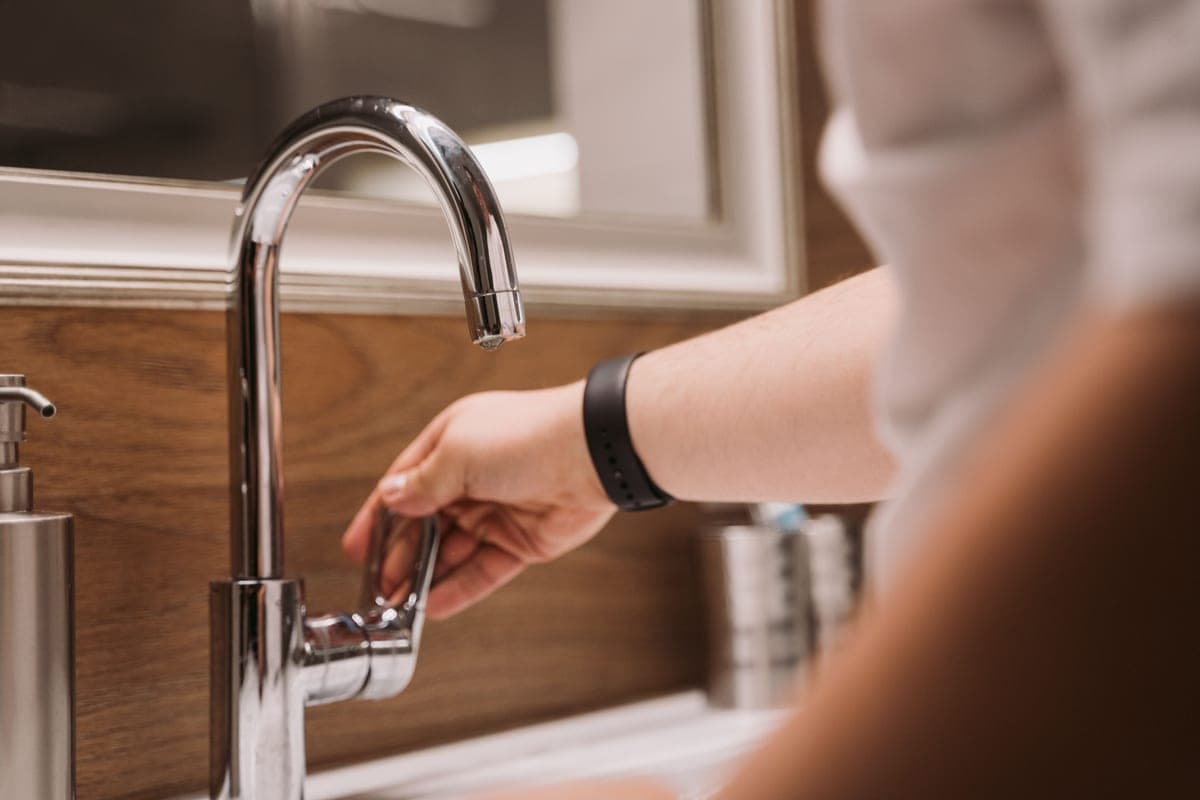
Head to head
Touchless vs manual
The honest cost-of-ownership comparison: what a sensor buys you, what it costs you, and who should skip it.
Best kitchen faucet
Best kitchen faucets
Five faucets covering the different jobs a kitchen faucet does, ranked on sourced specifications rather than brand.
Guide
Faucet finishes
Every mainstream finish compared on what it hides, what it shows, and whether it is a plating, a PVD coating or living metal.
Guide
Faucet hole configurations
What each drilling pattern accepts, the standard hole size, how deck plates work, and what adding a hole really involves.

How to
Install a kitchen faucet
Ten steps, branched by hole configuration, with the tools and parts list up front and the when-to-stop line stated plainly.
Found something out of date, or a figure you can source better than we did? Tell us — corrections get read first. Our methodology explains how picks are made, and contact is one click away.