Kitchen Faucets
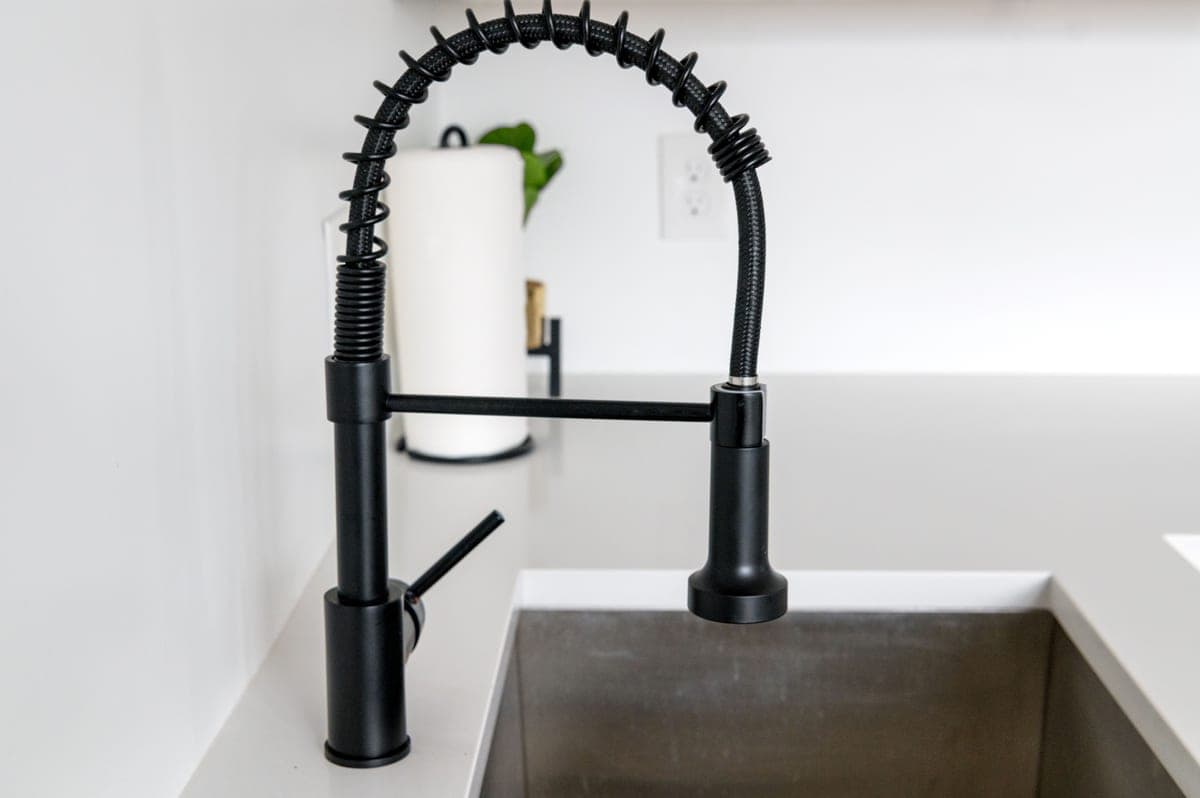
Pull-down vs pull-out kitchen faucet
Two hose designs, two different shapes, and one question that settles it: how deep is your sink and what is above it?
Disclosure: we earn a commission if you buy through the Amazon links on this page, at no extra cost to you. Commission never decides a verdict or a ranking position — read our editorial policy and affiliate disclosure.
How we assessed these: this comparison is built from published manufacturer specifications for the models named, with every figure linked to its source. We have not tested these faucets. Where a spec is not published, we say so.
Note: All three picks here are pull-down faucets. We have not yet verified a pull-out model whose published specifications we would stand behind, and we would rather leave that side of the comparison unnamed than recommend something we cannot source. The reasoning for choosing a pull-out is on this page regardless.
Short answer
A pull-down wand comes out of the top of a high arc and sprays downward; a pull-out wand comes forward from a lower spout and can be aimed anywhere, including at a bucket on the floor. Choose pull-down for a deep single-bowl sink with clear space above it. Choose pull-out for a shallow basin, a low window sill, or when you frequently fill containers away from the sink.
This is presented as a taste question and it is really a geometry question. The two designs put the water in different places and need different amounts of room, and once you know your basin depth and the clearance above your sink, one of them is usually clearly wrong.
| Pull-down | Pull-out | |
|---|---|---|
| Hose type | Runs inside a tall spout, with a counterweight in the cabinet | Runs through a lower spout, usually a longer hose |
| Spray direction | Points down into the basin | Aimed freely, including outside the sink |
| Spout height | Tall arc, commonly 8 inches or more to the outlet | Lower, often 5 to 7 inches |
| Suits a basin that is | Deep — 9 inches or more, or splashing will annoy you | Shallow or standard depth |
| Clearance needed above | More: overall heights of 15 inches and up are normal | Less: fits under a low window sill |
| Filling a bucket on the floor | Awkward; the wand does not extend far forward | Straightforward, which is the main argument for it |
| Docking | Magnetic on better models, and worth having | Usually a simple seat plus counterweight |
Basin depth is the first question
Water falling from an eight-inch spout into a five-inch-deep drop-in sink bounces, and it bounces onto you and the counter. That is not a defect in the faucet; it is physics, and it is the reason shallow bar sinks get short faucets. If your basin is nine or ten inches deep — as most modern undermount and workstation sinks are — the tall arc has somewhere to put the energy and a pull-down is comfortable. If you have an older, shallower drop-in sink, a pull-out's lower spout and shorter drop is the better match.
What is above the sink is the second
Measure from your deck to the underside of the window sill, the cabinet, or whatever else is there. Pull-down faucets are commonly 15 to 16 inches overall, and they need to clear that. This is the constraint that catches people with a sink under a window: the faucet fits, but the wand cannot be lifted out of its dock without hitting the sill.
Quick picks
Tap any row to jump to the full write-up. There are no scores here because we run no test lab — how picks are chosen is published in full on our methodology page.
| # | Product | Best for | Our read | Price |
|---|---|---|---|---|
| 1 |  Delta Leland 9178-AR-DST Best pull-down | Most kitchens, one or three holes | Tall arc, nine inches of reach, magnetic docking | Check price on Amazon #ad Affiliate link · We publish no price; Amazon shows the current one |
| 2 | 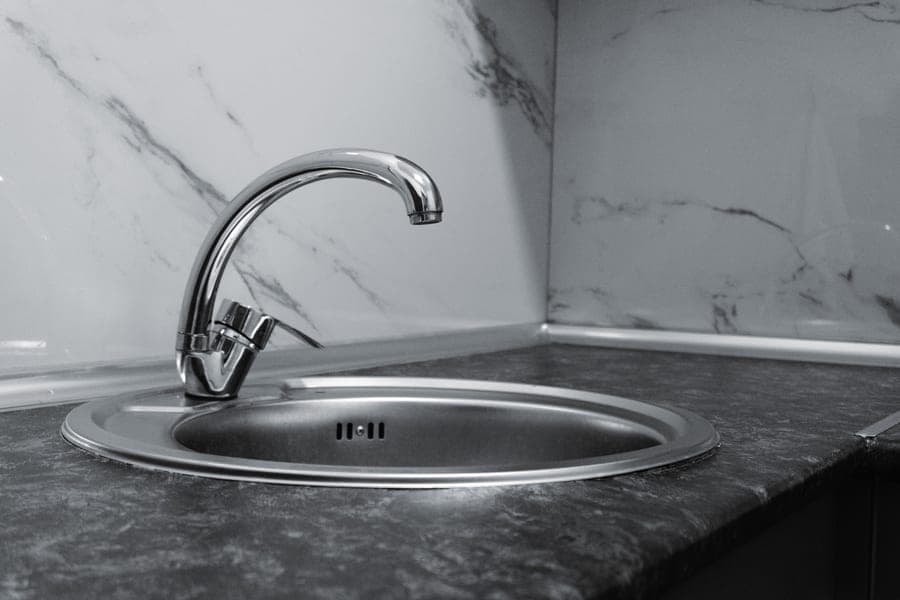 Kohler Simplice K-596 Best pull-down runner-up | Wide bowls and long reach | Same reach, adds a 30% boost mode | Check price on Amazon #ad Affiliate link · We publish no price; Amazon shows the current one |
| 3 | 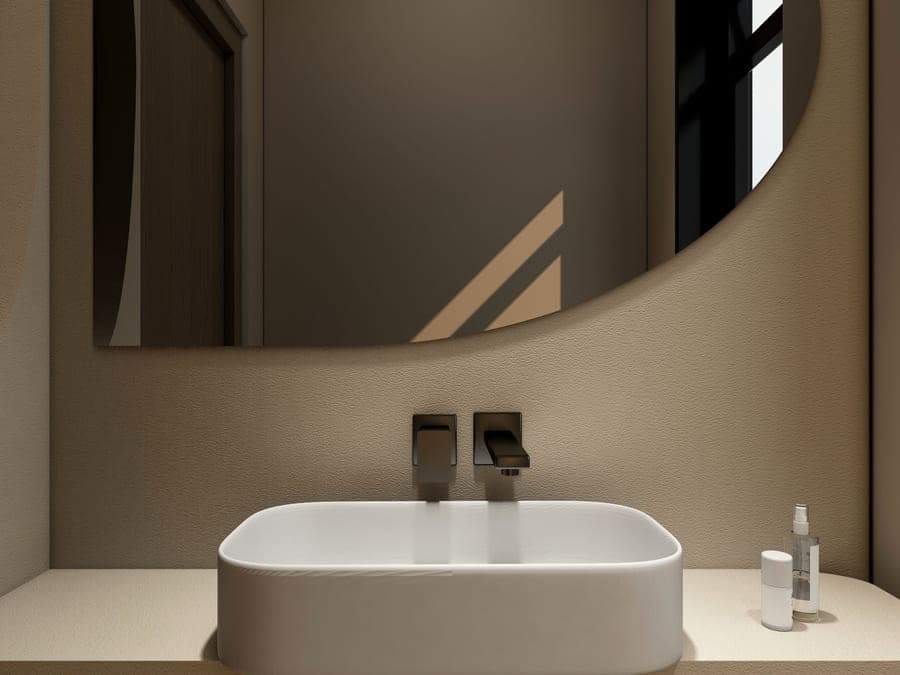 Moen Arbor 7594 Best if pot clearance decides it | Deep pots and hard-water kitchens | Tallest spout here, shorter reach | Check price on Amazon #ad Affiliate link · We publish no price; Amazon shows the current one |
The tasks where a pull-out genuinely wins
- Filling a bucket, a watering can or a pet bowl on the floor. A pull-out hose extends forward and down; a pull-down wand does not want to go there.
- Rinsing a large flat pan you cannot fit under a spout — you take the water to the pan rather than the pan to the water.
- Cleaning the sink itself. A pull-out aims at the basin walls and rim far more easily.
- Any sink under a low window, where a tall arc simply does not fit.
And where a pull-down wins
- Filling a stock pot, because the arc gives you clearance the pot fits under.
- Working in a deep single bowl, where the downward spray has room and does not splash.
- Docking reliability, because the best pull-downs use magnets and most pull-outs use a seat and gravity.
- Looking like the rest of the market — which matters if you want a matching soap dispenser and finish family.
Photograph shows the product category, not this specific unit. We do not republish manufacturer product photography.
1. Best pull-down
Delta Leland 9178-AR-DST
Delta · Best for most kitchens, one or three holes
The pull-down we would fit in most kitchens, because the two parts that usually fail first on a pull-down are the two Delta engineered around: the docking mechanism and the valve. MagnaTite pulls the wand back into the spout with a magnet instead of relying on a friction collar, and Diamond Seal keeps water off the valve. It ships with a deck plate, so it covers a three-hole sink or mounts through one.
Published specifications
What works
- MagnaTite docking is a magnet, not a friction fit — a wand that stops seating is the most common pull-down complaint, and a magnet does not wear the way a plastic collar does
- Spout reach of 9-3/16" clears the far side of a standard 22-inch front-to-back sink
- Diamond Seal keeps water off the valve, which is what the lifetime warranty is really protecting
- Deck plate in the box, so a three-hole sink needs no extra part
What does not
- 1.8 gpm is higher than the 1.5 gpm most competitors now ship, which matters if your area caps flow rate
- Zinc body rather than brass — normal at this price, but this is not a forever faucet
- No independent lab publishes durability figures for this model, so we cannot tell you how the finish looks at year five
Skip it if
Skip it if your sink is a shallow bar sink: at 14-7/8" overall the arc will splash in a basin under about seven inches deep.
#ad Affiliate link · We publish no price; Amazon shows the current one
Raw specifications: Delta’s own page for the Delta Leland 9178-AR-DST.
Photograph shows the product category, not this specific unit. We do not republish manufacturer product photography.
2. Best pull-down runner-up
Kohler Simplice K-596
Kohler · Best for wide bowls and long reach
The value pick with the longest reach of the three mainstream pull-downs, and the only one whose third spray function is genuinely useful rather than a novelty: Boost raises flow by 30% while you hold it, then drops back to 1.5 gpm. If your sink is wide, this is the one that reaches.
Published specifications
What works
- 9" reach, matching the longest in this roundup
- Boost is a real feature: 30% more flow on demand, then back to 1.5 gpm
- Sweep spray is a blade rather than a cone, which is better at pushing debris toward a drain
- Kohler publishes a full dimensional spec sheet, which makes hole and cabinet planning easy
What does not
- A three-function head has more moving parts than a two-function one, which is more to go wrong
- The gooseneck shape sets the handle further back than some people like on a shallow deck
- No published independent test data on this model, from anyone
Skip it if
Skip it if you want the simplest possible faucet — a two-function wand is one less thing to break.
#ad Affiliate link · We publish no price; Amazon shows the current one
Raw specifications: Kohler’s own page for the Kohler Simplice K-596.
Photograph shows the product category, not this specific unit. We do not republish manufacturer product photography.
3. Best if pot clearance decides it
Moen Arbor 7594
Moen · Best for deep pots and hard-water kitchens
The pull-down to buy if you want the taller arc and a finish that hides water spots. Its 8-1/4" spout height is about half an inch more clearance than the Leland, which is the difference between washing a stock pot and fighting one. The tradeoff is reach: 7-7/8" against 9-3/16", so it works closer to the back of the bowl.
Published specifications
What works
- The 8-1/4" spout height is genuine pot clearance, not decorative arc
- Power Boost concentrates the stream for filling and rinsing without raising the rated flow
- Spot Resist Stainless is the single most useful finish choice in a hard-water house
- Reflex docking has been in Moen's line long enough that replacement wands are easy to find
What does not
- Reach is 7-7/8", over an inch shorter than the Leland — on a wide double bowl you will notice
- Moen publishes no independent noise or durability measurement, and neither do we
- The spot-resist coating is a finish, not armor; abrasive cleaners still dull it
Skip it if
Skip it if you have a wide double-bowl sink and want one faucet to reach both drains comfortably — buy reach instead of height.
#ad Affiliate link · We publish no price; Amazon shows the current one
Raw specifications: Moen’s own page for the Moen Arbor 7594.
What to take away
- Basin depth decides the splash question: tall arc plus shallow basin equals a wet counter.
- Measure clearance above the deck before choosing a pull-down; 15 to 16 inches overall is normal.
- A pull-out's real advantage is reaching outside the sink, not anything about spray quality.
- Magnetic docking is more common on pull-downs and is worth weighing when the rest is level.
How we sourced this page
Every figure on this page came from one of the following. Where a manufacturer or an independent lab does not publish a number, we say so rather than estimate it.
Common questions
- Is pull-down or pull-out better for a small kitchen?
- Pull-out, usually — small kitchens more often have shallower sinks and lower windows, which are exactly the two conditions a pull-down handles badly. The exception is a small kitchen with a deep single-bowl sink, where a pull-down works well.
- Do pull-out faucets splash less?
- Generally yes, because the water falls a shorter distance and hits the basin with less velocity. The difference is most noticeable in a shallow sink; in a nine- or ten-inch bowl both designs are fine.
- Which lasts longer, a pull-down or a pull-out?
- Nobody publishes comparative durability testing for either, so an honest answer is that we do not know. What is verifiable is that the docking mechanism is the common failure point on both, and that magnetic docking — more common on pull-downs — has no wearing surface.
- Can I replace a pull-out faucet with a pull-down?
- Usually yes, as long as the hole count matches and there is height clearance above the deck. Both designs commonly mount through a single hole with an optional deck plate, so the plumbing under the sink is the same job. Measure the clearance first.
More in Kitchen Faucets
Nine times out of ten the faucet that fails you is the one that did not fit — wrong hole count, wrong reach, wrong finish for your water. Start with the measurements and the rest gets easy.
Read next

Best pull-down faucet
Best pull-down faucets
Three mainstream pull-downs compared on reach, arc height and docking mechanism — the specs that decide how one ages.

Guide
Height and reach guide
Spout height, reach and overall height are three different numbers. Here is which one decides what, and how to measure yours.
Best kitchen faucet
Best kitchen faucets
Five faucets covering the different jobs a kitchen faucet does, ranked on sourced specifications rather than brand.
Head to head
Drop-in vs undermount
A pros and cons table, what each countertop material can take, and the real cost of converting from one to the other.

How to
Install a kitchen faucet
Ten steps, branched by hole configuration, with the tools and parts list up front and the when-to-stop line stated plainly.
Found something out of date, or a figure you can source better than we did? Tell us — corrections get read first. Our methodology explains how picks are made, and contact is one click away.