Kitchen Faucets
Filtered water at the kitchen faucet: the three routes
One of these options will not physically fit the faucet you probably own. Work out which route suits your sink before you buy a filter that cannot mount.
Disclosure: we earn a commission if you buy through the Amazon links on this page, at no extra cost to you. Commission never decides a verdict or a ranking position — read our editorial policy and affiliate disclosure.
How we assessed these: we compared published manufacturer specifications, read from each maker's own page or spec sheet and linked to the source on every figure. We have not lab-tested these faucets and we do not own them. Where a figure does not exist publicly, the page says so rather than estimating it.
Short answer
There are three routes: a faucet-mount filter (cheapest, certified, but will not fit a pull-down or pull-out wand), an under-sink filter plumbed to its own small dedicated tap (best water, needs a spare deck hole), or a pitcher filter (no plumbing, no fitment problem, smallest volume). The fitment limitation decides most of these choices before cost does.
"Filtered water kitchen faucet" describes three quite different products, and the internet tends to mix them up. Sorting them out matters, because the cheapest option is physically incompatible with the most popular faucet type sold today.
Quick picks
Tap any row to jump to the full write-up. There are no scores here because we run no test lab — how picks are chosen is published in full on our methodology page.
| # | Product | Best for | Our read | Price |
|---|---|---|---|---|
| 1 | 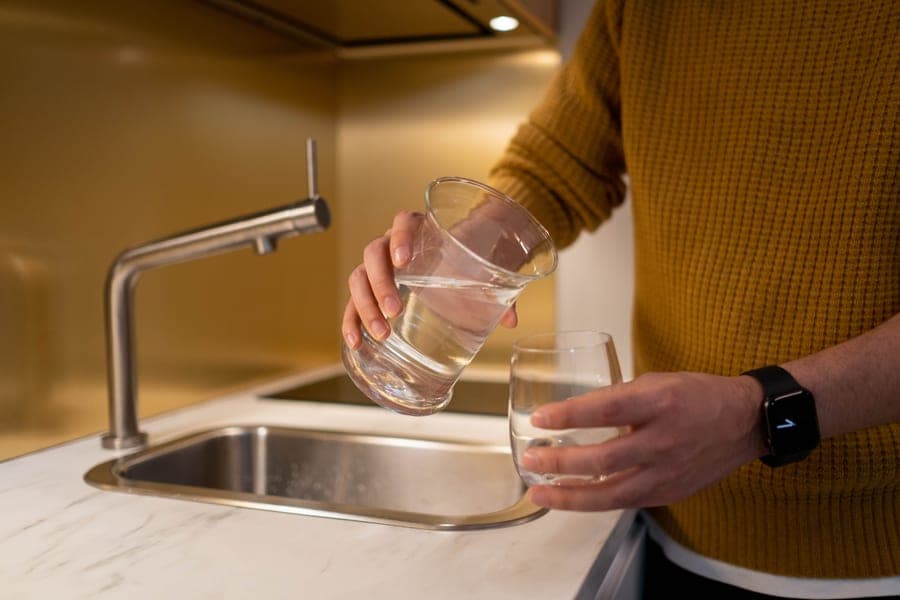 PUR PLUS faucet mount filtration system Cheapest certified route | Standard non-wand faucets | Certified lead reduction, but standard spouts only | Check price on Amazon #ad Affiliate link · We publish no price; Amazon shows the current one |
| 2 |  Delta Leland 9178-AR-DST Best faucet to pair with it | Most kitchens, one or three holes | Standard-thread spout when the wand is docked | Check price on Amazon #ad Affiliate link · We publish no price; Amazon shows the current one |
| 3 | 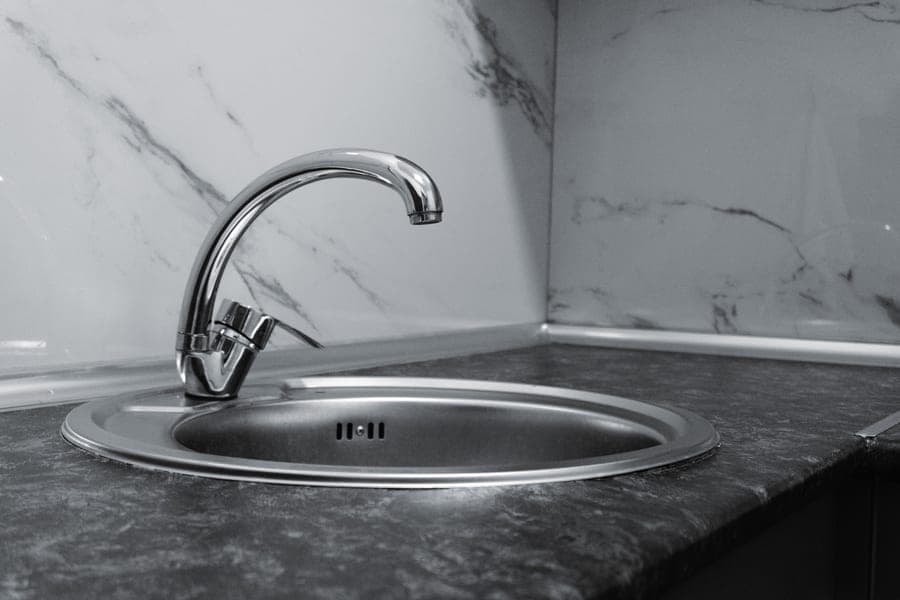 Kohler Simplice K-596 Best if you are replacing the faucet anyway | Wide bowls and long reach | Nine-inch reach, with a separate filter tap alongside | Check price on Amazon #ad Affiliate link · We publish no price; Amazon shows the current one |
Route one: a faucet-mount filter
A housing clamps to the end of your existing spout and diverts water through a cartridge. It installs in minutes with no tools, costs less than a decent meal out, and with a certified cartridge it genuinely reduces lead and chlorine — PUR publishes NSF and WQA certification for its PLUS cartridges, rated at 100 gallons or roughly three months of typical use.
The catch is fitment, and it is absolute: these units clamp to a standard spout tip, and a pull-down or pull-out faucet has a spray wand where that tip would be. There is no adapter. If your faucet has a wand, this route is closed to you.
Route two: under-sink filter with a dedicated tap
A canister filter lives in the cabinet and feeds a small separate tap on the sink deck. This is the best water of the three: larger cartridges mean longer life and better contact time, the filter is out of sight, and your main faucet keeps full unfiltered flow for washing up — which matters, because running dishwater through a filter cartridge is an expensive way to rinse plates.
It needs two things: space in the cabinet and a spare hole in the sink deck. If you have a four-hole sink with an unused hole (or a soap dispenser you never fill), you already have the hole. If not, drilling stainless is possible with a step bit and drilling quartz or granite is a job for a fabricator. Our faucet hole configurations page covers what each hole can be used for.
Route three: the pitcher, honestly
A filter pitcher has no fitment problem, no plumbing and no installation. Its limitation is volume and patience — you filter what you remember to filter. For a one- or two-person household that wants better-tasting drinking water and nothing more, it is genuinely the rational choice, and we would rather say that than sell you a faucet.
Photograph shows the product category, not this specific unit. We do not republish manufacturer product photography.
1. Cheapest certified route
PUR PLUS faucet mount filtration system
PUR · Best for standard non-wand faucets
The cheapest honest answer to filtered water at the kitchen sink, with one hard limitation to know before buying: it clamps to the spout of a standard faucet and will not fit a pull-down or pull-out wand. If your faucet has a wand, an under-sink system or a dedicated filtered-water faucet is the only route.
Published specifications
What works
- Certified lead reduction for roughly the cost of two months of bottled water
- Installs in minutes with no tools and no plumbing
- Filter change is a twist, and the housing tells you when it is due
- Reversible: it comes back off and leaves the faucet as it was
What does not
- Does not fit pull-down or pull-out faucets — the most common kitchen faucet type sold today
- It hangs off the end of the spout, which is visually obvious
- 100 gallons is roughly three months for a small household and much less for a large one
Skip it if
Skip it if your kitchen faucet has a pull-down wand. It will not fit, and no adapter makes it fit.
#ad Affiliate link · We publish no price; Amazon shows the current one
Photograph shows the product category, not this specific unit. We do not republish manufacturer product photography.
2. Best faucet to pair with it
Delta Leland 9178-AR-DST
Delta · Best for most kitchens, one or three holes
The pull-down we would fit in most kitchens, because the two parts that usually fail first on a pull-down are the two Delta engineered around: the docking mechanism and the valve. MagnaTite pulls the wand back into the spout with a magnet instead of relying on a friction collar, and Diamond Seal keeps water off the valve. It ships with a deck plate, so it covers a three-hole sink or mounts through one.
Published specifications
What works
- MagnaTite docking is a magnet, not a friction fit — a wand that stops seating is the most common pull-down complaint, and a magnet does not wear the way a plastic collar does
- Spout reach of 9-3/16" clears the far side of a standard 22-inch front-to-back sink
- Diamond Seal keeps water off the valve, which is what the lifetime warranty is really protecting
- Deck plate in the box, so a three-hole sink needs no extra part
What does not
- 1.8 gpm is higher than the 1.5 gpm most competitors now ship, which matters if your area caps flow rate
- Zinc body rather than brass — normal at this price, but this is not a forever faucet
- No independent lab publishes durability figures for this model, so we cannot tell you how the finish looks at year five
Skip it if
Skip it if your sink is a shallow bar sink: at 14-7/8" overall the arc will splash in a basin under about seven inches deep.
#ad Affiliate link · We publish no price; Amazon shows the current one
Raw specifications: Delta’s own page for the Delta Leland 9178-AR-DST.
Photograph shows the product category, not this specific unit. We do not republish manufacturer product photography.
3. Best if you are replacing the faucet anyway
Kohler Simplice K-596
Kohler · Best for wide bowls and long reach
The value pick with the longest reach of the three mainstream pull-downs, and the only one whose third spray function is genuinely useful rather than a novelty: Boost raises flow by 30% while you hold it, then drops back to 1.5 gpm. If your sink is wide, this is the one that reaches.
Published specifications
What works
- 9" reach, matching the longest in this roundup
- Boost is a real feature: 30% more flow on demand, then back to 1.5 gpm
- Sweep spray is a blade rather than a cone, which is better at pushing debris toward a drain
- Kohler publishes a full dimensional spec sheet, which makes hole and cabinet planning easy
What does not
- A three-function head has more moving parts than a two-function one, which is more to go wrong
- The gooseneck shape sets the handle further back than some people like on a shallow deck
- No published independent test data on this model, from anyone
Skip it if
Skip it if you want the simplest possible faucet — a two-function wand is one less thing to break.
#ad Affiliate link · We publish no price; Amazon shows the current one
Raw specifications: Kohler’s own page for the Kohler Simplice K-596.
What filtration does not do
It does not soften water. Hardness is dissolved calcium and magnesium; a carbon-block cartridge is not designed to remove them, and your glasses will still spot. If spotting is the problem you are solving, read best kitchen faucet for hard water instead — the answer there is a finish, not a filter.
It also does not sterilize. A standard carbon filter is certified for chemical and particulate reduction, not for microbiological purification, and the certification list on the box is the specification that matters. If you have a specific contaminant concern, get a water test first and match the certification to the result. Guessing is the expensive way to do this.
What to take away
- A faucet-mount filter will not fit a pull-down or pull-out faucet. No adapter exists.
- An under-sink filter with its own tap gives the best water and keeps unfiltered flow for washing up.
- Filtration does not soften water: spotting is a finish problem, not a cartridge problem.
- Read the certification list rather than the marketing. Certified for lead is a claim; "purifies water" is not.
How we sourced this page
Every figure on this page came from one of the following. Where a manufacturer or an independent lab does not publish a number, we say so rather than estimate it.
Common questions
- Will a PUR or Brita filter fit my pull-down faucet?
- No. Faucet-mount filters clamp onto a standard spout tip, and a pull-down faucet has a spray wand there instead. The manufacturers state this limitation on the packaging. If you want filtered water with a pull-down faucet, you need an under-sink system or a pitcher.
- Do filtered water faucets reduce lead?
- A cartridge certified for lead reduction does, and certification is the thing to check — NSF and WQA certify specific cartridges against specific contaminants. PUR publishes NSF and WQA certification for lead reduction on its PLUS cartridges. An uncertified filter that claims to "purify" is making a marketing claim, not a tested one.
- How often do I change a faucet water filter?
- PUR rates its PLUS cartridge at 100 gallons, which the manufacturer describes as about three months of typical use. That is a volume figure rather than a calendar one, so a large household will hit it sooner. Most housings have an indicator, and a noticeable drop in flow is the other reliable sign.
- Is an under-sink filter better than a faucet-mount one?
- Generally yes, for three reasons: bigger cartridges last longer and give better contact time, the hardware is out of sight, and your main faucet keeps full unfiltered flow for dishes rather than pushing every gallon through a cartridge. The cost is installation and a spare hole in the sink deck.
More in Kitchen Faucets
Nine times out of ten the faucet that fails you is the one that did not fit — wrong hole count, wrong reach, wrong finish for your water. Start with the measurements and the rest gets easy.
Read next

Best for hard water
Best for hard water
Hard water spots the finish and scales the aerator. These picks address both, and the cheapest fix is a part you can already replace.
Guide
Faucet hole configurations
What each drilling pattern accepts, the standard hole size, how deck plates work, and what adding a hole really involves.
Best kitchen faucet
Best kitchen faucets
Five faucets covering the different jobs a kitchen faucet does, ranked on sourced specifications rather than brand.

Best sink strainer
Best sink strainers
Basket strainer or drop-in screen — what each does, which fits a disposal, and the two worth buying.

How to
Install a kitchen faucet
Ten steps, branched by hole configuration, with the tools and parts list up front and the when-to-stop line stated plainly.
Found something out of date, or a figure you can source better than we did? Tell us — corrections get read first. Our methodology explains how picks are made, and contact is one click away.