Kitchen Faucets
Faucet cartridges explained: types, identification and cost
When a faucet drips, the cartridge is almost always the reason — and it is almost always a cheap part. The hard bit is identifying which one you have.
Disclosure: we earn a commission if you buy through the Amazon links on this page, at no extra cost to you. Commission never decides a verdict or a ranking position — read our editorial policy and affiliate disclosure.
Short answer
A faucet cartridge is the replaceable valve assembly inside the faucet body that controls flow and mixing. Four types exist: ceramic disc (the modern standard), cartridge, ball, and compression (oldest, uses rubber washers). A dripping faucet is usually a worn cartridge, and the part typically costs between about ten and fifty dollars depending on brand.
Almost every faucet repair is a cartridge repair. Water is not leaking through the metal; it is getting past a worn seal inside the valve. The good news is that the valve is designed to be replaced. The awkward news is that identifying the right one is genuinely the hardest part of the job.
The four valve types
Ceramic disc
Two polished ceramic discs slide across each other; one moves, one is fixed, and the alignment of their ports sets flow and temperature. Ceramic on ceramic barely wears, which is why this is the modern standard and why a ceramic-disc faucet can go fifteen years without attention. When one does fail it is usually because grit got between the discs, which is a symptom of sediment in the supply rather than of the valve.
Cartridge (sleeve type)
A cylindrical insert with rubber O-rings and internal ports. Turning or lifting the handle rotates or raises the sleeve. Very common on single-handle kitchen faucets from the 1980s onward, and the O-rings are the wear item. The part is usually cheap and brand-specific.
Ball valve
A slotted metal ball rotates against spring-loaded rubber seats. Recognizable by a single handle that pivots in a rounded dome. Repairable with a kit of seats and springs rather than a whole cartridge, which is cheap but fiddlier.
Compression
The oldest design: turning the handle screws a stem down onto a rubber washer to close off flow. Two-handle faucets that require several turns to shut off are compression valves. They drip when the washer hardens, and a washer costs pennies. If you have a compression faucet in a kitchen, you have an old faucet — which is not itself a problem.
How to identify the cartridge you actually have
- Look for a model number on the faucet: underneath the spout, on the back of the body, or stamped inside the escutcheon. This is the fastest route and it is worth two minutes with a flashlight and a phone camera.
- If there is no number, identify the brand from the logo on the handle or spout, then match the handle shape against the manufacturer's parts diagrams. Moen, Delta and Kohler all publish them.
- If neither works, remove the cartridge and take it to a plumbing supplier. A physical part on the counter beats any description, and the assistant has seen more cartridges than you have.
- Photograph everything as you disassemble. The order of the retaining clip, washer and O-rings is easy to get wrong on the way back.
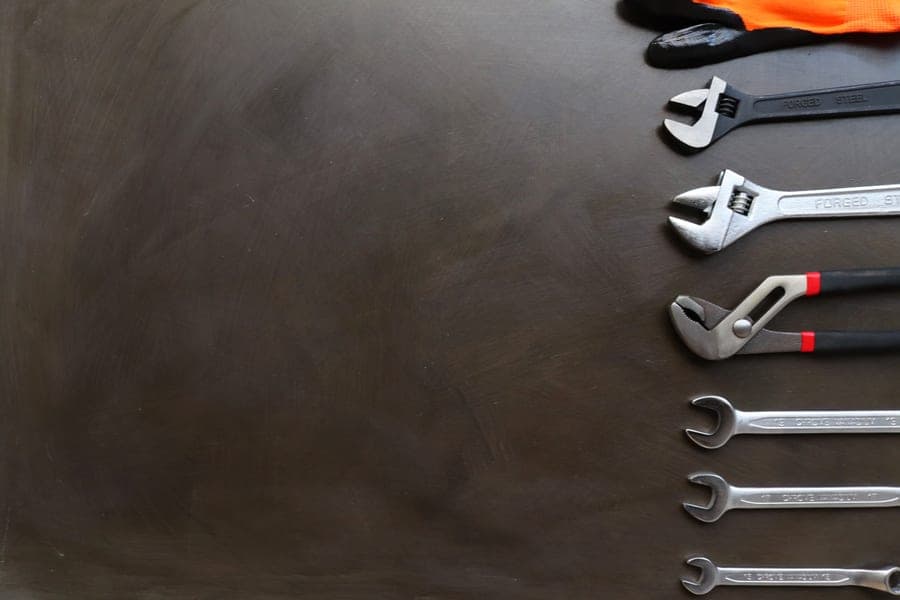
Photograph shows the product category, not this specific unit. We do not republish manufacturer product photography.
1. The tool you will need
RIDGID Model 1017 telescoping basin wrench
RIDGID · Best for any faucet removal or install
The one tool that decides whether a faucet swap is a two-hour job or a six-hour one. Faucet mounting nuts sit behind the sink where no normal wrench reaches; a basin wrench's spring-loaded head ratchets one-handed in that space. The telescoping shank is what gets you from a shallow vanity to a deep kitchen cabinet.
Published specifications
What works
- The 10-to-17-inch telescoping shank covers both a shallow bathroom vanity and a deep kitchen base cabinet
- One-handed ratcheting matters, because the other hand is holding a flashlight
- Alloy steel jaws grip a plastic mounting nut without crushing it
- The head locks at an angle, which is how you reach a nut behind a disposal
What does not
- A single-purpose tool that lives in a drawer between faucet jobs
- A badly corroded nut still needs penetrating oil and patience, not a better wrench
- No substitute for clearing the cabinet out before you start
Skip it if
Skip it if a plumber is fitting the faucet — they own one, and you would use yours perhaps twice a decade.
#ad Affiliate link · We publish no price; Amazon shows the current one
Raw specifications: RIDGID’s own page for the RIDGID Model 1017 telescoping basin wrench.

Photograph shows the product category, not this specific unit. We do not republish manufacturer product photography.
2. Best faucet for parts availability
Moen Arbor 7594
Moen · Best for deep pots and hard-water kitchens
The pull-down to buy if you want the taller arc and a finish that hides water spots. Its 8-1/4" spout height is about half an inch more clearance than the Leland, which is the difference between washing a stock pot and fighting one. The tradeoff is reach: 7-7/8" against 9-3/16", so it works closer to the back of the bowl.
Published specifications
What works
- The 8-1/4" spout height is genuine pot clearance, not decorative arc
- Power Boost concentrates the stream for filling and rinsing without raising the rated flow
- Spot Resist Stainless is the single most useful finish choice in a hard-water house
- Reflex docking has been in Moen's line long enough that replacement wands are easy to find
What does not
- Reach is 7-7/8", over an inch shorter than the Leland — on a wide double bowl you will notice
- Moen publishes no independent noise or durability measurement, and neither do we
- The spot-resist coating is a finish, not armor; abrasive cleaners still dull it
Skip it if
Skip it if you have a wide double-bowl sink and want one faucet to reach both drains comfortably — buy reach instead of height.
#ad Affiliate link · We publish no price; Amazon shows the current one
Raw specifications: Moen’s own page for the Moen Arbor 7594.

Photograph shows the product category, not this specific unit. We do not republish manufacturer product photography.
3. Best valve protection
Delta Leland 9178-AR-DST
Delta · Best for most kitchens, one or three holes
The pull-down we would fit in most kitchens, because the two parts that usually fail first on a pull-down are the two Delta engineered around: the docking mechanism and the valve. MagnaTite pulls the wand back into the spout with a magnet instead of relying on a friction collar, and Diamond Seal keeps water off the valve. It ships with a deck plate, so it covers a three-hole sink or mounts through one.
Published specifications
What works
- MagnaTite docking is a magnet, not a friction fit — a wand that stops seating is the most common pull-down complaint, and a magnet does not wear the way a plastic collar does
- Spout reach of 9-3/16" clears the far side of a standard 22-inch front-to-back sink
- Diamond Seal keeps water off the valve, which is what the lifetime warranty is really protecting
- Deck plate in the box, so a three-hole sink needs no extra part
What does not
- 1.8 gpm is higher than the 1.5 gpm most competitors now ship, which matters if your area caps flow rate
- Zinc body rather than brass — normal at this price, but this is not a forever faucet
- No independent lab publishes durability figures for this model, so we cannot tell you how the finish looks at year five
Skip it if
Skip it if your sink is a shallow bar sink: at 14-7/8" overall the arc will splash in a basin under about seven inches deep.
#ad Affiliate link · We publish no price; Amazon shows the current one
Raw specifications: Delta’s own page for the Delta Leland 9178-AR-DST.
What a replacement cartridge costs
For the major brands, a genuine cartridge is typically in the ten-to-fifty-dollar range, and manufacturers frequently supply one free under a limited lifetime warranty — that is what these warranties do in the overwhelming majority of claims. Aftermarket cartridges cost less and vary; for a ceramic-disc faucet in particular, the genuine part is worth the difference, because the ceramic tolerances are the reason the valve lasts.
Against that, a new mid-range faucet is a couple of hundred dollars plus an afternoon. So the honest calculation is: if the faucet body and finish are sound and the brand stocks parts, replace the cartridge. If the finish is failing, the spray head is scaled beyond cleaning and the docking has given up, the cartridge is not the problem you are solving.
When a cartridge is not the answer
- Water dripping from the base of the spout rather than the outlet — that is usually a spout O-ring, a cheaper and easier fix.
- A leak under the sink at the supply connection — that is a supply line or a compression fitting, not the valve.
- Weak flow rather than a drip — start at the aerator and the spray head, which scale up long before a valve wears.
- A faucet with no available parts. If the brand has no website and no parts channel, replacement is the only route, and that is the real cost of a cheap faucet.
What to take away
- Ceramic disc is the modern standard and rarely fails without grit in the supply.
- Identify by model number first, then by parts diagram, then by taking the old part to a supplier.
- Genuine cartridges for major brands are usually $10-$50, and are often supplied free under warranty.
- A drip from the spout base is an O-ring, not a cartridge — check where the water is coming from before ordering.
How we sourced this page
Every figure on this page came from one of the following. Where a manufacturer or an independent lab does not publish a number, we say so rather than estimate it.
Common questions
- How do I know what faucet cartridge I need?
- Find the faucet's model number first — under the spout, on the back of the body, or inside the escutcheon. If there is no number, identify the brand and match the handle against the manufacturer's published parts diagram. Failing both, remove the cartridge and take it to a plumbing supplier, which is the most reliable method of the three.
- How much does a faucet cartridge replacement cost?
- The part is typically $10 to $50 for a major brand, and manufacturers often supply one free under a limited lifetime warranty. A plumber's call-out is the larger cost, which is why this is one of the better DIY jobs: it is usually a hex key, a screwdriver and twenty minutes once the water is off.
- How long does a faucet cartridge last?
- A ceramic-disc cartridge can go well over a decade, and the usual cause of early failure is grit or sediment in the supply rather than wear. Rubber-sealed cartridges and compression washers have shorter lives because rubber hardens. Nobody publishes measured lifespans, so treat any specific number with suspicion.
- Can I use an aftermarket faucet cartridge?
- Often yes, and for a rubber-sealed cartridge the saving is reasonable. For ceramic disc valves we would buy genuine: the tight ceramic tolerances are exactly what makes the valve last, and that is the part an aftermarket copy is most likely to get wrong.
More in Kitchen Faucets
Nine times out of ten the faucet that fails you is the one that did not fit — wrong hole count, wrong reach, wrong finish for your water. Start with the measurements and the rest gets easy.
Read next
How to
Replace a faucet cartridge
Identify the cartridge, get the water off properly, and swap it — for single-handle and two-handle faucets.
Troubleshooting
Faucet leaking diagnosis
Four leak locations, four different causes, ranked by how common each one actually is.
Head to head
Moen vs Delta
Valve design, docking mechanism and spray-head cleaning are the three real differences. Quality is not one of them.
Guide
Kitchen faucet brands
Brands ranked on warranty terms and parts availability for discontinued models — the specs that decide repairability.
Best kitchen faucet
Best kitchen faucets
Five faucets covering the different jobs a kitchen faucet does, ranked on sourced specifications rather than brand.
Found something out of date, or a figure you can source better than we did? Tell us — corrections get read first. Our methodology explains how picks are made, and contact is one click away.