Kitchen Faucets
Faucet hole configurations, deck plates and hole sizes
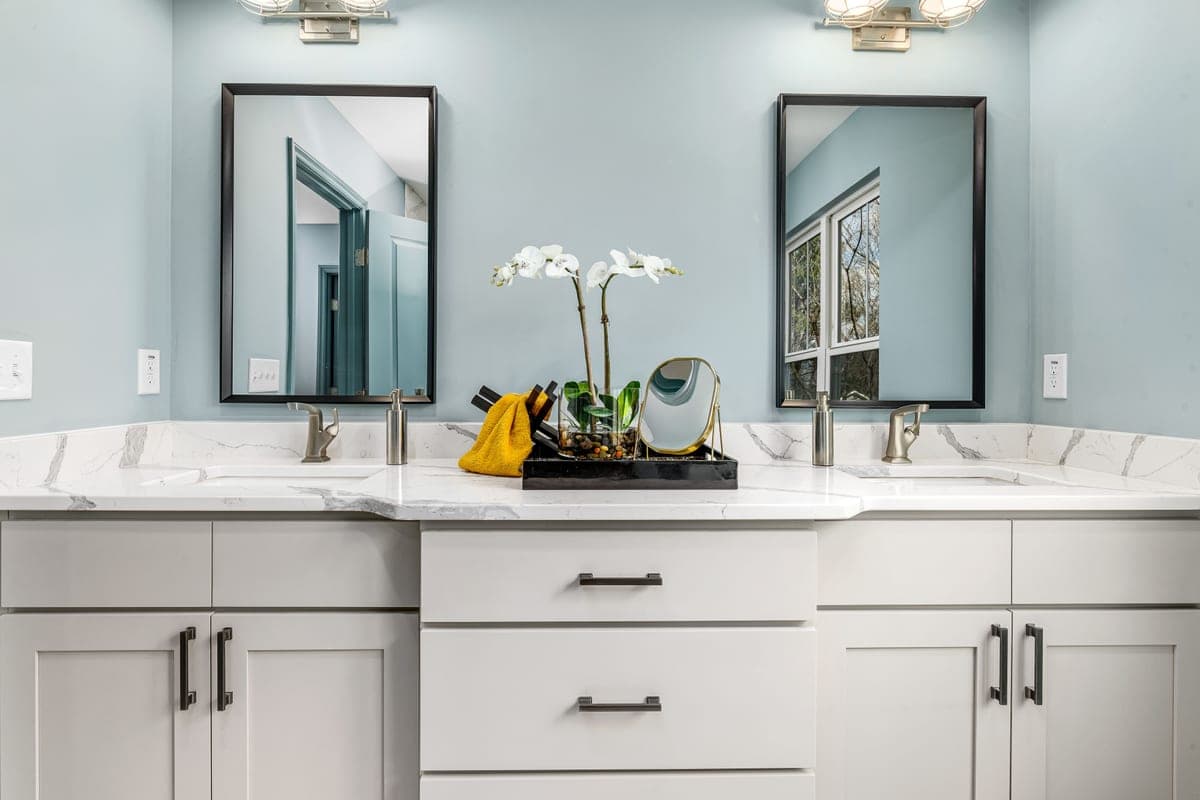
Your sink's drilling decides which faucets you can even consider. Count the holes, measure the centers, and most of the market disappears in ninety seconds.
Disclosure: we earn a commission if you buy through the Amazon links on this page, at no extra cost to you. Commission never decides a verdict or a ranking position — read our editorial policy and affiliate disclosure.
Short answer
A standard kitchen faucet hole is 1-3/8 inches in diameter, and sinks are drilled with one, two, three or four of them. A single-hole faucet fits a one-hole sink, or a three-hole sink using the deck plate that usually comes in the box. A three-hole widespread set cannot be fitted to a single-hole sink. Count and measure before you shop.
This is the specification that decides whether a faucet is even a candidate, and it is the one most people discover on install day. It takes ninety seconds to check: count the holes in the sink deck, and measure center to center between the outermost two.
What each pattern accepts
| Holes in the deck | What fits | What does not |
|---|---|---|
| One | Single-hole faucets of any type, with or without a deck plate | Widespread and bridge sets, side sprayers, soap dispensers — no hole left for them |
| Two | Bridge and widespread sets at the matching spacing; single-hole faucet plus one accessory | Three-hole centreset sets |
| Three at 4in centers | Centreset faucets; single-hole faucet with a deck plate covering all three | Widespread sets drilled for 8in centers |
| Three at 8in centers | Widespread and bridge sets; single-hole faucet with a long deck plate | Centreset faucets — the escutcheon will not span the holes |
| Four | Any of the above plus a soap dispenser, air switch or filtered-water tap | Nothing, really — four holes is the most flexible drilling there is |
The standard hole size, and why yours might differ
The industry standard is 1-3/8 inches, and most faucets specify a minimum deck opening of 1-3/8 with a maximum around 1-1/2. Some faucets require 1-1/2 inches, so check the installation sheet rather than assuming. If your existing holes are slightly small, a step bit will open stainless steel; if they are too large for a new faucet's base, a base plate or escutcheon covers the gap.
Deck plates: what they are and when you need one
A deck plate (also called an escutcheon) is a flat cover that sits under the faucet base and spans unused holes. Most single-hole kitchen faucets include one, because converting a three-hole sink to a single-hole faucet is the single most common kitchen faucet upgrade there is. Fit the plate with the gasket the manufacturer supplies, and do not silicone it down — you may want to remove it, and silicone under a metal plate on a stainless deck is remarkably hard to clean off.
The reverse adapter does not exist. There is no way to fit a widespread three-hole faucet to a single-hole sink, because two of its three components need holes that are not there.

Photograph shows the product category, not this specific unit. We do not republish manufacturer product photography.
1. Best for a three-hole sink
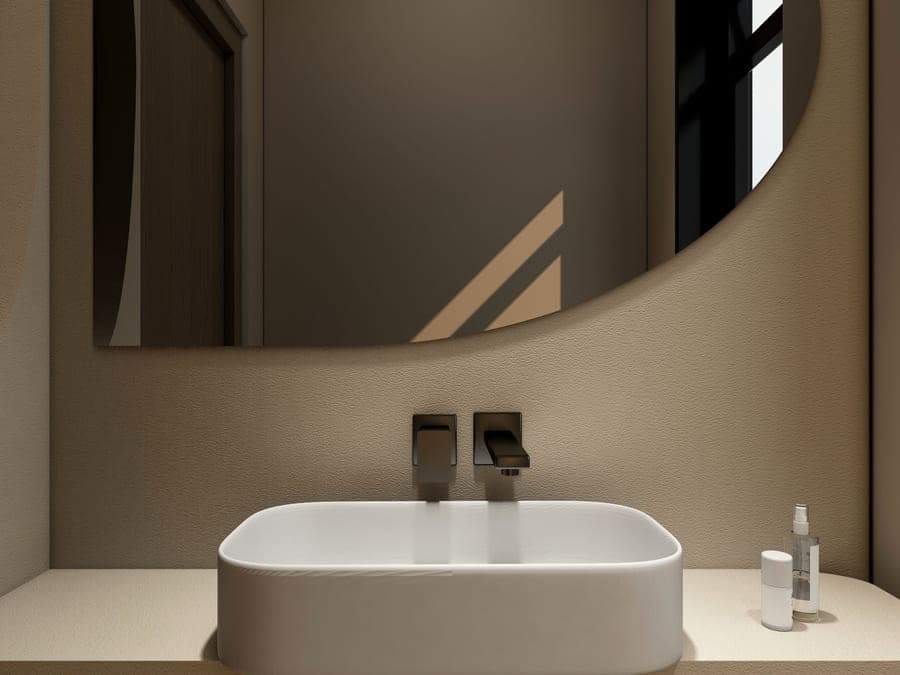
Delta Leland 9178-AR-DST
Delta · Best for most kitchens, one or three holes
The pull-down we would fit in most kitchens, because the two parts that usually fail first on a pull-down are the two Delta engineered around: the docking mechanism and the valve. MagnaTite pulls the wand back into the spout with a magnet instead of relying on a friction collar, and Diamond Seal keeps water off the valve. It ships with a deck plate, so it covers a three-hole sink or mounts through one.
Published specifications
What works
- MagnaTite docking is a magnet, not a friction fit — a wand that stops seating is the most common pull-down complaint, and a magnet does not wear the way a plastic collar does
- Spout reach of 9-3/16" clears the far side of a standard 22-inch front-to-back sink
- Diamond Seal keeps water off the valve, which is what the lifetime warranty is really protecting
- Deck plate in the box, so a three-hole sink needs no extra part
What does not
- 1.8 gpm is higher than the 1.5 gpm most competitors now ship, which matters if your area caps flow rate
- Zinc body rather than brass — normal at this price, but this is not a forever faucet
- No independent lab publishes durability figures for this model, so we cannot tell you how the finish looks at year five
Skip it if
Skip it if your sink is a shallow bar sink: at 14-7/8" overall the arc will splash in a basin under about seven inches deep.
#ad Affiliate link · We publish no price; Amazon shows the current one
Raw specifications: Delta’s own page for the Delta Leland 9178-AR-DST.
Photograph shows the product category, not this specific unit. We do not republish manufacturer product photography.
2. Best either-way option
Moen Arbor 7594
Moen · Best for deep pots and hard-water kitchens
The pull-down to buy if you want the taller arc and a finish that hides water spots. Its 8-1/4" spout height is about half an inch more clearance than the Leland, which is the difference between washing a stock pot and fighting one. The tradeoff is reach: 7-7/8" against 9-3/16", so it works closer to the back of the bowl.
Published specifications
What works
- The 8-1/4" spout height is genuine pot clearance, not decorative arc
- Power Boost concentrates the stream for filling and rinsing without raising the rated flow
- Spot Resist Stainless is the single most useful finish choice in a hard-water house
- Reflex docking has been in Moen's line long enough that replacement wands are easy to find
What does not
- Reach is 7-7/8", over an inch shorter than the Leland — on a wide double bowl you will notice
- Moen publishes no independent noise or durability measurement, and neither do we
- The spot-resist coating is a finish, not armor; abrasive cleaners still dull it
Skip it if
Skip it if you have a wide double-bowl sink and want one faucet to reach both drains comfortably — buy reach instead of height.
#ad Affiliate link · We publish no price; Amazon shows the current one
Raw specifications: Moen’s own page for the Moen Arbor 7594.
Photograph shows the product category, not this specific unit. We do not republish manufacturer product photography.
3. Best for a two-hole widespread sink
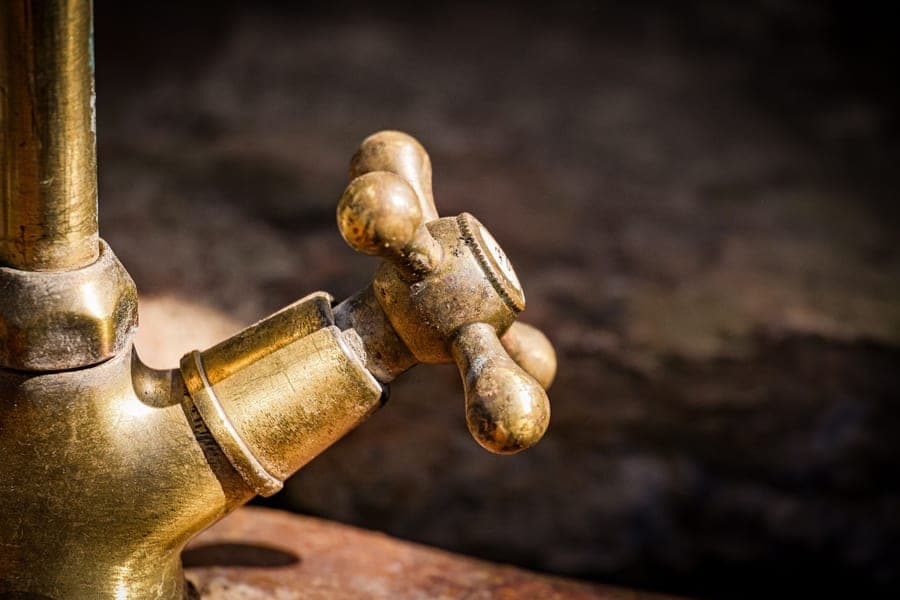
Kohler Artifacts K-76519-4 bridge faucet
Kohler · Best for period kitchens with two deck holes
If you want a bridge faucet, buy one from a manufacturer that will still stock parts for it in ten years, because a bridge faucet is a two-valve assembly and the valves are what ages. This is a genuine two-hole bridge with a separate side sprayer, which is how the configuration is meant to work — not a single-hole faucet with a decorative crossbar.
Published specifications
What works
- A true bridge: the horizontal tube is the plumbing, which is the whole point of the style
- Two-hole spacing works on sinks drilled for a widespread set
- Kohler parts availability is the strongest argument for buying a bridge faucet from Kohler
- The side sprayer keeps spray duty off the spout, so the spout stays simple
What does not
- Two valves means two cartridges to replace instead of one
- Bridge faucets are the hardest style to clean around — the crossbar traps splash
- Kohler does not publish a flow rate for every finish of this model, so we do not state one
Skip it if
Skip it if your sink is drilled single-hole, or if you want a pull-down wand — bridge faucets and pull-down wands are mutually exclusive.
#ad Affiliate link · We publish no price; Amazon shows the current one
Raw specifications: Kohler’s own page for the Kohler Artifacts K-76519-4 bridge faucet.
Adding a hole: stainless, granite and quartz
Drilling a new hole in a stainless steel sink is a genuine DIY job: a step bit or a hole saw designed for metal, cutting oil, slow speed, firm pressure, and a deburring pass afterwards. Twenty minutes and the main risk is a wandering pilot.
Using spare holes well
If you are converting a three-hole sink to a single-hole faucet, consider using the spare holes rather than covering them. The two best uses: an air switch for a garbage disposal, which is the correct solution when there is no wall switch, and a dedicated filtered-water tap fed by an under-sink filter. Both are far easier when the hole already exists, and both are why a four-hole sink is quietly the most useful drilling you can own.
A soap dispenser is the third option, with one caveat: check it refills from above the deck. The older designs require you to lie under the cabinet and unscrew the reservoir, which is why so many of them sit empty.
What to take away
- 1-3/8 inches is the standard hole; check the faucet's installation sheet for its minimum and maximum.
- A single-hole faucet fits a three-hole sink with a deck plate. A widespread set cannot fit a single-hole sink at all.
- Measure center-to-center spacing as well as counting holes — 4-inch and 8-inch centers accept different faucets.
- Drilling stainless is a DIY job. Drilling granite or quartz is a fabricator's job, and a chip is not repairable.
How we sourced this page
Every figure on this page came from one of the following. Where a manufacturer or an independent lab does not publish a number, we say so rather than estimate it.
Common questions
- What is the standard faucet hole size for a kitchen sink?
- 1-3/8 inches in diameter. Most faucets specify a 1-3/8 inch minimum with a maximum around 1-1/2, so a slightly oversized hole is usually fine and covered by the base or escutcheon. Always check the specific faucet's installation sheet, because a few models require 1-1/2.
- Can I use a 1-hole faucet on a 3-hole sink?
- Yes, with a deck plate — and most single-hole kitchen faucets include one for exactly this purpose. It sits under the faucet base and covers the two unused holes. This is the most common faucet upgrade there is.
- Can I drill an extra hole in my sink?
- In stainless steel, yes: a step bit or metal hole saw, cutting oil, slow speed and a deburring pass. In granite or quartz, no — that needs a diamond core bit with water cooling and is a fabricator's job, because a crack means a new countertop rather than a repair.
- What is the difference between 4-inch and 8-inch centers?
- The distance between the centers of the outer two holes. Four-inch centers take a centreset faucet where the handles and spout are on one base; eight-inch centers take a widespread or bridge set where the components are separate. They are not interchangeable, and the deck plate for one will not span the other.
More in Kitchen Faucets
Nine times out of ten the faucet that fails you is the one that did not fit — wrong hole count, wrong reach, wrong finish for your water. Start with the measurements and the rest gets easy.
Read next

Guide
Height and reach guide
Spout height, reach and overall height are three different numbers. Here is which one decides what, and how to measure yours.
Best kitchen faucet
Best kitchen faucets
Five faucets covering the different jobs a kitchen faucet does, ranked on sourced specifications rather than brand.
Best bridge faucet
Bridge faucets
How a bridge faucet is plumbed, why it needs two deck holes, and what two valves mean for maintenance in ten years.
Best kitchen sink
Best kitchen sinks
Five sinks across the four materials, compared on sourced dimensions, cabinet requirements and how each one fails.

How to
Install a kitchen faucet
Ten steps, branched by hole configuration, with the tools and parts list up front and the when-to-stop line stated plainly.
Found something out of date, or a figure you can source better than we did? Tell us — corrections get read first. Our methodology explains how picks are made, and contact is one click away.