Kitchen Faucets
Touchless vs manual kitchen faucet
One genuine benefit, one genuine liability, and a decision that comes down to how often you handle raw meat.
Disclosure: we earn a commission if you buy through the Amazon links on this page, at no extra cost to you. Commission never decides a verdict or a ranking position — read our editorial policy and affiliate disclosure.
How we assessed these: specifications for both models come from the manufacturers' own pages, linked at each figure. We have not tested either faucet, and no independent lab publishes sensor-reliability data for kitchen faucets — so this page reasons from published specs and stops where the evidence does.
Short answer
Buy touchless if you regularly handle raw meat or bake, because starting water without touching a handle is a genuine hygiene gain. Buy manual if you cook rarely or want the faucet to be serviceable in fifteen years with a twelve-dollar cartridge. A touchless faucet adds electronics to a wet cabinet; that is the whole tradeoff.
This comparison is unusually clean because you can buy the same faucet both ways. The Moen Arbor exists as a manual single-handle pull-down and as a MotionSense Wave touchless model with the same spout geometry, so the comparison is genuinely apples to apples: identical body, identical reach and height, one with a sensor and one without.
What the sensor actually buys you
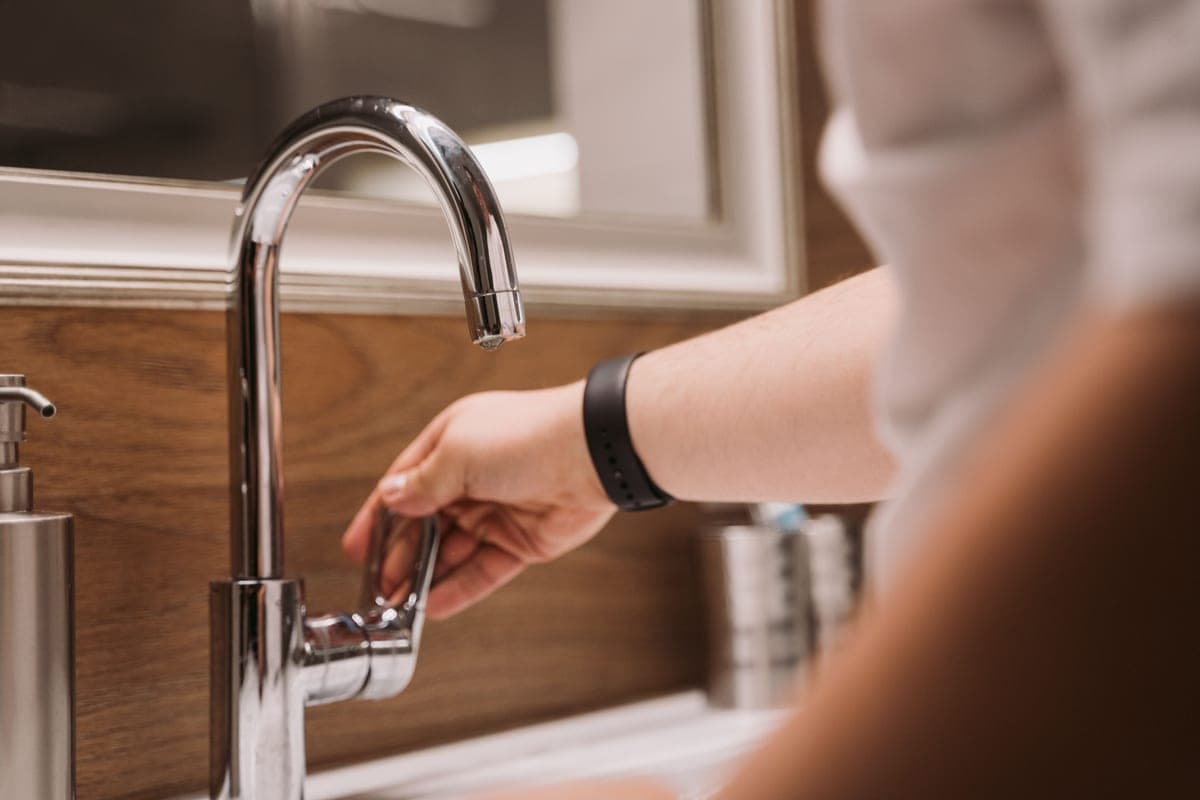
One thing, and it is worth having: you can start and stop water without touching the faucet. That matters specifically when your hands are contaminated or covered — raw chicken, raw egg, flour, garden soil, engine grease. In those moments a manual faucet forces a choice between touching a handle you will then have to clean, or using a wrist or elbow, which is how handles get knocked out of adjustment.
What it does not buy you is temperature control. On both models the handle still sets the mix, so a wave gives you water at whatever the handle was left at. If you want temperature without touching, that is a different and considerably more expensive product category.
What the sensor costs you
- Batteries, on a battery model — six AA cells that eventually need changing. Mains models trade that for needing an unswitched GFCI outlet under the sink.
- A sensor board and a solenoid valve in a damp cabinet. These are components a manual faucet does not have, and when they fail the manufacturer's answer is a module rather than a twelve-dollar cartridge.
- A long-term parts question. Ceramic cartridges are stocked for decades; electronics modules for a discontinued sensor faucet are a different proposition, and no manufacturer publishes a commitment on that.
- False activation, if you buy a dual-sensor model. This is avoidable — buy single-sensor — but it is the most common complaint about the category.
| Touchless | Manual | |
|---|---|---|
| Start water with dirty hands | Yes, without contact | No — handle contact required |
| Sets temperature hands-free | No, the handle still does that | No |
| Needs power | Batteries or a GFCI outlet under the sink | No |
| Parts that can fail | Cartridge, sensor, solenoid, battery pack | Cartridge |
| Works if the electronics die | Yes, as a manual faucet | Not applicable |
| Long-term serviceability | Cartridge yes; electronics module uncertain | Excellent — cartridges stocked for decades |
Quick picks
Tap any row to jump to the full write-up. There are no scores here because we run no test lab — how picks are chosen is published in full on our methodology page.
| # | Product | Best for | Our read | Price |
|---|---|---|---|---|
| 1 | 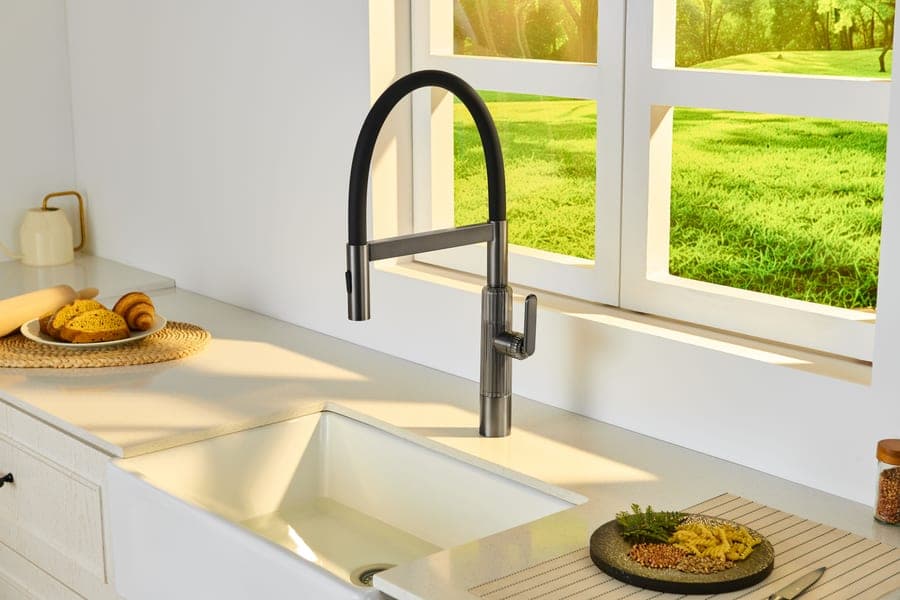 Moen Arbor MotionSense Wave 7594EW Best touchless | Raw-meat prep and messy hands | Single sensor, battery power, manual handle still works | Check price on Amazon #ad Affiliate link · We publish no price; Amazon shows the current one |
| 2 | 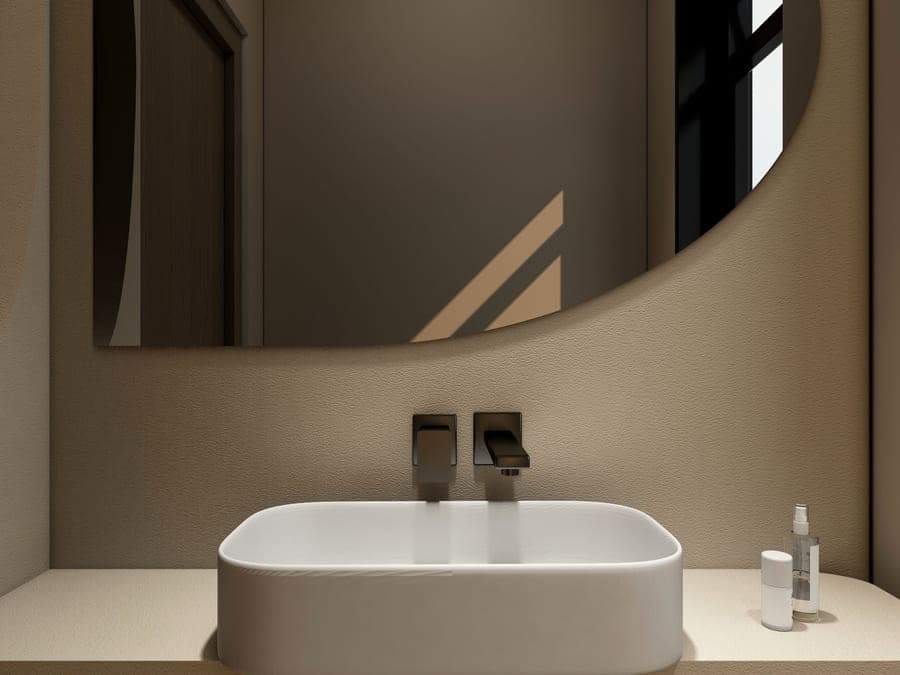 Moen Arbor 7594 The same faucet, manual | Deep pots and hard-water kitchens | No electronics, no batteries, one cartridge to replace | Check price on Amazon #ad Affiliate link · We publish no price; Amazon shows the current one |
The fallback is the most important specification
Any touchless faucet worth buying still works as a manual faucet. That single property turns an electronics failure from an emergency into an annoyance, and it is the reason we are comfortable recommending a sensor faucet at all. Check it before you buy: if a product's documentation does not clearly state that the handle operates independently of the sensor, treat that silence as the answer and buy something else.
Who should buy which
Touchless, if you cook with raw meat weekly, if you bake and deal with sticky hands, if anyone in the house has mobility or grip difficulty that makes a lever awkward, or if there are children who wash hands more willingly when it is a game. Manual, if you cook occasionally, if you want the smallest number of failure points over the longest period, or if the kitchen is a rental and the next occupant inherits whatever you fit.
Photograph shows the product category, not this specific unit. We do not republish manufacturer product photography.
1. Best touchless
Moen Arbor MotionSense Wave 7594EW
Moen · Best for raw-meat prep and messy hands
The honest touchless pick, because it is a single-sensor faucet rather than a dual-sensor one. Dual-sensor faucets trigger when you reach across the deck; a single wave sensor above the spout does not. It runs on six AA batteries, so there is no electrician and no outlet needed, and the manual handle still works if the batteries die.
Published specifications
What works
- Single sensor, so reaching for a dish towel does not start the water
- Battery power means it installs like an ordinary faucet — no outlet, no electrician
- The manual handle still works, so a dead battery is an inconvenience rather than a failure
- Same Arbor body as the manual 7594, so the spout geometry is a known quantity
What does not
- Batteries are a consumable a manual faucet does not have
- Sensor faucets put electronics in a wet environment, which is more to fail than a cartridge
- Moen publishes no battery-life figure we can quote, so we will not estimate one
Skip it if
Skip it if you cook rarely and mostly want a faucet that still works in fifteen years with a $12 cartridge — buy the manual Arbor.
#ad Affiliate link · We publish no price; Amazon shows the current one
Raw specifications: Moen’s own page for the Moen Arbor MotionSense Wave 7594EW.
Photograph shows the product category, not this specific unit. We do not republish manufacturer product photography.
2. The same faucet, manual
Moen Arbor 7594
Moen · Best for deep pots and hard-water kitchens
The pull-down to buy if you want the taller arc and a finish that hides water spots. Its 8-1/4" spout height is about half an inch more clearance than the Leland, which is the difference between washing a stock pot and fighting one. The tradeoff is reach: 7-7/8" against 9-3/16", so it works closer to the back of the bowl.
Published specifications
What works
- The 8-1/4" spout height is genuine pot clearance, not decorative arc
- Power Boost concentrates the stream for filling and rinsing without raising the rated flow
- Spot Resist Stainless is the single most useful finish choice in a hard-water house
- Reflex docking has been in Moen's line long enough that replacement wands are easy to find
What does not
- Reach is 7-7/8", over an inch shorter than the Leland — on a wide double bowl you will notice
- Moen publishes no independent noise or durability measurement, and neither do we
- The spot-resist coating is a finish, not armor; abrasive cleaners still dull it
Skip it if
Skip it if you have a wide double-bowl sink and want one faucet to reach both drains comfortably — buy reach instead of height.
#ad Affiliate link · We publish no price; Amazon shows the current one
Raw specifications: Moen’s own page for the Moen Arbor 7594.
What to take away
- The hygiene benefit is real and specific: starting water without contact when your hands are contaminated.
- Touchless does not control temperature — the handle still decides what a wave delivers.
- Buy single-sensor. Dual-sensor models cause the false-activation complaints.
- Confirm the manual handle works independently. That is the failure plan, and it is not optional.
How we sourced this page
Every figure on this page came from one of the following. Where a manufacturer or an independent lab does not publish a number, we say so rather than estimate it.
Common questions
- Are touchless faucets more hygienic?
- For the specific moment when your hands are contaminated and you need water, yes — you avoid transferring anything to a handle you will later touch clean. Over a whole day the benefit is narrower than the marketing suggests, because you still touch the handle to set temperature.
- What happens if a touchless faucet breaks?
- On any model worth buying, the manual handle keeps working, so you have a normal faucet until the part arrives. That is why we treat the manual fallback as the most important specification in the category, and why a product that does not clearly state it should be avoided.
- Do touchless faucets waste water?
- Sensor faucets typically run for a fixed period or until you wave again, and several have an auto-shutoff. In practice most people use less, because the water runs only while it is needed rather than through the whole washing-up process. Neither claim is independently measured for kitchen faucets, so treat both directions with caution.
- Is a touchless faucet worth the extra cost?
- If you handle raw meat or bake regularly, yes. If you cook rarely, you are paying for electronics that add failure points without addressing a problem you have — and the manual version of the same faucet will outlive it.
More in Kitchen Faucets
Nine times out of ten the faucet that fails you is the one that did not fit — wrong hole count, wrong reach, wrong finish for your water. Start with the measurements and the rest gets easy.
Read next
Best touchless faucet
Best touchless faucets
Touchless faucets compared on sensor arrangement and power source — the two specs that decide whether hands-free is useful.
Best kitchen faucet
Best kitchen faucets
Five faucets covering the different jobs a kitchen faucet does, ranked on sourced specifications rather than brand.
Guide
Faucet cartridges explained
The four valve types, how to identify yours without guessing, and what a replacement cartridge really costs.
Guide
Kitchen faucet brands
Brands ranked on warranty terms and parts availability for discontinued models — the specs that decide repairability.

How to
Install a kitchen faucet
Ten steps, branched by hole configuration, with the tools and parts list up front and the when-to-stop line stated plainly.
Found something out of date, or a figure you can source better than we did? Tell us — corrections get read first. Our methodology explains how picks are made, and contact is one click away.