Kitchen Sinks
Fireclay vs cast iron kitchen sinks
From two feet away they look identical. One is a ceramic body with a glaze fired into it; the other is a metal casting with enamel fused to the surface. That difference decides the weight, the repair and the chip.
Disclosure: we earn a commission if you buy through the Amazon links on this page, at no extra cost to you. Commission never decides a verdict or a ranking position — read our editorial policy and affiliate disclosure.
How we assessed these: this comparison uses each manufacturer's published specifications for the named models, linked at every figure, plus the material properties each company states in writing. We run no laboratory, so there is no chip-resistance or thermal-shock testing here from us, and no independent lab publishes a comparison of these two materials either. Where that data would be needed, we say so instead of filling the gap.
Short answer
Buy fireclay if you want the farmhouse look with less weight for the cabinet to carry and a surface that cannot rust where it chips. Buy enameled cast iron if you want the heavier, more impact-tolerant sink and a self-trimming apron that forgives a rough cabinet cut. Both are ceramic-surfaced, both chip under a dropped pan, and neither can be repaired the way a scratch in stainless can.
This is one of the few sink questions where the two options genuinely look the same. Both are white, both are glossy, both come as apron-front farmhouse sinks, and both are sold on the same photograph. The sales copy is interchangeable too — every listing for either material promises durability, heat resistance and a lifetime.
What is different is what sits under the shiny surface, and that is not a detail. It determines how much the sink weighs, what the cabinet underneath has to be built to carry, what happens at a chip, and how precise the carpentry has to be.
What each material actually is
Fireclay is a ceramic. Clay is shaped, a glaze is applied, and the whole thing is fired at very high temperature — BOCCHI publishes temperatures up to 2000°F for its Classico range — which vitrifies the body and fuses the glaze into it rather than onto it. The result is a single non-porous ceramic object. BOCCHI states the glazed surface resists stains, scratches and thermal shock.
Enameled cast iron is a metal casting with a porcelain enamel coating fired onto its surface. The strength comes from the iron; the finish and the non-porous surface come from the enamel. Kohler's Whitehaven range is this construction, and the material is why the sink can be cast with features a ceramic cannot easily be given — including the self-trimming apron and the 2-degree basin slope Kohler publishes on that range.
Difference one: weight, and what it costs you
Cast iron is the heavier material, and in a farmhouse installation weight is not a specification you can shrug at — an apron-front sink is carried by the cabinet, not by the countertop. That means a support frame inside the base unit, and in practice it means the real installation cost of a cast-iron farmhouse sink is carpentry rather than plumbing.
We are not going to print a pounds figure for either sink, because neither maker publishes a unit weight for the models here — Kohler does not state one on the Whitehaven range page. What is safe to say, and useful, is the direction: an equivalent fireclay sink is lighter than an equivalent enameled cast-iron one, which simplifies the support frame, and both are heavier than any stainless sink of the same size. If you want an actual number to build a frame to, use your retailer's published shipping weight for the specific model, which is the only figure available.
It is also a two-person lift either way. If you are working alone, that is a reason to choose the drop-in route and a stainless sink instead — the four we rank on the best drop-in kitchen sinks page all rest their weight on the countertop rim rather than on the cabinet.
Difference two: what happens at a chip
Both surfaces chip. A dropped cast-iron pan, a ceramic mug landing on the rim, a wrench off the counter — these are the realistic ways either sink gets damaged, and no glaze or enamel survives a hard point impact. The difference is what is underneath when it happens.
On a fireclay sink the exposed material is the ceramic body: the chip is visible, it is not repairable in any satisfying way, and it stays exactly as it is. On an enameled cast-iron sink the exposed material is iron, which oxidizes in the presence of water — so a chip left bare will stain and work outward from the edge. That makes a chip in cast iron more urgent to address than a chip in fireclay, even though the fireclay chip is the more permanent one.
The practical defense is the same for both and it costs very little: use a bottom grid. The BOCCHI Classico ships with a stainless bottom grid and a chrome strainer, which is the single most useful thing in the box, because the grid is what stands between a dropped pan and the glaze. If your chosen sink does not include one, buy one with it.
| Specification | BOCCHI Classico 30" (fireclay) | Kohler Whitehaven K-6489 (cast iron) |
|---|---|---|
| Material | Fireclay, fired up to 2000°F | Enameled cast iron |
| Overall size | Not published in comparable form | 35-11/16" x 21-9/16" x 9-5/8" |
| Basin | Not published in comparable form | 30-3/4" x 18-1/16" x 9" deep |
| Minimum cabinet | 33" | 36" |
| Basin slope | Not published | 2 degrees toward an offset drain |
| Drain connection | Takes a standard disposal flange, no extension needed | 1-1/2" |
| In the box | Stainless bottom grid and chrome strainer | Not published on the range page |
| Warranty | Limited lifetime | Kohler limited lifetime |
The two sinks are different sizes and are not direct substitutes — this table compares what each maker publishes, not like-for-like dimensions. Cells reading "not published" are exactly that: we did not find the figure on the manufacturer's page and will not estimate it.
Quick picks
Tap any row to jump to the full write-up. There are no scores here because we run no test lab — how picks are chosen is published in full on our methodology page.
| # | Product | Best for | Our read | Price |
|---|---|---|---|---|
| 1 |  BOCCHI Classico 30-inch fireclay farmhouse sink The fireclay to buy | Farmhouse style, lighter than cast iron | Non-porous fired glaze, 33-inch cabinet, grid and strainer included | Check price on Amazon #ad Affiliate link · We publish no price; Amazon shows the current one |
| 2 |  Kohler Whitehaven K-6489 The cast iron to buy | Farmhouse looks without a custom cabinet | Self-trimming apron, 9-inch basin, 2-degree slope to the drain | Check price on Amazon #ad Affiliate link · We publish no price; Amazon shows the current one |
Difference three: how precise the cabinet work has to be
This is the difference almost nobody mentions and it decides whether the job is a weekend or a trade call. A farmhouse sink needs the front of the base cabinet cut away so the apron can show, and the question is how accurate that cut has to be.
Kohler's Whitehaven is specified as self-trimming: the apron overhangs the cabinet face, so the cut behind it does not have to be neat — it only has to be smaller than the apron. That turns a cabinetmaker's fit into a rough cut with a jigsaw. Fireclay sinks are also hand-made, and BOCCHI, like most fireclay makers, notes dimensional variation batch to batch, which means you cut the cabinet to the sink you actually received rather than to the catalog dimensions. Both are manageable. The cast-iron one is more forgiving; the fireclay one demands that you measure the object in front of you.
Our farmhouse sinks page covers the cabinet work itself in detail, including the support frame, and is worth reading before you order either material.
Heat, stains and everyday living
Both materials tolerate heat far better than a granite composite sink does, and that is a genuine advantage of the whole ceramic-surfaced category: a hot pan set down in the basin is not the hazard it is in a composite sink. Neither manufacturer publishes a temperature limit, so we will not quote one.
On staining, both surfaces are non-porous when intact, which means tea, turmeric and red wine sit on top rather than soaking in. Both will mark from a cast-iron pan left wet in the basin — that is iron transfer onto the glaze, not a stain in it, and it comes off. What takes the shine off either material permanently is abrasive cleaner and a scouring pad, which is the same advice we give for every finish on this site.
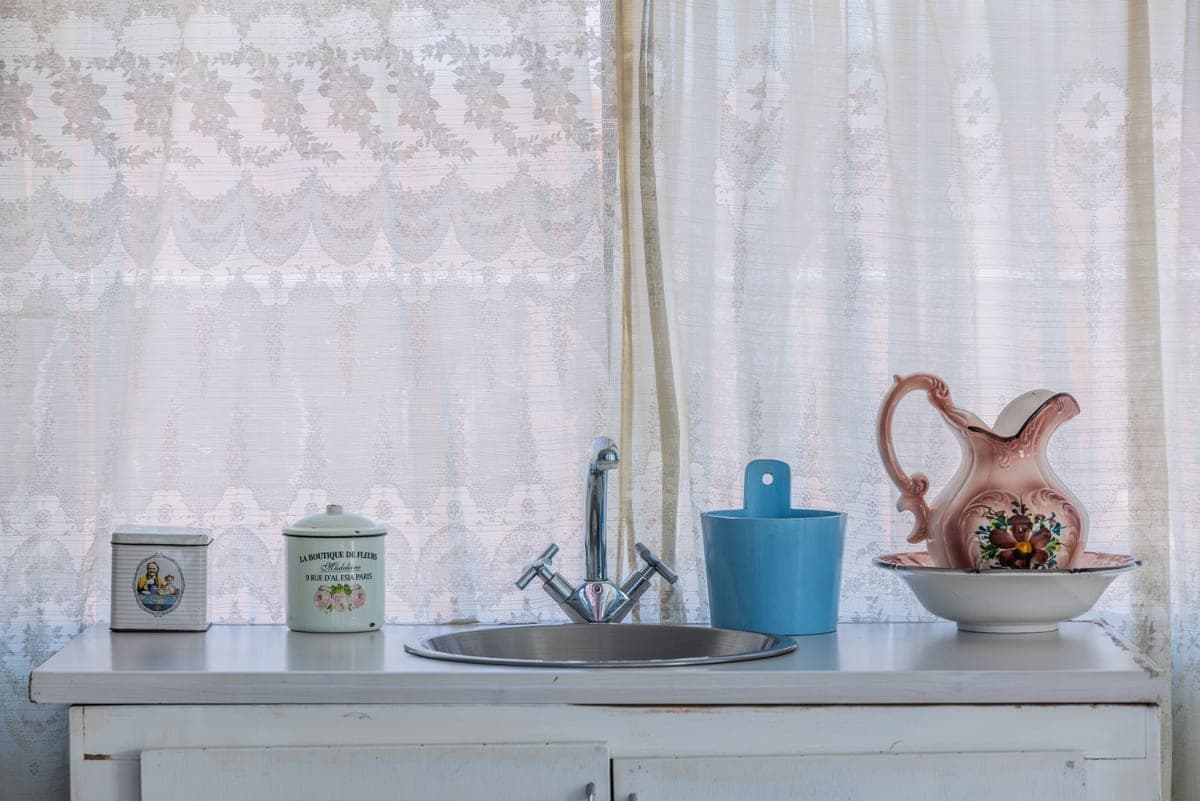
Photograph shows the product category, not this specific unit. We do not republish manufacturer product photography.
1. The fireclay to buy
BOCCHI Classico 30-inch fireclay farmhouse sink
BOCCHI · Best for farmhouse style, lighter than cast iron
Fireclay's argument against cast iron is the surface: the glaze is fired onto clay at very high temperature and is non-porous, rather than an enamel layer bonded to metal. This one ships with the bottom grid and strainer, and needs no flange extension for a disposal — a small detail that saves a trip to the store on install day.
Published specifications
What works
- Non-porous glaze, so staining is a cleaning problem rather than a permanent one
- Lighter than an equivalent enameled cast-iron sink, which simplifies cabinet support
- Grid and strainer in the box — the grid is what protects the glaze from dropped cast iron
- Takes a standard disposal flange without an extension kit
What does not
- Fireclay is a ceramic: a hard impact chips it, and a chip is not repairable the way a scratch in stainless is
- Hand-made dimensions vary slightly batch to batch, so cut the cabinet to the sink you received
- No independent lab publishes chip-resistance testing for fireclay sinks, so the material claims here are the manufacturer's
Skip it if
Skip it if your household is hard on a sink — dropped pots and ceramic do not mix. Choose 16-gauge stainless instead.
#ad Affiliate link · We publish no price; Amazon shows the current one
Photograph shows the product category, not this specific unit. We do not republish manufacturer product photography.
2. The cast iron to buy
Kohler Whitehaven K-6489
Kohler · Best for farmhouse looks without a custom cabinet
The enameled cast-iron farmhouse sink to buy, mainly for one structural reason: the self-trimming apron overhangs the cabinet face, so installation is a rough cut rather than a cabinetmaker's fit. That detail is the difference between a weekend job and a trade job. It is also heavy enough that the cabinet needs real support.
Published specifications
What works
- Self-trimming apron means a rough cabinet cut, not a precision one
- Enameled cast iron resists chipping, cracking and heat in a way composite does not
- The 2-degree slope and offset drain genuinely reduce standing water
- Kohler stocks matching drains and accessories, so the sink does not orphan
What does not
- Cast iron is heavy — the cabinet needs a proper support frame, and that is the real installation cost
- Enamel dulls under abrasive cleaners, and a dropped cast pan will chip it
- Kohler does not publish a unit weight on the range page, so plan support using your retailer's shipping weight
Skip it if
Skip it if you are installing alone, or over an existing base cabinet you cannot reinforce. Weight decides this one, not looks.
#ad Affiliate link · We publish no price; Amazon shows the current one
Raw specifications: Kohler’s own page for the Kohler Whitehaven K-6489.
The tiebreakers, in order
- If the base cabinet is existing and you cannot easily reinforce it, choose fireclay. Weight is the first constraint, not the last.
- If the cabinet cut has to be rough-and-ready, choose the self-trimming cast-iron apron. It hides the carpentry.
- If chips worry you more than anything, understand the trade: fireclay chips are permanent but inert, cast-iron chips expose iron and need attention.
- If you want the deeper basin of the two models here, that is the Whitehaven at 9 inches — and check the clearance to your trap arm before you commit to it.
- If you are fitting a garbage disposal, BOCCHI publishes that the Classico needs no flange extension. For a thick ceramic sink that is not a given, so check it on whatever you buy.
- If you are installing alone, buy neither. Buy stainless and keep your back.
Where this sits against the rest of the category: fireclay and cast iron are the two premium ceramic answers, granite composite is the stain-hiding modern answer, and stainless is the forgiving one. All five materials, and how each one fails, are compared on our kitchen sink materials page. The single-material detail pages — fireclay sinks and cast iron kitchen sinks — go deeper on each one than a head-to-head sensibly can.
What to take away
- Fireclay is a fired ceramic body with the glaze fused into it. Enameled cast iron is a metal casting with porcelain enamel fired onto the surface.
- Cast iron is the heavier material, so the base cabinet and its support frame are the real installation cost.
- Both chip. A fireclay chip is permanent but inert; a cast-iron chip exposes iron that will oxidize if left bare.
- A bottom grid is the cheapest protection for either surface. BOCCHI includes one with the Classico.
- Kohler's self-trimming apron forgives a rough cabinet cut; fireclay sinks vary batch to batch, so you cut to the sink you received.
- Neither maker publishes a unit weight or a temperature limit for these models, so neither figure appears on this page.
How we sourced this page
Every figure on this page came from one of the following. Where a manufacturer or an independent lab does not publish a number, we say so rather than estimate it.
Common questions
- Is fireclay or cast iron better for a kitchen sink?
- Neither is better overall. Fireclay is lighter, which simplifies the cabinet support, and its chips do not rust because the body is ceramic throughout. Enameled cast iron is heavier and more impact-tolerant, and Kohler's self-trimming apron makes the cabinet cut much more forgiving. Choose on weight and carpentry, not on looks, because the two are visually almost identical.
- Do fireclay sinks chip more easily than cast iron?
- No independent lab publishes chip-resistance testing for either material, so we will not rank them on it. Both are ceramic-surfaced and both chip under a hard point impact. The meaningful difference is what the chip exposes: ceramic in a fireclay sink, iron in an enameled cast-iron one.
- Can a chipped enamel or fireclay sink be repaired?
- Not invisibly. Touch-up kits exist for enamel and will seal the exposed iron, which is worth doing on a cast-iron sink to stop the damage spreading, but the repair is visible. A fireclay chip is essentially permanent. This is the main practical argument for a stainless sink in a hard-used kitchen.
- How much does a cast iron farmhouse sink weigh?
- Kohler does not publish a unit weight on the Whitehaven range page, so we are not going to state one. Use your retailer's shipping weight for the exact model number when you size the support frame, and plan for a two-person lift regardless of material.
- Will a garbage disposal fit a fireclay or cast iron sink?
- Usually, but check the drain opening and the sink's thickness. A thick-walled ceramic sink can be deep enough at the drain that a standard disposal flange cannot reach through, which needs an extension kit. BOCCHI publishes that the Classico needs no extension. If the documentation is silent, measure before install day.
- Which material is quieter?
- Both are quieter than an undamped stainless sink, because mass does the work that sound pads do on steel, and neither maker publishes a noise figure. We have not measured either, so this is a statement about the materials rather than a ranking of the two models.
More in Kitchen Sinks
Three specifications settle almost every kitchen sink question: how thick the steel is, how it meets the counter, and what it is made of. Get those right and brand barely matters.
Read next
Guide
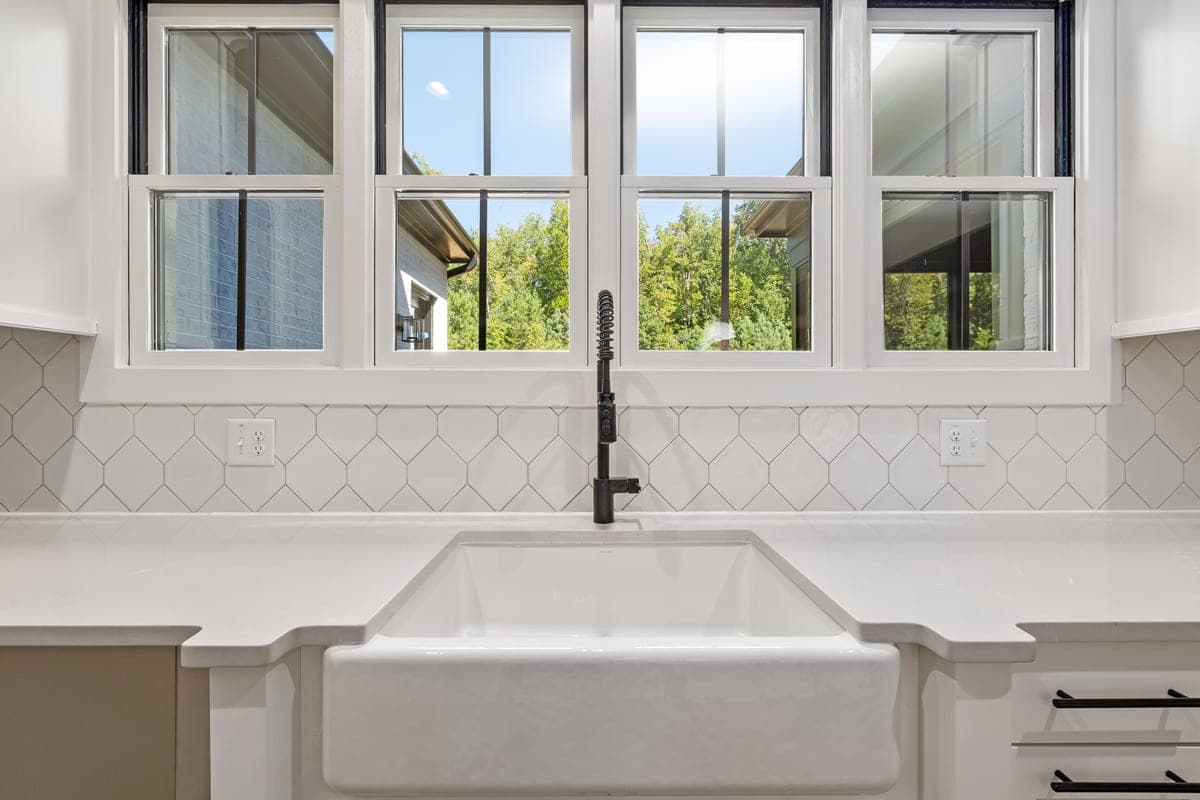
Fireclay sinks
How fireclay is made, what the glaze does, whether it chips, and how it stacks up against cast iron and stainless.

Guide
Cast iron sinks
What enameled cast iron is good at, the cabinet support it demands, and whether refinishing an old one is ever worth it.
Best farmhouse sink
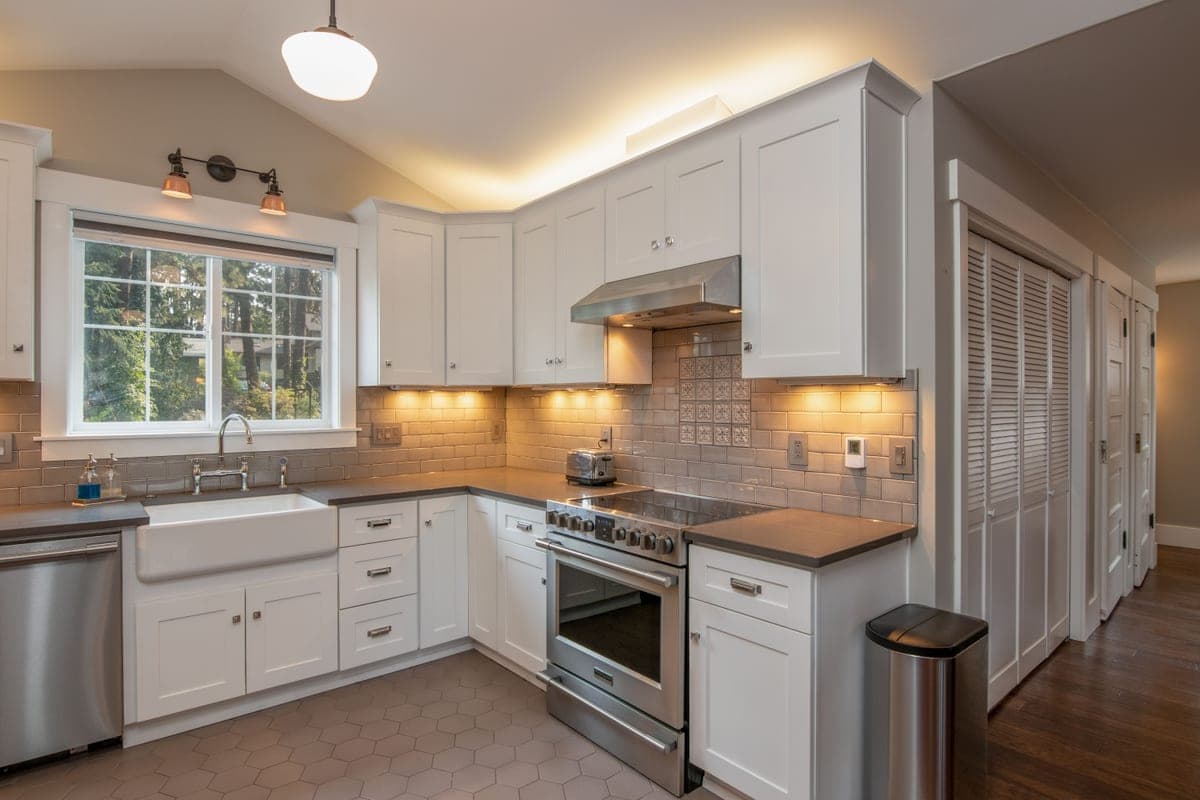
Farmhouse sinks
Apron-front dimensions, the cabinet modification involved, and why self-trimming is the detail that decides the difficulty.
Guide
Sink materials compared
Five materials compared on heat, impact, noise and repairability, with the honest failure mode of each one.
Best drop-in sink
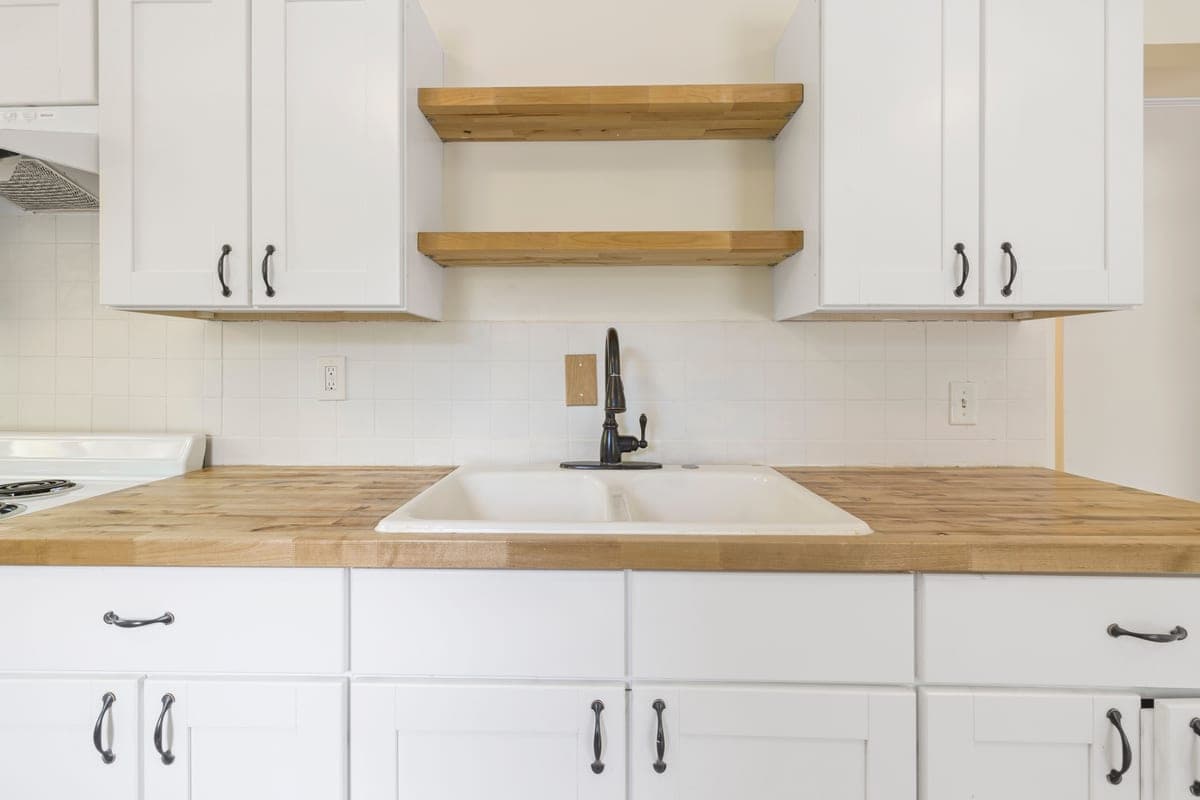
Best drop-in sinks
Four top-mount sinks chosen on gauge, bowl depth and cutout — plus the measurement that decides whether a new one drops into your existing hole.
Head to head
Granite composite vs stainless
Two materials that fail in opposite ways: heat tolerance against appearance. Plus what quartz composite actually is.
Found something out of date, or a figure you can source better than we did? Tell us — corrections get read first. Our methodology explains how picks are made, and contact is one click away.