Kitchen Sinks
Cast iron kitchen sinks: weight, enamel and refinishing
The toughest sink surface in a normal kitchen, sitting on the heaviest sink body. The cabinet work is the real cost, and it is the part that gets underestimated.

Disclosure: we earn a commission if you buy through the Amazon links on this page, at no extra cost to you. Commission never decides a verdict or a ranking position — read our editorial policy and affiliate disclosure.
Short answer
An enameled cast iron sink is cast iron with vitreous enamel fused onto it. The enamel resists chipping, cracking and heat better than most surfaces in a kitchen; the iron makes it heavy enough that the base cabinet needs a purpose-built support frame. That frame, built to hold the sink at exactly the right height, is the real installation cost.
Cast iron sinks have been in kitchens for a century, which is the strongest available argument for the material: the ones from the 1930s are still in service. Modern versions add one genuinely useful design idea — a self-trimming apron — and keep the fundamental property that makes the material worth it.
What the enamel does well
Kohler describes the Whitehaven's enameled cast iron as resisting chipping, cracking and burning. That is three separate claims and all three are properties of the material rather than marketing: vitreous enamel is a glass layer fused at high temperature to a thick iron substrate, so it is hard, it is chemically inert to almost everything in a kitchen, and the iron behind it absorbs impact energy that would crack an unsupported ceramic.
What it does not resist is abrasion from the wrong cleaner. A cream cleanser with grit in it, used weekly for years, dulls the gloss unevenly — and a dulled patch on an enamel sink cannot be polished back. Mild detergent, always.
The weight, and what the cabinet has to do
A full-size apron-front cast iron sink is heavy enough that it is a genuine two-person lift and the cabinet must carry it from below rather than the countertop taking the load. In practice that means building a support frame inside the base cabinet: a ledger fixed to the cabinet sides and cross-members sized so the sink sits at exactly the height the counter will meet.
Height accuracy is the part that catches people. A quarter of an inch too low leaves a visible gap under the counter edge; a quarter too high fouls the countertop. Build the frame, dry-fit the sink, measure, adjust, and only then fit the counter. Kohler does not publish a unit weight on the Whitehaven range page, so plan the frame using the shipping weight from your retailer rather than an estimate.
Quick picks
Tap any row to jump to the full write-up. There are no scores here because we run no test lab — how picks are chosen is published in full on our methodology page.
| # | Product | Best for | Our read | Price |
|---|---|---|---|---|
| 1 | 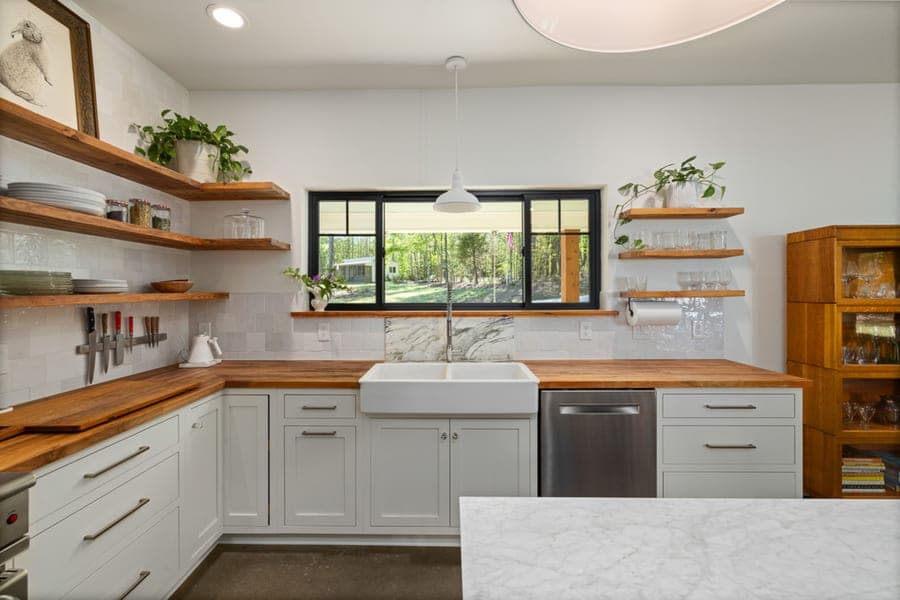 Kohler Whitehaven K-6489 Best cast iron sink | Farmhouse looks without a custom cabinet | Self-trimming apron, 2-degree slope, offset drain | Check price on Amazon #ad Affiliate link · We publish no price; Amazon shows the current one |
| 2 | 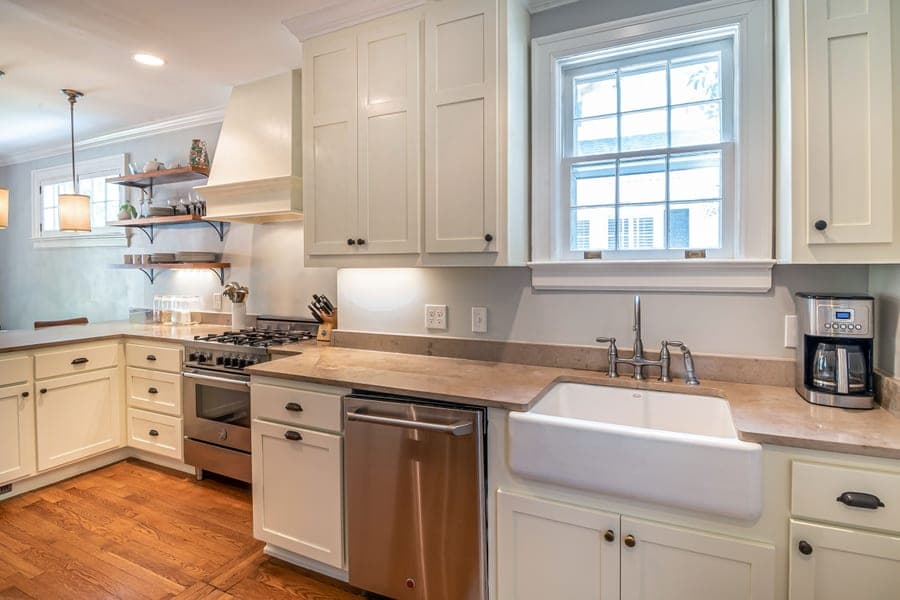 BOCCHI Classico 30-inch fireclay farmhouse sink The lighter alternative | Farmhouse style, lighter than cast iron | Fireclay — simpler support, same look | Check price on Amazon #ad Affiliate link · We publish no price; Amazon shows the current one |
Refinishing an old cast iron sink
A worn or chipped cast iron sink can be refinished, and the honest summary is that the results are better than people expect and worse than a new sink. There are two routes. A professional reglazing service applies a catalyzed coating in situ; done well it looks good for several years and it is not the original vitreous enamel, so it wears differently and can be damaged by the same abrasives that would not have troubled the original.
DIY epoxy kits exist, cost very little, and produce a finish that looks acceptable at first and typically shows wear within a year or two around the drain and where dishes land. If the sink is a period piece that cannot be replaced, refinishing is worth doing. If it is a standard sink, compare the refinishing quote against a new one and the arithmetic usually favors replacement.
Cast iron against stainless, in one paragraph
Cast iron is quieter, better looking to most eyes, heat-tolerant and chip-resistant, and it is heavy and expensive and permanent. Stainless is lighter, cheaper, tolerates anything, and shows every mark. If the sink is a design feature in the room, cast iron. If it is a tool, stainless — and the 16 gauge vs 18 gauge question becomes the one that matters.
Photograph shows the product category, not this specific unit. We do not republish manufacturer product photography.
1. Best cast iron sink
Kohler Whitehaven K-6489
Kohler · Best for farmhouse looks without a custom cabinet
The enameled cast-iron farmhouse sink to buy, mainly for one structural reason: the self-trimming apron overhangs the cabinet face, so installation is a rough cut rather than a cabinetmaker's fit. That detail is the difference between a weekend job and a trade job. It is also heavy enough that the cabinet needs real support.
Published specifications
What works
- Self-trimming apron means a rough cabinet cut, not a precision one
- Enameled cast iron resists chipping, cracking and heat in a way composite does not
- The 2-degree slope and offset drain genuinely reduce standing water
- Kohler stocks matching drains and accessories, so the sink does not orphan
What does not
- Cast iron is heavy — the cabinet needs a proper support frame, and that is the real installation cost
- Enamel dulls under abrasive cleaners, and a dropped cast pan will chip it
- Kohler does not publish a unit weight on the range page, so plan support using your retailer's shipping weight
Skip it if
Skip it if you are installing alone, or over an existing base cabinet you cannot reinforce. Weight decides this one, not looks.
#ad Affiliate link · We publish no price; Amazon shows the current one
Raw specifications: Kohler’s own page for the Kohler Whitehaven K-6489.
Photograph shows the product category, not this specific unit. We do not republish manufacturer product photography.
2. The lighter alternative
BOCCHI Classico 30-inch fireclay farmhouse sink
BOCCHI · Best for farmhouse style, lighter than cast iron
Fireclay's argument against cast iron is the surface: the glaze is fired onto clay at very high temperature and is non-porous, rather than an enamel layer bonded to metal. This one ships with the bottom grid and strainer, and needs no flange extension for a disposal — a small detail that saves a trip to the store on install day.
Published specifications
What works
- Non-porous glaze, so staining is a cleaning problem rather than a permanent one
- Lighter than an equivalent enameled cast-iron sink, which simplifies cabinet support
- Grid and strainer in the box — the grid is what protects the glaze from dropped cast iron
- Takes a standard disposal flange without an extension kit
What does not
- Fireclay is a ceramic: a hard impact chips it, and a chip is not repairable the way a scratch in stainless is
- Hand-made dimensions vary slightly batch to batch, so cut the cabinet to the sink you received
- No independent lab publishes chip-resistance testing for fireclay sinks, so the material claims here are the manufacturer's
Skip it if
Skip it if your household is hard on a sink — dropped pots and ceramic do not mix. Choose 16-gauge stainless instead.
#ad Affiliate link · We publish no price; Amazon shows the current one
What to take away
- Vitreous enamel on a thick iron substrate is the most damage-tolerant sink surface in a normal kitchen.
- The cabinet, not the countertop, carries the weight — and the support frame's height accuracy is the critical detail.
- Self-trimming aprons turn the cabinet cut from precision work into a rough cut. Look for it specifically.
- Refinishing works but is not the original enamel; it is worth it for a period sink, rarely for a standard one.
How we sourced this page
Every figure on this page came from one of the following. Where a manufacturer or an independent lab does not publish a number, we say so rather than estimate it.
Common questions
- What are the pros and cons of a cast iron kitchen sink?
- Pros: the enamel resists chipping, cracking and heat; it is very quiet; and it lasts for decades. Cons: it is heavy enough to need a purpose-built cabinet support frame, the enamel dulls under abrasive cleaners, and a severe chip is only cosmetically repairable.
- Is a cast iron sink better than stainless steel?
- It is quieter, more heat-tolerant in the basin and chip-resistant rather than dent-prone, and it looks like a design feature rather than a tool. Stainless is lighter, cheaper, easier to install and shows marks. Neither is better; they suit different priorities.
- Can you refinish a cast iron kitchen sink?
- Yes. Professional reglazing applies a catalyzed coating in place and looks good for several years, though it is not the original vitreous enamel and wears differently. DIY epoxy kits are cheap and typically show wear within a year or two. Worth it for a period sink, rarely worth it for a standard one.
- How much does a cast iron sink weigh?
- Enough that it is a two-person lift and the cabinet has to carry it from below. Manufacturers do not always publish a unit weight on the range page, so use the shipping weight from your retailer when designing the support frame rather than guessing.
More in Kitchen Sinks
Three specifications settle almost every kitchen sink question: how thick the steel is, how it meets the counter, and what it is made of. Get those right and brand barely matters.
Read next
Guide
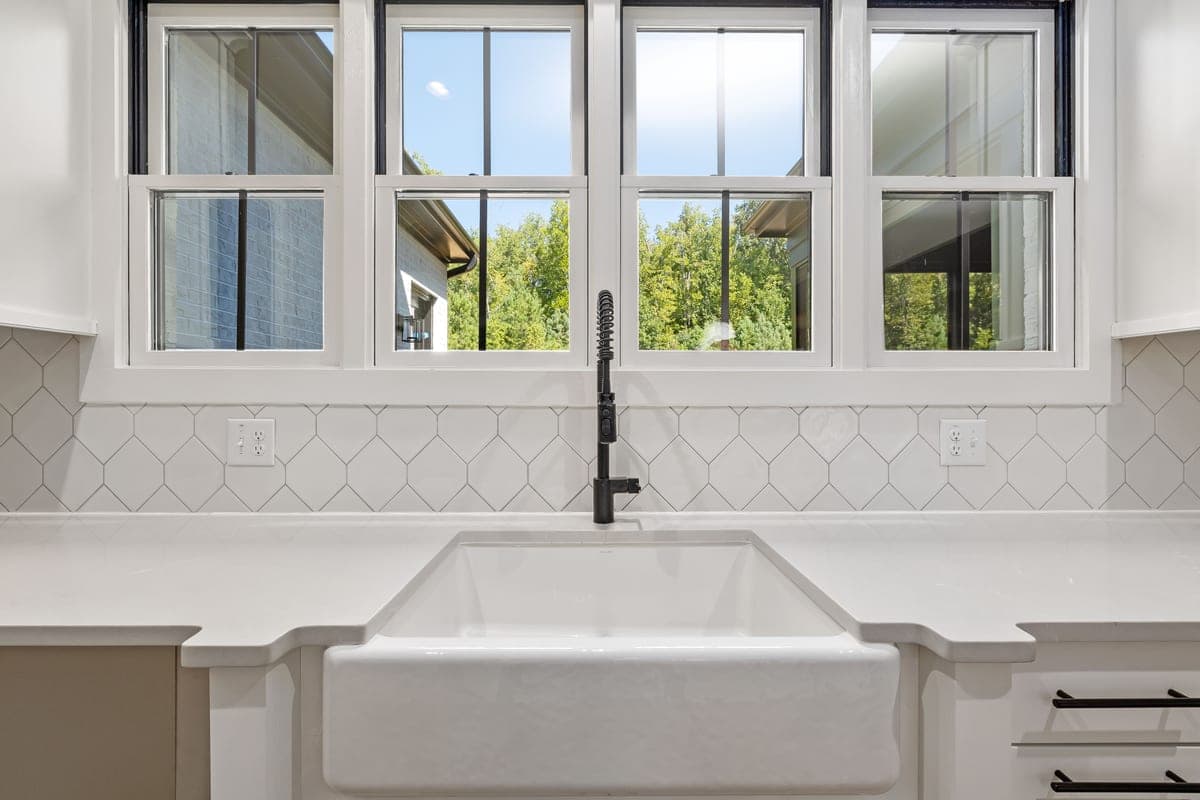
Fireclay sinks
How fireclay is made, what the glaze does, whether it chips, and how it stacks up against cast iron and stainless.
Guide
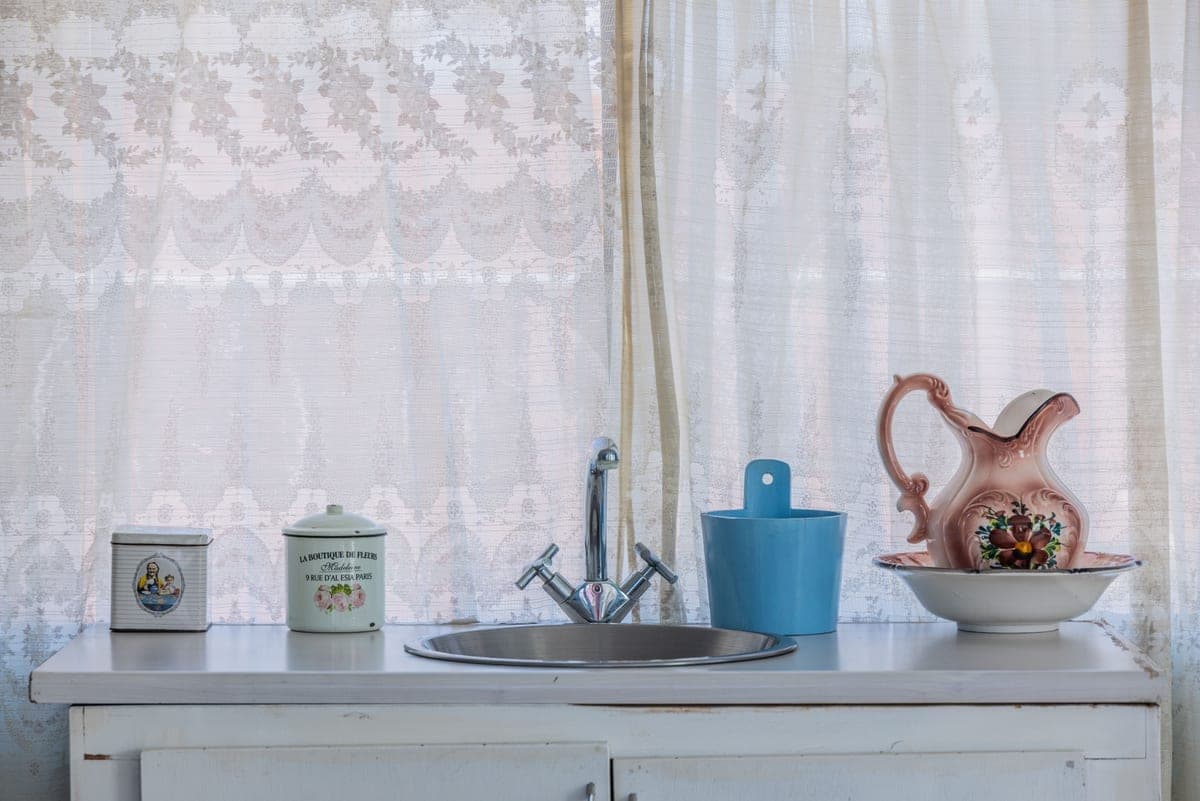
Sink materials compared
Five materials compared on heat, impact, noise and repairability, with the honest failure mode of each one.
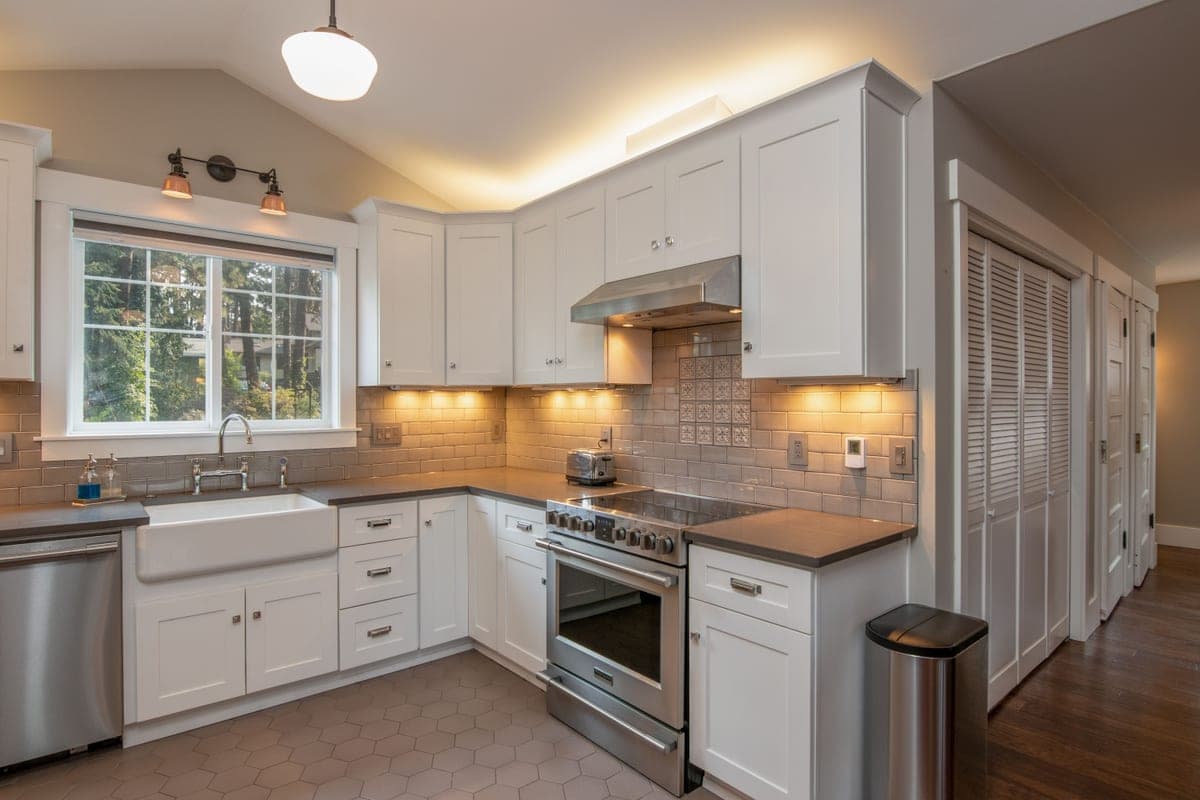
Best farmhouse sink
Farmhouse sinks
Apron-front dimensions, the cabinet modification involved, and why self-trimming is the detail that decides the difficulty.
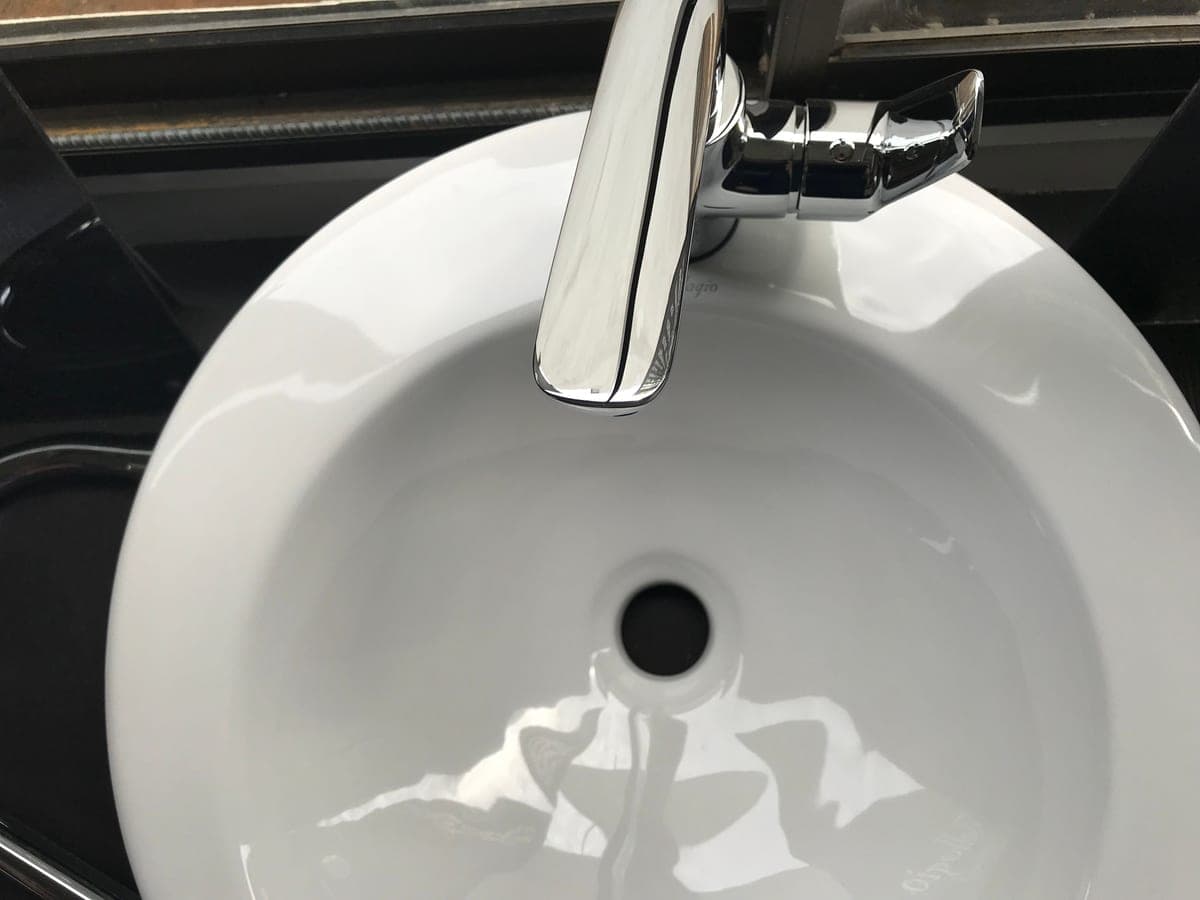
Head to head
16 gauge vs 18 gauge
16 gauge is 25% thicker steel. What that buys, what it does not buy, and why sound-deadening coverage is the spec nobody advertises.

How to
Fix kitchen sink scratches
Material-by-material scratch repair: what blends out, what improves, and what should be left alone.
Found something out of date, or a figure you can source better than we did? Tell us — corrections get read first. Our methodology explains how picks are made, and contact is one click away.