Kitchen Sinks
Granite composite vs stainless steel kitchen sink
Both are good sinks that fail in opposite directions. One hides everything and objects to heat; the other tolerates anything and shows every mark.
Disclosure: we earn a commission if you buy through the Amazon links on this page, at no extra cost to you. Commission never decides a verdict or a ranking position — read our editorial policy and affiliate disclosure.
How we assessed these: material composition and dimensions come from the manufacturers' published information with source links. There is no independent lab publishing comparative thermal or impact testing for residential sinks, so this page reasons from materials properties and says where the evidence stops.
Short answer
Granite composite is roughly 80% ground granite in an acrylic binder: quiet without pads, hides water spots and scratches, and objects to thermal shock. Stainless steel tolerates boiling water and hot pans without complaint, and shows scratches and water spotting. Choose composite if appearance and hard water bother you; choose stainless if hot pans go in the sink.
These are the two materials most kitchen sink decisions come down to, and they are close to opposites. Neither is better. They fail differently, and the honest question is which failure you would rather own.
| Granite composite | Stainless steel | |
|---|---|---|
| Composition | Up to 80% ground granite in acrylic resin | Grade 304 stainless sheet, 16 or 18 gauge |
| Water spotting | Hides it, especially in dark colors | Shows it; a satin finish helps |
| Scratches | Color runs through, so scratches barely show | Visible, and they accumulate into a patina |
| Dents | Does not dent; can chip on a severe impact | Dents under a dropped cast-iron pan |
| Heat | Thermal shock is a real limit | Effectively unlimited in kitchen terms |
| Noise | Quiet by mass, no pads required | Needs pads and undercoating to stop ringing |
| Staining | Light colors can stain from turmeric and tea | Rarely stains; can discolor from iron deposits |
| Repair | Chips are not easily repaired | Scratches can be blended on brushed finishes |
What composite is actually made of
Blanco publishes Silgranit as up to 80% finely ground natural granite combined with an acrylic binder, cast into a mold rather than pressed from sheet. Because the color is part of the material rather than a coating, a scratch exposes more of the same material rather than a different substrate underneath. That single property is why composite ages more gracefully than any coated finish.
You will also see "quartz composite", which is the same idea with quartz as the aggregate instead of granite. Manufacturers make competing hardness claims, and there is no independent testing we can cite to adjudicate between them, so treat the choice as a color and brand decision rather than a performance one.
The thermal shock question, honestly
This is composite's genuine limitation and it deserves a precise statement. Pouring boiling water down a composite sink is fine — manufacturers design for it, and pasta water is a normal kitchen event. What composite does not want is a severe, localized temperature difference: a cast-iron pan straight off a hot burner set down on a cold wet basin. Stainless does not care about that at all.
Blanco does not publish a thermal limit figure, and we are not going to print one. The practical rule is a trivet for anything that came off direct heat, which is a habit rather than a hardship.
Quick picks
Tap any row to jump to the full write-up. There are no scores here because we run no test lab — how picks are chosen is published in full on our methodology page.
| # | Product | Best for | Our read | Price |
|---|---|---|---|---|
| 1 |  Blanco Diamond Silgranit super single Best composite | Hard water and visible sinks | Up to 80% ground granite; hides spots and scratches | Check price on Amazon #ad Affiliate link · We publish no price; Amazon shows the current one |
| 2 | 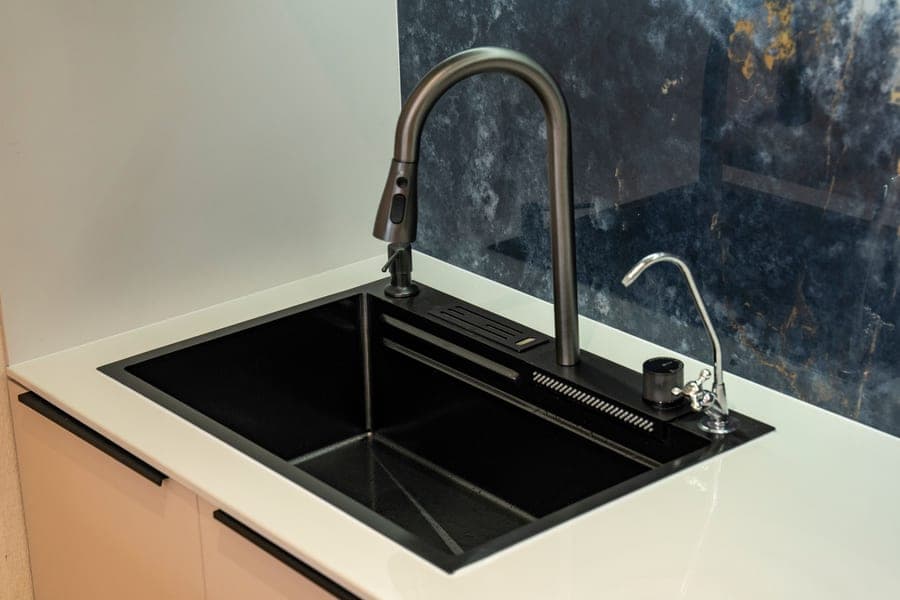 Kraus Kore KWU110-30 workstation sink Best stainless | Small kitchens that need counter space | 16-gauge, heavily damped, takes any abuse | Check price on Amazon #ad Affiliate link · We publish no price; Amazon shows the current one |
Stainless, and the two specs that matter
Stainless is the default for good reason: it is cheapest per inch of bowl, it tolerates heat and impact, and it can be repaired cosmetically. Its two weaknesses — ringing and visible marks — are both addressable. Ringing is a damping specification: look for pads over most of the basin plus an undercoating, which Kraus publishes as over 80% coverage on the Kore. Marks are a finish question, and a brushed or satin basin hides far more than a polished one.
Gauge is the other number, and it is worth understanding properly rather than as a slogan: 16 gauge vs 18 gauge.
Cleaning: different products, different mistakes
- Composite: mild detergent daily; a mild abrasive cream occasionally for staining. Do not leave bleach standing in the basin, and never use a scouring pad on a gloss composite.
- Stainless: mild detergent, wipe with the grain, dry to prevent spotting. Never steel wool — it leaves iron particles that rust in place and look exactly like the sink rusting.
- Both: rinse away anything acidic or salty rather than leaving it to sit. Lemon halves and brine are harder on a sink than hot water is.
The full method for stainless is in how to clean a stainless steel sink, and scratch repair is covered in how to fix kitchen sink scratches.
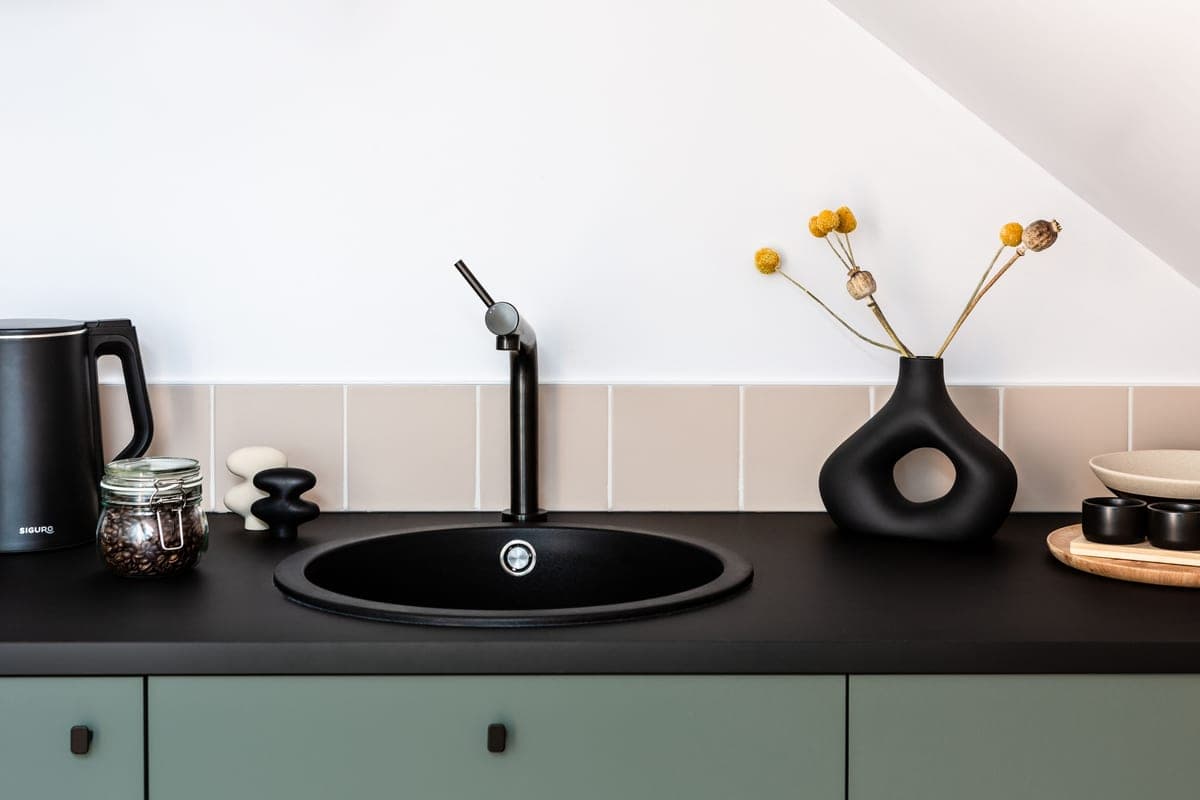
Photograph shows the product category, not this specific unit. We do not republish manufacturer product photography.
1. Best composite
Blanco Diamond Silgranit super single
Blanco · Best for hard water and visible sinks
The granite composite sink that answers the material's usual objection. Silgranit is up to 80% ground granite in an acrylic binder, and what it does better than stainless is hide everything: no water spots, no visible scratch pattern, no dent from a dropped pan. What it does worse is take a screaming-hot pan straight off the burner.
Published specifications
What works
- Hides limescale and water spotting better than any stainless finish — the reason to choose it in hard water
- Color runs through the material, so a scratch does not expose a different substrate
- Quieter than stainless without added pads, because the mass does the damping
- A 9-1/2" bowl is deep enough to lay a sheet pan flat
What does not
- Composite is not stainless: thermal shock is a real limit, so a very hot pan goes on a trivet
- Light colors show tea and turmeric staining more than dark ones
- Blanco publishes no thermal-limit figure, so we will not print one
Skip it if
Skip it if you routinely dump hot pans and boiling stock straight into the sink. Stainless tolerates that; composite is the wrong tool for it.
#ad Affiliate link · We publish no price; Amazon shows the current one
Photograph shows the product category, not this specific unit. We do not republish manufacturer product photography.
2. Best stainless
Kraus Kore KWU110-30 workstation sink
Kraus · Best for small kitchens that need counter space
The workstation sink we would buy, and the clearest case for 16-gauge steel anywhere in this category: a ledge sink is the one configuration where basin flex is genuinely audible, because accessories rest on the rim and transmit it. Ten inches deep, rear-offset drain, and the grid, mat, board and strainer are in the box rather than a $200 upsell.
Published specifications
- Overall size
- 30" x 19" source
- Bowl size
- 28" x 16" source
- Bowl depth
- 10" source
- Gauge
- 16-gauge stainless steel source
- Minimum cabinet
- 33" left to right, 24" front to back source
- Drain
- Rear offset, 3-1/2" opening source
- Sound damping
- NoiseDefend pads covering over 80% of the basin, plus undercoating source
- Warranty
- Kraus limited lifetime source
What works
- The integrated ledge turns a 30-inch sink into prep counter, the best single trade available in a small kitchen
- Rear-offset drain leaves usable cabinet space under the front of the sink
- Genuine 16-gauge with pads over 80% of the basin — gauge and damping do different jobs, and this sink has both
- A 3-1/2" drain opening takes a standard disposal flange with no adapter
What does not
- Needs a 33-inch cabinet for a 30-inch sink — measure before ordering
- A 10-inch deep bowl is a long reach for a shorter person
- The accessories are the reason to buy it and also the reason it costs more than a plain undermount
Skip it if
Skip it if your run of counter is already generous — you would be paying for prep space you do not need, and a plain 18-gauge undermount will serve.
#ad Affiliate link · We publish no price; Amazon shows the current one
Raw specifications: Kraus’s own page for the Kraus Kore KWU110-30 workstation sink.
What to take away
- Composite hides water spots and scratches because the color runs through the material.
- Stainless tolerates heat and impact; composite objects to thermal shock from pans off direct heat.
- Composite is quiet by mass; stainless needs pad coverage, which is the specification to ask for.
- Nobody publishes comparative thermal or impact testing for residential sinks, so material properties are the honest basis for choosing.
How we sourced this page
Every figure on this page came from one of the following. Where a manufacturer or an independent lab does not publish a number, we say so rather than estimate it.
Common questions
- Is granite composite better than stainless steel?
- Neither is better overall. Composite hides water spots and scratches and is quiet without pads; stainless tolerates hot pans and heavy impact and can be cosmetically repaired. Choose composite if appearance and hard water bother you, stainless if hot cookware goes in the sink.
- Do granite composite sinks crack?
- Cracking is rare; chipping from a severe localized impact is the realistic risk, and a chip in composite is not easily repaired. Thermal shock — a pan straight off a burner onto a cold wet basin — is the other stress to avoid. Manufacturers do not publish limit figures, so a trivet is the sensible habit.
- What is the difference between granite composite and quartz composite?
- The aggregate: ground granite in one, ground quartz in the other, both in an acrylic resin. Manufacturers make competing hardness claims and there is no independent testing to settle them, so treat it as a color and brand choice rather than a performance one.
- Do composite sinks stain?
- Light colors can, from turmeric, tea, tomato and red wine, and a mild abrasive cream usually removes it. Dark colors hide staining almost completely. What both dislike is bleach left standing in the basin.
More in Kitchen Sinks
Three specifications settle almost every kitchen sink question: how thick the steel is, how it meets the counter, and what it is made of. Get those right and brand barely matters.
Read next
Guide
Sink materials compared
Five materials compared on heat, impact, noise and repairability, with the honest failure mode of each one.
Head to head
16 gauge vs 18 gauge
16 gauge is 25% thicker steel. What that buys, what it does not buy, and why sound-deadening coverage is the spec nobody advertises.
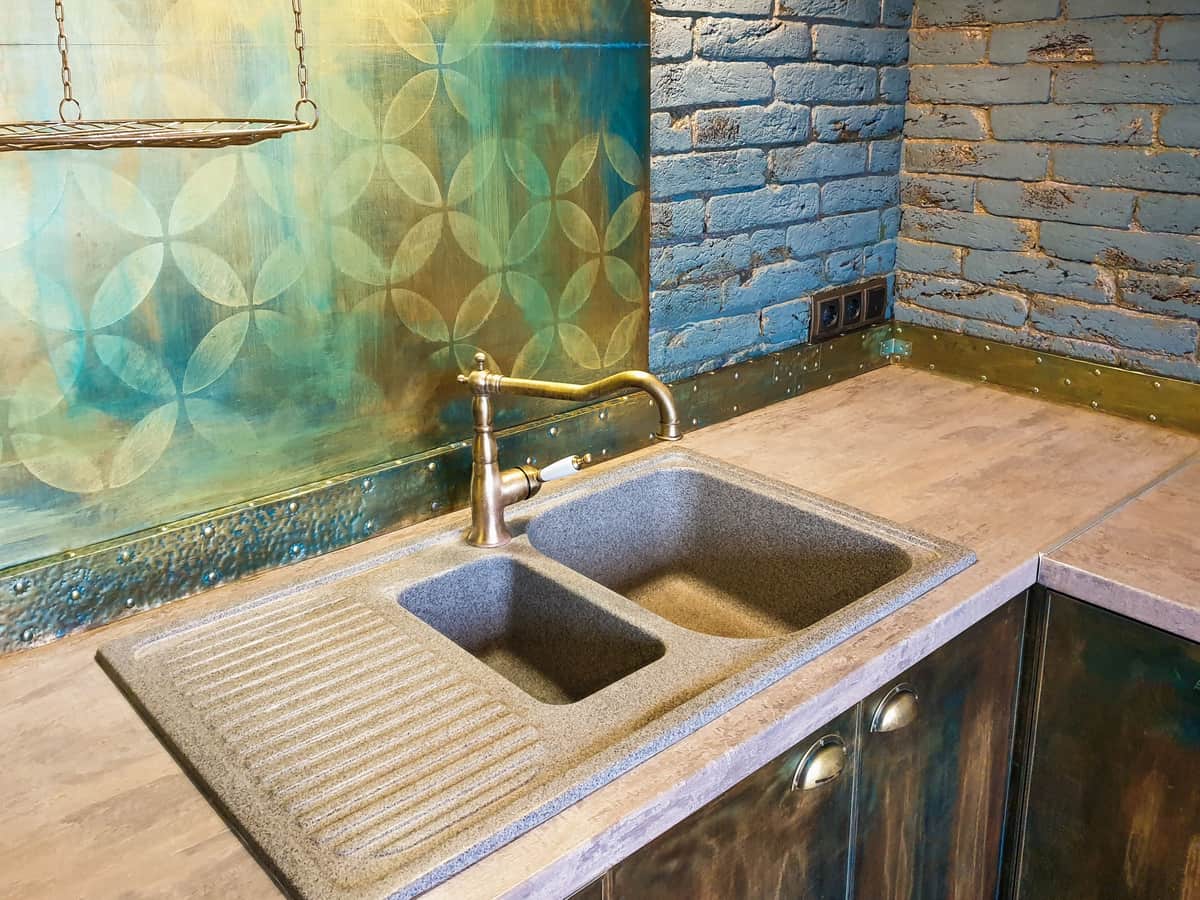
Best kitchen sink
Best kitchen sinks
Five sinks across the four materials, compared on sourced dimensions, cabinet requirements and how each one fails.

How to
Clean a stainless steel sink
The weekly method, what causes brown marks, and the products that permanently damage a brushed finish.

How to
Fix kitchen sink scratches
Material-by-material scratch repair: what blends out, what improves, and what should be left alone.
Found something out of date, or a figure you can source better than we did? Tell us — corrections get read first. Our methodology explains how picks are made, and contact is one click away.