Kitchen Sinks
The best drop-in kitchen sinks
A drop-in is the only sink you can change without touching your countertop, which makes it the right answer far more often than the undermount-only internet admits. Four models, chosen on the three figures that decide whether yours will fit.
Disclosure: we earn a commission if you buy through the Amazon links on this page, at no extra cost to you. Commission never decides a verdict or a ranking position — read our editorial policy and affiliate disclosure.
How we assessed these: we compared the dimensions, gauge, damping and mounting systems each manufacturer publishes on its own product page, read on 2026-10-05 and linked at every figure. We have not installed these sinks and we do not own them. Where a maker publishes no figure — including unit weight and noise — this page says so rather than estimating it.
Short answer
The best drop-in kitchen sink is the Kraus KHT300-33: 16-gauge stainless, a 31 by 18 inch bowl 10 inches deep, a rear-set drain and a rim finished to sit on the counter. It is sold as a dual-mount sink, so it can be undermounted later if the countertop is ever replaced. For a straight swap into an older cutout, the shallower 18-gauge Elkay LRS33222 is the safer fit.
Drop-in sinks have an image problem. Every kitchen feature in every magazine shows an undermount basin, so a top-mount sink reads as the cheap option — and in the one way that matters to a renovation budget, it is: the sink sits on the counter, carries its own weight on the rim, and does not need a fabricated stone edge or a mounting system glued to the underside. That is why a drop-in is the only kitchen sink most people can genuinely replace in a morning without a countertop crew.
The decision is not drop-in versus undermount on looks. It is whether you are replacing the countertop at the same time. If you are not, a drop-in is the sink category you are shopping in, and the useful question becomes which one — which is where almost nothing published is any help, because the specifications that decide it are rarely compared.
Quick picks
Tap any row to jump to the full write-up. There are no scores here because we run no test lab — how picks are chosen is published in full on our methodology page.
| # | Product | Best for | Our read | Price |
|---|---|---|---|---|
| 1 | 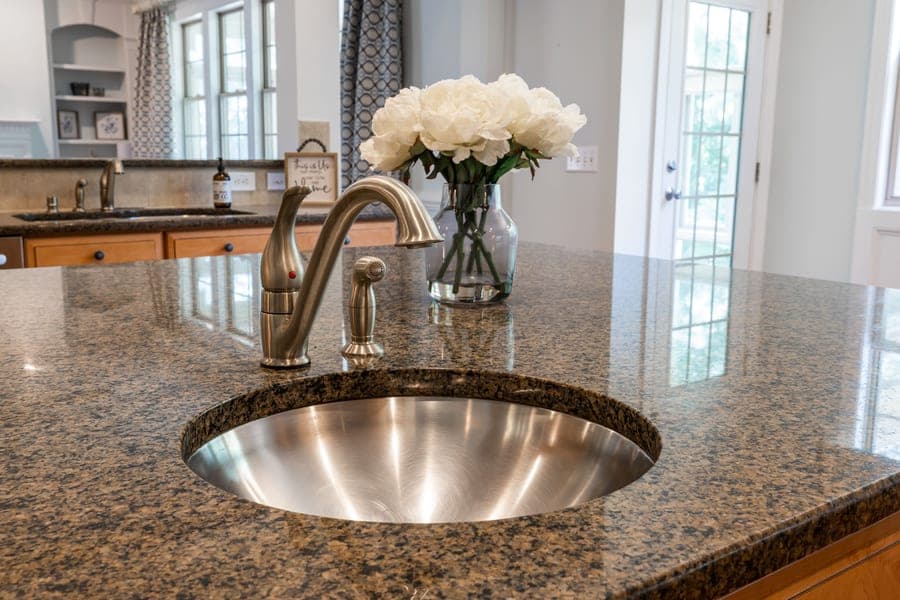 Kraus KHT300-33 drop-in sink Best overall | Replacing a sink without touching the counter | 16-gauge in a drop-in, 10 inches deep, mounts either way | Check price on Amazon #ad Affiliate link · We publish no price; Amazon shows the current one |
| 2 |  Elkay Lustertone Classic LRS33222 Best like-for-like replacement | A like-for-like swap in an existing cutout | 7-5/8 inches deep, five hole drillings, U-channel clips | Check price on Amazon #ad Affiliate link · We publish no price; Amazon shows the current one |
| 3 | 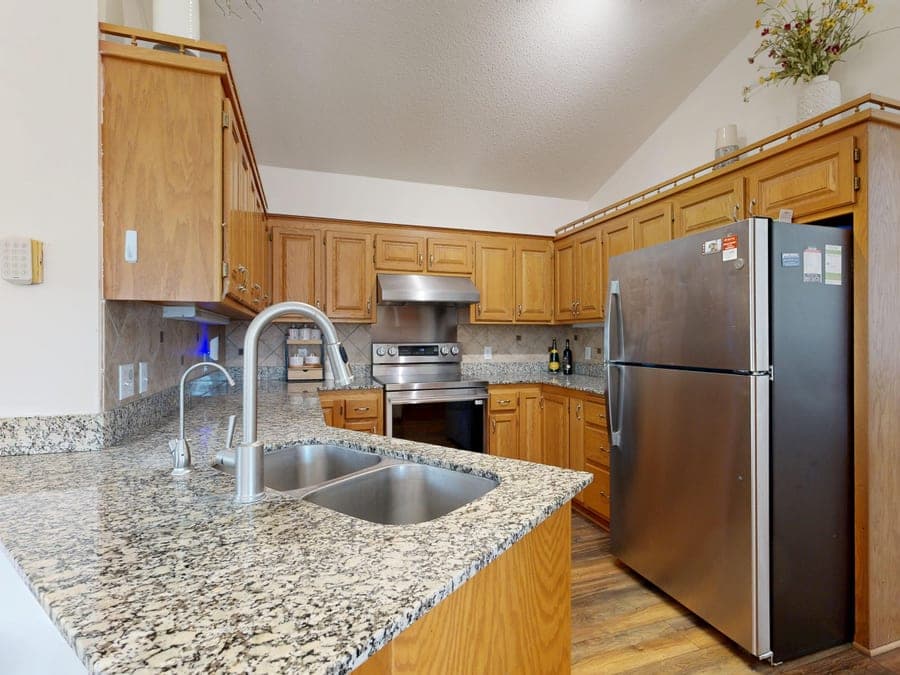 Kraus KHT302-33 double-bowl drop-in sink Best double bowl | Washing on one side, draining on the other | Two equal 15-1/2-inch bowls, both a full 10 inches deep | Check price on Amazon #ad Affiliate link · We publish no price; Amazon shows the current one |
| 4 | 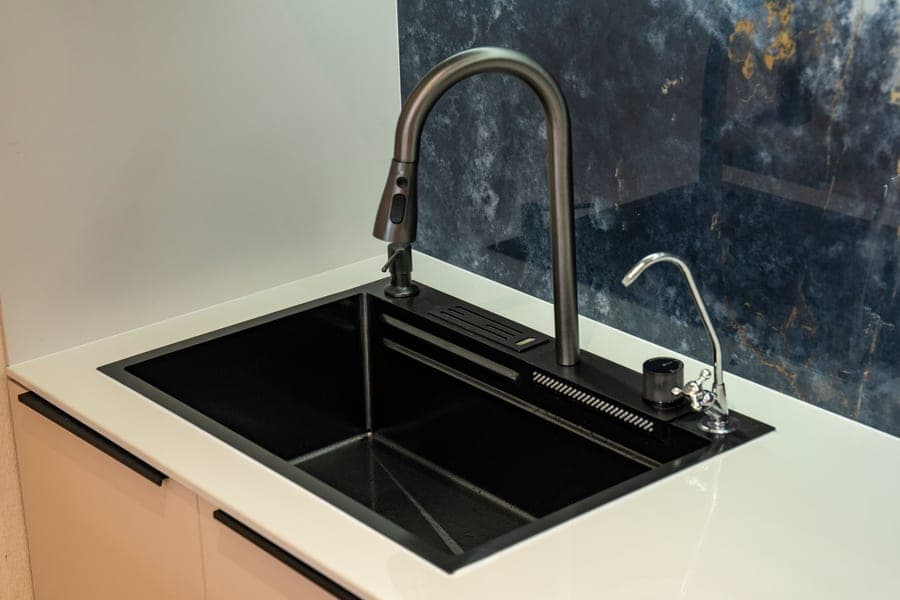 Kraus KWT310-33/5.5 ADA workstation drop-in sink Best shallow and ADA fit | Shallow cabinets and accessible kitchens | A 5.5-inch bowl that clears plumbing a deep sink will not | Check price on Amazon #ad Affiliate link · We publish no price; Amazon shows the current one |
The three figures that decide a drop-in
A drop-in has to satisfy three constraints at once, and they are all published. Get these three right and the installation is a sealant bead and a set of clips; get one wrong and the sink goes back in the box.
- Overall size against your cutout. The sink's rim has to cover the hole already in your counter, which means the new sink's overall footprint must be at least as big as the old one. Every sink here is a 33 by 22 inch body, which is the dominant American size.
- Bowl depth against the plumbing under it. A 10-inch bowl hangs four inches lower than a 6-inch one. If a disposal and a trap already fill that space, depth is the constraint, not width.
- Minimum cabinet width. All four sinks here publish 36 inches. A 33-inch sink does not fit a 30-inch base cabinet, however the counter is cut.
Gauge and damping are two different problems
The gauge number is the steel's thickness, and a lower number is thicker: 16-gauge is thicker than 18-gauge. What thickness buys you is resistance to denting and a bowl that flexes less when you drop a pan in it. What it does not buy you is quiet. Quiet comes from damping pads and undercoating stuck to the outside of the basin, and those are specified separately — which is why a thick sink with poor pads can be louder in use than a thinner sink wrapped in them.
The two Kraus sinks here publish both: TRU16 gauge steel plus NoiseDefend pads — on all sides on the KHT300-33, and covering over 80% of the body on the double-bowl KHT302-33 — with anti-condensation undercoating on top of that. The Elkay LRS33222 publishes 18-gauge Type 304 steel with bottom pads only. That is an honest difference you will hear, and it is the clearest single reason the Kraus sinks cost more. If you want the full argument, our 16 gauge vs 18 gauge page sets out what each thickness is actually worth.
| Sink | Gauge | Overall | Bowl depth | Damping | Min cabinet |
|---|---|---|---|---|---|
| Kraus KHT300-33 | TRU16 | 33 x 22 x 10-5/8" | 10" | Pads all sides + undercoating | 36" |
| Elkay LRS33222 | 18 | 33 x 22 x 7-5/8" | 7-1/2" | Bottom pads only | 36" |
| Kraus KHT302-33 | TRU16 | 33 x 22 x 10-5/8" | 10" (both bowls) | Pads over 80% + undercoating | 36" |
| Kraus KWT310-33/5.5 | TRU16 | 33 x 22 x 6" | 5.5" | Not published for this model | 36" |
| Elkay ILR3322R | 18 | 33 x 22 x 7-5/8" | 7-1/2" | Bottom pads only | 36" |
Each figure comes from the manufacturer's own product page for that model number, linked in the sources list. Where a maker does not publish a figure in comparable form, the cell says so — we do not infer damping coverage from a photograph.
Why depth, not width, is usually the limit
Modern single-bowl sinks are deep, and depth is sold as an upgrade. In a drop-in replacement it is also the figure most likely to stop the job, because the space below a sink is already occupied. A garbage disposal hangs under the drain. The trap arm runs horizontally to the wall at a fixed height, and the disposal's outlet has to end up at or above it so water runs downhill.
Swap a 7-1/2-inch bowl for a 10-inch bowl and you have moved the drain outlet two and a half inches closer to the trap arm. Sometimes there is room. Sometimes the plumbing has to be reworked, which turns a sink swap into a plumbing job. Measure from the underside of the counter down to the center of the trap arm before you buy depth, the same way you would before buying a disposal — the method is identical and it is set out on our garbage disposal sizing and fit page.
This is also exactly where the shallow KWT310-33/5.5 earns its place. A 5.5-inch bowl is ADA-compliant depth, which is its headline, but the practical use is broader than accessibility: it is the sink that fits when nothing else will, over a trap arm that sits high or inside a cabinet that is already full.
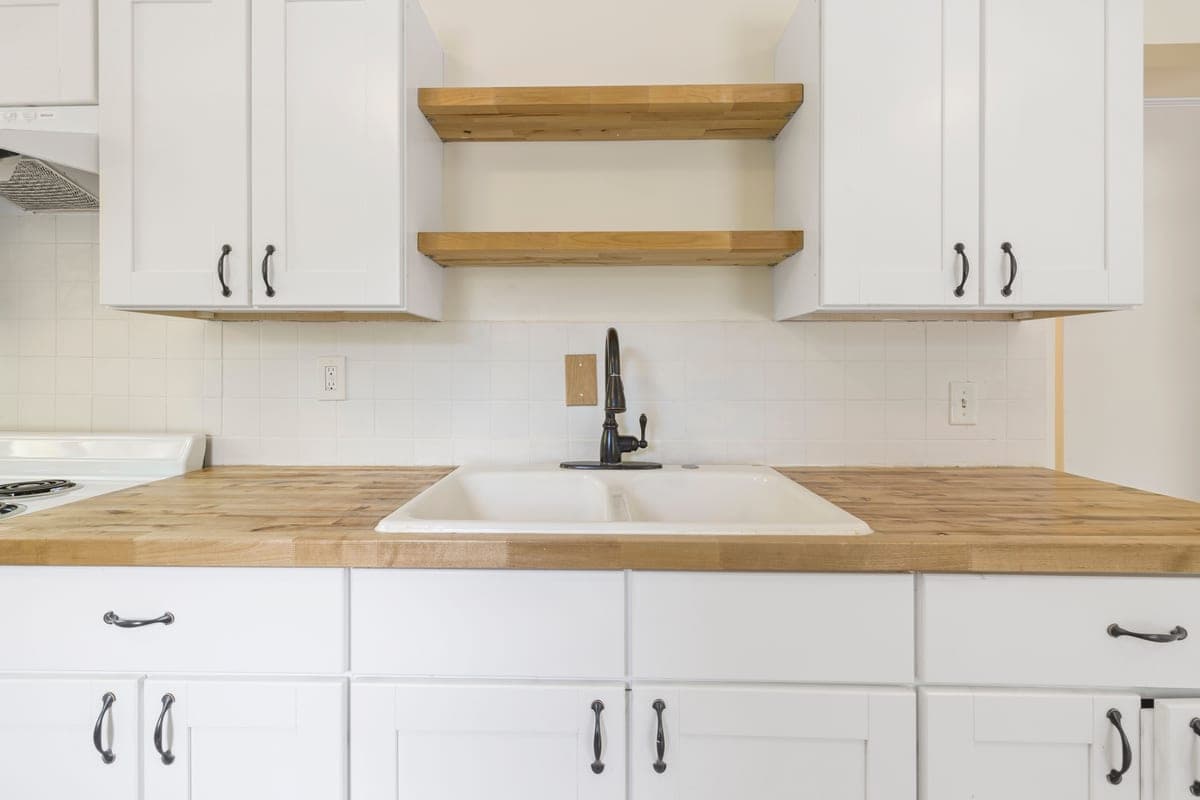
Photograph shows the product category, not this specific unit. We do not republish manufacturer product photography.
1. Best overall
Kraus KHT300-33 drop-in sink
Kraus · Best for replacing a sink without touching the counter
The drop-in we would fit in most kitchens, because it is a 16-gauge sink sold as a dual-mount: the rim is finished to sit on the counter, and the same sink can be undermounted later if you ever replace the countertop. At 10 inches deep with a rear-set drain it behaves like a modern undermount while asking nothing of your existing counter.
Published specifications
- Overall size
- 33" x 22" x 10-5/8" deep source
- Bowl size
- 31" x 18" x 10" deep source
- Gauge
- TRU16 gauge T304 stainless steel source
- Mounting
- Dual mount — drop-in or undermount source
- Faucet holes
- Two pre-drilled, for a faucet and a soap dispenser source
- Drain
- Rear-set source
- Minimum cabinet
- 36" source
- Sound damping
- NoiseDefend pads on all sides plus anti-condensation undercoating source
- Certification
- cUPC to ASME A112.19.3 / CSA B45.4 source
- Included
- Bottom grid, drain assembly with removable strainer, decorative drain cover source
- Warranty
- Kraus limited lifetime source
What works
- 16-gauge steel in a drop-in, which is unusual — most top-mount sinks at this size are 18-gauge or thinner
- Dual mount means the sink survives a future countertop replacement instead of being thrown away with it
- A 10-inch bowl with a rear-set drain leaves usable cabinet space under the front of the sink
- Grid, drain and strainer are in the box, so the only extra part is the sealant
What does not
- A 33-inch sink still needs a 36-inch cabinet, so it is not a drop-in replacement for a 30-inch base unit
- A 10-inch bowl is a long reach for a shorter person, and a drop-in rim sits slightly higher than an undermount one
- Kraus publishes no unit weight for this model, so plan the lift by the shipping box rather than a figure
Skip it if
Skip it if your existing cutout is for a 30-inch sink. A drop-in can cover a slightly smaller hole, never a smaller cabinet.
#ad Affiliate link · We publish no price; Amazon shows the current one
Raw specifications: Kraus’s own page for the Kraus KHT300-33 drop-in sink.
Photograph shows the product category, not this specific unit. We do not republish manufacturer product photography.
2. Best like-for-like replacement
Elkay Lustertone Classic LRS33222
Elkay · Best for a like-for-like swap in an existing cutout
The plain, serviceable American drop-in, and the one most likely to be a direct swap for what is already in your counter: 33 by 22 inches, 7-5/8 inches deep, two faucet holes, 18-gauge Type 304 steel. Elkay's U-channel mounting is the detail that matters on install day — the clips go into the channel before the sink goes in, so you spend less time on your back.
Published specifications
- Overall size
- 33" x 22" x 7-5/8" source
- Bowl size
- 28" x 16" x 7-1/2" deep source
- Gauge
- 18 gauge, Type 304 stainless steel source
- Faucet holes
- 2 (1-, 3-, 4- and MR2-hole versions are separate model numbers) source
- Drain opening
- 3-1/2" source
- Minimum cabinet
- 36" source
- Sound damping
- Bottom pads only source
- Mounting
- U-channel — clips are set in the channel before installation source
- Shipping weight
- 27 lb source
- Origin
- Made in the USA source
What works
- 7-5/8 inches deep, which is the depth most older cabinets and shallow trap arms were built around
- U-channel mounting is the easiest clip system to work with single-handed
- Elkay sells the same bowl in five hole drillings, so you can match an existing three-hole counter exactly
- Type 304 steel with a repairable satin grain — light scratches blend rather than stand out
What does not
- Sound deadening is bottom pads only rather than full-side pads, so you will hear this sink more than a pad-wrapped 16-gauge one
- 18-gauge flexes more than 16-gauge under a dropped pan, and this is a flat-bottomed bowl, so the drumming is audible
- Elkay publishes a list price far above typical street price, so the number on the spec page is not a useful guide to what you will pay
Skip it if
Skip it if you want a deep modern basin. At 7-1/2 inches the bowl will not take a sheet pan laid flat.
#ad Affiliate link · We publish no price; Amazon shows the current one
Raw specifications: Elkay’s own page for the Elkay Lustertone Classic LRS33222.
Photograph shows the product category, not this specific unit. We do not republish manufacturer product photography.
3. Best double bowl
Kraus KHT302-33 double-bowl drop-in sink
Kraus · Best for washing on one side, draining on the other
The double bowl for people who genuinely use two bowls — two equal 15-1/2 inch basins, both 10 inches deep, in the same 16-gauge dual-mount body as the single-bowl KHT300. Equal bowls are the right split if one side lives full of soaking dishes; a 60/40 split is the better choice if what you really want is one usable bowl.
Published specifications
- Overall size
- 33" x 22" x 10-5/8" deep source
- Bowl size
- Two equal bowls, 15-1/2" x 18" x 10" deep source
- Gauge
- TRU16 gauge stainless steel, 10:18 chromium-to-nickel source
- Mounting
- Dual mount — drop-in or undermount source
- Faucet holes
- Two pre-drilled, for a faucet and a soap dispenser source
- Minimum cabinet
- 36" source
- Sound damping
- NoiseDefend pads covering over 80% of the sink, plus undercoating source
- Certification
- cUPC to ASME A112.19.3 / CSA B45.4 source
- Included
- Two bottom grids, two drain assemblies with strainers, cut-out template, mounting hardware source
- Warranty
- Kraus limited lifetime source
What works
- Two 10-inch-deep bowls rather than one deep bowl and one token shallow one
- Pads over 80% of the body — the most complete damping of any sink on this page
- Both drains come with grids and strainers, which on a double bowl is normally two extra purchases
- Dual mount, so the same sink works on your existing counter now and an undermount counter later
What does not
- Each bowl is 15-1/2 inches wide, which will not take a large roasting pan flat — that is the cost of two bowls at 33 inches
- A center divider means the disposal lives under one side only, so decide which before you plumb it
- Two drain assemblies means two more joints under the sink that can weep
Skip it if
Skip it if you wash big sheet pans and roasting trays. One wide bowl beats two narrow ones for that, every time.
#ad Affiliate link · We publish no price; Amazon shows the current one
Raw specifications: Kraus’s own page for the Kraus KHT302-33 double-bowl drop-in sink.
Photograph shows the product category, not this specific unit. We do not republish manufacturer product photography.
4. Best shallow and ADA fit
Kraus KWT310-33/5.5 ADA workstation drop-in sink
Kraus · Best for shallow cabinets and accessible kitchens
The drop-in to buy when depth is the problem rather than the goal. The bowl is 5.5 inches deep, which is what makes it ADA-compliant and also what makes it fit over a shallow trap arm — and it still carries a workstation ledge, so the cutting board and the drying rack recover the working space the shallow bowl costs.
Published specifications
- Overall size
- 33" x 22" x 6" deep source
- Bowl size
- 31" x 16" x 5.5" deep source
- Gauge
- TRU16 gauge stainless steel source
- Mounting
- Dual mount — drop-in or undermount source
- Faucet holes
- One pre-drilled, plus a soap-dispenser hole source
- Drain
- Rear offset source
- Minimum cabinet
- 36" source
- Compliance
- ADA; cUPC to ASME A112.19.3 / CSA B45.4 source
- Included
- Bottom grid, bamboo cutting board, roll-up drying rack, drain assembly, cut-out template source
- Warranty
- Kraus limited lifetime source
What works
- A 5.5-inch bowl clears plumbing that a 10-inch bowl simply will not — the commonest reason a sink upgrade stalls
- ADA-compliant depth, which matters if the kitchen has to be usable seated
- The integrated ledge and included accessories give back the working space the shallow bowl gives up
- Rear-offset drain, so the trap sits at the back of the cabinet rather than the middle
What does not
- 5.5 inches is genuinely shallow: a running faucet splashes more, and tall pots have to be filled at an angle
- The accessories are part of the price, and most households will not use all of them
- A shallow wide bowl shows standing water more obviously than a deep one, so the grid earns its place here
Skip it if
Skip it if you have the clearance for a deep bowl and nobody in the house needs an ADA-height basin. Buy depth instead.
#ad Affiliate link · We publish no price; Amazon shows the current one
Raw specifications: Kraus’s own page for the Kraus KWT310-33/5.5 ADA workstation drop-in sink.
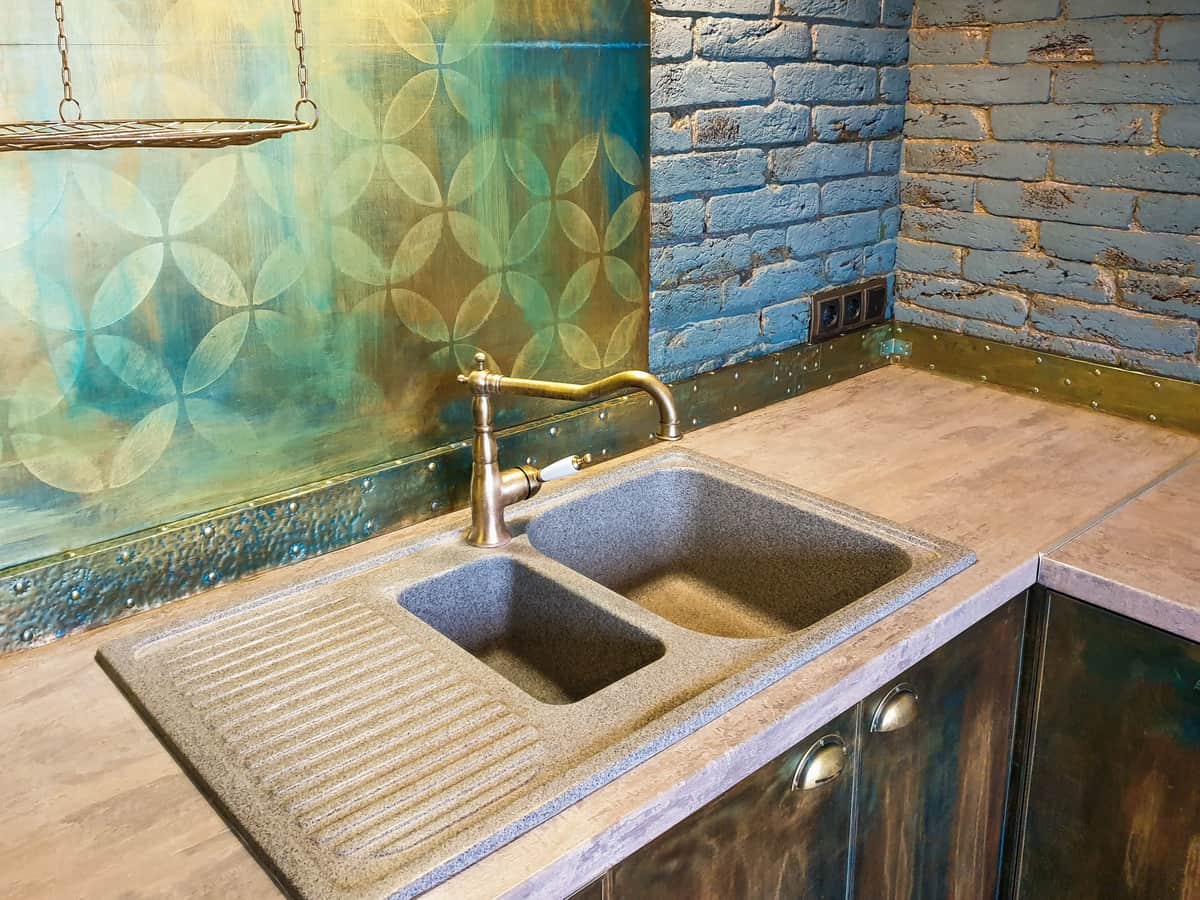
The drainboard: the thing only a drop-in can do
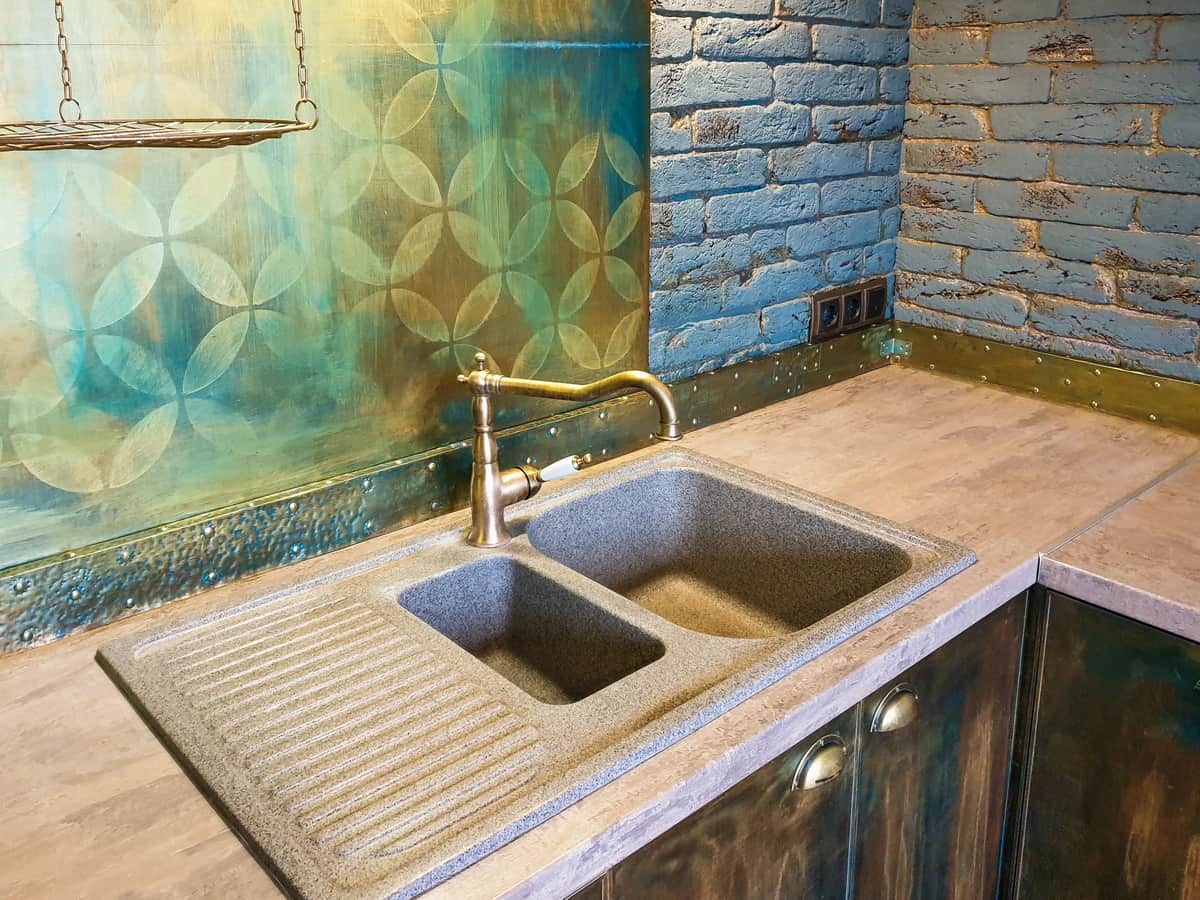
There is one configuration undermount sinks cannot offer at all, and it is worth knowing about before you dismiss the category. Because a drop-in sink includes the deck it sits on, that deck can be pressed with a drainboard — a ribbed, sloped shelf beside the bowl that channels water back into the sink. An undermount has no deck to put one on; the countertop is the deck.
Elkay still makes them. The ILR3322R is a 33 by 22 inch Lustertone Classic with a 16 by 16 inch bowl and a drainboard on the right, in the same 18-gauge Type 304 steel as the plain LRS33222, with a 3-1/2 inch drain opening and compliance listed to ASME A112.19.3, CSA B45.4, cUPC and IPC. The trade is obvious from those numbers: the bowl drops from 28 inches wide to 16 to make room for the board. If you dry dishes on a rack on the counter, or stand hot pans down next to the sink, that trade is a good one. If you wash roasting trays, it is not.
We have not made it a ranked pick because the bowl is small enough that it suits a specific habit rather than most kitchens. It is a real, current, purchasable sink, and if the drainboard is the reason you are reading this page, it is the one to look at.
Single bowl or double, in a drop-in
The split matters more in a 33-inch drop-in than people expect, because the divider eats width that cannot be recovered. The KHT302-33 gives two equal bowls at 15-1/2 inches each — genuinely usable for washing on one side and draining on the other, and no good at all for a sheet pan. A single 31-inch bowl takes anything you own and leaves you nowhere to stack. There is no configuration that does both at this width; the honest advice is to decide which failure you would rather live with. Our single bowl vs double bowl page works through the same decision in more depth.
One detail specific to a double bowl and a disposal: the unit mounts under one drain, not both. Decide which side before the plumbing goes back together, because moving it afterward means redoing the waste pipework. The side away from the dishwasher is usually right.
What the installation actually involves
This is the part that makes the category worth defending. A drop-in sink is held by clips that pull it down onto a bead of sealant from underneath, and the whole operation happens with the sink resting in the hole rather than being supported overhead. Elkay's U-channel system lets you seat the clips in the channel before the sink goes in, which removes most of the awkward work; Kraus supplies a cut-out template and mounting hardware for a new counter.
- Shut off both supply valves, disconnect the supply lines, the trap and the dishwasher hose, and unplug or switch off the disposal at the breaker.
- Cut the old sealant bead with a utility knife all the way round, then lift the sink out from above.
- Scrape the old sealant off the counter completely. A new sink will not seal onto a ridge of old silicone.
- Dry-fit the new sink in the opening and check the rim covers the cutout on all four sides before you open the sealant.
- Fit the faucet, the strainer or disposal flange and the basket to the sink on the counter, not in the cabinet. Everything you can attach from above is a connection you do not have to make lying down.
- Run the sealant bead, set the sink, fit the clips finger-tight all round, then tighten them in opposite pairs — the same order you would use on a wheel.
- Reconnect the trap and supplies, then run water and look underneath with a dry paper towel. Damp is a leak; wet is a bigger one.
Who should not buy a drop-in
If the countertop is being replaced anyway, buy an undermount. You are paying the fabricator to cut a hole either way, and an undermount gives you a continuous counter surface you can sweep crumbs straight off, with no rim to collect grime. The rim is the real cost of a drop-in and it is a cleaning cost, paid daily. Our best undermount kitchen sinks roundup covers that side, and drop-in vs undermount lays out the comparison properly.
The other case against is a stone counter you dislike the cutout on. A drop-in rim hides a rough or chipped cutout edge, which is genuinely useful — but it cannot make a hole smaller, and it cannot sit flat on a counter that is not flat. On a tiled countertop, measure the rim's bearing surface against your tile layout before ordering anything.
How we chose
Every sink here is a current catalog model with a live manufacturer product page carrying the figures quoted, read on the date at the top of this page. We ranked on published specifications only — gauge, bowl dimensions, depth, damping coverage, drain position, mounting system, minimum cabinet and certification — because those are the facts that exist. There is no first-party testing on this site and no independent lab publishes durability or noise comparisons for kitchen sinks, so you will not find a score out of ten here. Our full methodology explains the rubric.
What to take away
- A drop-in is the only kitchen sink you can replace without touching the countertop. That, not looks, is the reason to buy one.
- Measure the cutout in your counter and the clearance down to the trap arm before you shop. Those two numbers eliminate most of the catalog.
- Gauge and sound damping are separate specifications. 16-gauge resists dents; pads and undercoating are what make a sink quiet.
- All four picks here are 33 by 22 inch bodies needing a 36-inch cabinet — a 33-inch sink will not fit a 30-inch base unit.
- A drainboard is a drop-in-only option, because an undermount has no deck to press one into.
- If the countertop is being replaced at the same time, buy an undermount instead. The rim is a daily cleaning cost.
How we sourced this page
Every figure on this page came from one of the following. Where a manufacturer or an independent lab does not publish a number, we say so rather than estimate it.
- Kraus KHT300-33 drop-in / undermount single-bowl sink product page (published specifications)
- Elkay Lustertone Classic LRS33222 drop-in sink product page (published specifications)
- Kraus KHT302-33 drop-in / undermount double-bowl sink product page (published specifications)
- Kraus KWT310-33/5.5 ADA workstation drop-in sink product page (published specifications)
- Elkay Lustertone Classic ILR3322R drop-in sink with right drainboard (published specifications)
Common questions
- What is the best drop-in kitchen sink?
- The Kraus KHT300-33, on published specifications: 16-gauge TRU16 stainless, a 31 by 18 inch bowl 10 inches deep, a rear-set drain, NoiseDefend pads on all sides and a rim finished for either a drop-in or an undermount installation. For a straight replacement in an older cutout with a disposal already under it, the shallower 18-gauge Elkay LRS33222 is the lower-risk choice.
- Are drop-in sinks cheaper than undermount sinks?
- The sink itself is usually less, but the real saving is the installation: a drop-in carries its own weight on the rim and needs no countertop fabrication, so it can be swapped without a stone crew. We publish no prices on this site, so check the current price at the retailer before deciding.
- Can I replace a drop-in sink with a bigger one?
- Only if the cabinet allows it and you are prepared to enlarge the cutout. A drop-in rim can cover an opening slightly smaller than its own footprint, but it cannot shrink one. Every sink on this page needs a 36-inch minimum base cabinet, so a 30-inch cabinet rules them all out regardless of how the counter is cut.
- How deep should a drop-in kitchen sink be?
- As deep as the plumbing below it allows, which is usually between 6 and 10 inches. Measure from the underside of the counter to the center of the trap arm first. A disposal plus a 10-inch bowl frequently leaves too little room for the trap to sit at the correct height, which is why shallower bowls still sell.
- Do drop-in sinks leak around the rim?
- Not if the sealant bead is continuous and the old sealant was removed completely. The two failure modes are a rim set onto a ridge of old silicone, and clips tightened round in one direction, which lifts the far edge. Tighten them in opposite pairs and check underneath with a dry paper towel after the first run.
- Can a drop-in sink be undermounted instead?
- Only if the manufacturer says so. The three Kraus sinks here are published as dual-mount, meaning the rim is finished for both methods. The Elkay Lustertone Classic models on this page are specified as drop-in, and Elkay sells separate undermount ranges — fitting a drop-in sink underneath a counter leaves an unfinished edge exposed.
More in Kitchen Sinks
Three specifications settle almost every kitchen sink question: how thick the steel is, how it meets the counter, and what it is made of. Get those right and brand barely matters.
Read next
Head to head
Drop-in vs undermount
A pros and cons table, what each countertop material can take, and the real cost of converting from one to the other.
Head to head
16 gauge vs 18 gauge
16 gauge is 25% thicker steel. What that buys, what it does not buy, and why sound-deadening coverage is the spec nobody advertises.
Best undermount sink
Best undermount sinks
Undermount picks by material, and the countertop question that decides whether an undermount sink is possible in your kitchen.

Guide
Sink sizes and cabinet fit
The cabinet-to-sink arithmetic, the four measurements to take, and how a disposal changes the numbers.
Head to head
Single vs double bowl
What a divider costs you, who genuinely benefits from two bowls, and what is involved in swapping a double for a single.
Head to head
Fireclay vs cast iron
The same white farmhouse look from two different materials. What the substrate under the glaze changes about weight, chipping and installation.
Best kitchen sink
Best kitchen sinks
Five sinks across the four materials, compared on sourced dimensions, cabinet requirements and how each one fails.
Found something out of date, or a figure you can source better than we did? Tell us — corrections get read first. Our methodology explains how picks are made, and contact is one click away.