Kitchen Sinks
Fireclay sinks: pros, cons and what the glaze actually does
Fireclay's advantage is a non-porous surface fired into the clay rather than bonded onto metal. Its disadvantage is that ceramics chip and cannot be spot-repaired.
Disclosure: we earn a commission if you buy through the Amazon links on this page, at no extra cost to you. Commission never decides a verdict or a ranking position — read our editorial policy and affiliate disclosure.
Short answer
Fireclay is clay fired at very high temperature with a glaze fused into the surface, so it is non-porous and highly stain-resistant. BOCCHI publishes firing temperatures up to 2000F for the Classico. It is lighter than enameled cast iron and simpler to support, and it chips on hard impact with no practical spot repair.
Fireclay and enameled cast iron look nearly identical in a kitchen and are made in completely different ways, which is where the differences in behavior come from.
How it is made, and why that matters
A fireclay sink is formed from clay, dried, glazed and then fired in a kiln at very high temperature. The glaze does not sit on the surface as a separate coating; it vitrifies into it. That is the key structural difference from enameled cast iron, where a vitreous enamel is fused onto a metal substrate — two materials with different expansion rates bonded together.
The practical consequence is stain resistance. A non-porous surface means turmeric, tea, red wine and tomato sit on top and wipe off rather than soaking in. BOCCHI states resistance to stains, scratches and thermal shock for the Classico's glaze, and thermal shock resistance is a genuine advantage over composite.
The chip question, straight
Fireclay chips. A cast-iron skillet dropped from cabinet height into a fireclay basin will take a piece out of the glaze and the clay beneath it, and unlike a scratch in stainless there is no blending it away. Touch-up kits exist and they are a color match at best, visible in raking light.
The mitigation is a bottom grid, and BOCCHI includes a stainless one with the Classico. Fit it and leave it in: it takes the impact, it keeps cookware off the base, and it is the single reason a fireclay sink can survive a working kitchen.
Quick picks
Tap any row to jump to the full write-up. There are no scores here because we run no test lab — how picks are chosen is published in full on our methodology page.
| # | Product | Best for | Our read | Price |
|---|---|---|---|---|
| 1 |  BOCCHI Classico 30-inch fireclay farmhouse sink Best fireclay sink | Farmhouse style, lighter than cast iron | Fired to 2000F, grid and strainer in the box | Check price on Amazon #ad Affiliate link · We publish no price; Amazon shows the current one |
| 2 |  Kohler Whitehaven K-6489 The cast iron alternative | Farmhouse looks without a custom cabinet | Tougher, heavier, self-trimming apron | Check price on Amazon #ad Affiliate link · We publish no price; Amazon shows the current one |
Fireclay against the alternatives
| Fireclay | Enameled cast iron | Stainless steel | |
|---|---|---|---|
| Surface | Glaze vitrified into clay | Enamel fused to metal | Bare grade 304 steel |
| Weight | Moderate | Heavy | Light |
| Impact | Chips | More resistant, can still chip | Dents, does not chip |
| Stains | Highly resistant (non-porous) | Resistant | Resistant; iron deposits can mark |
| Noise | Quiet — mass damps it | Very quiet | Rings unless damped |
| Repair | None practical | Cosmetic touch-up only | Scratches blend on brushed finishes |
| Cabinet work | Standard support | Reinforced frame needed | Standard |
Living with one
- Use the bottom grid. Every day, not just when you remember.
- Clean with mild detergent. A soft cream cleanser occasionally for marks; never a scouring pad on the glaze.
- Rinse acidic food away rather than leaving it. The glaze is non-porous, not inert.
- Do not stand on it, and do not use the basin as a chopping surface. Both are how a chip starts.
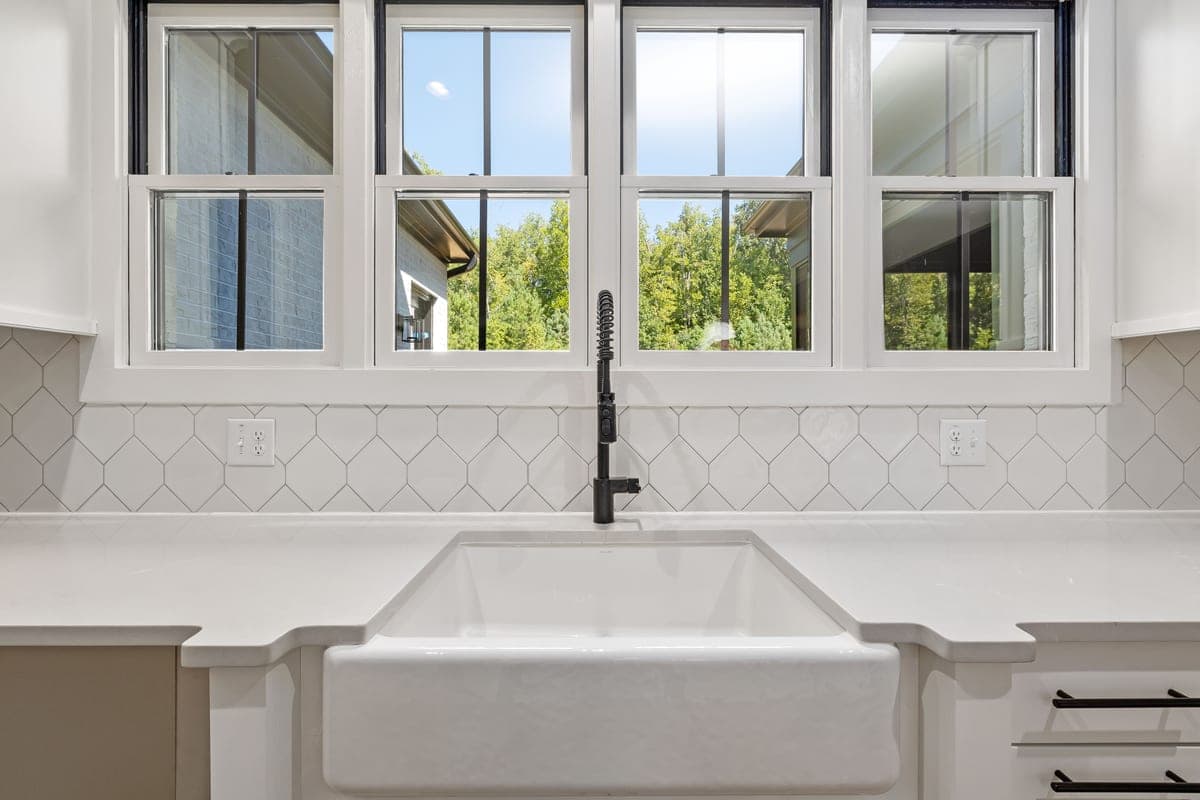
Photograph shows the product category, not this specific unit. We do not republish manufacturer product photography.
1. Best fireclay sink
BOCCHI Classico 30-inch fireclay farmhouse sink
BOCCHI · Best for farmhouse style, lighter than cast iron
Fireclay's argument against cast iron is the surface: the glaze is fired onto clay at very high temperature and is non-porous, rather than an enamel layer bonded to metal. This one ships with the bottom grid and strainer, and needs no flange extension for a disposal — a small detail that saves a trip to the store on install day.
Published specifications
What works
- Non-porous glaze, so staining is a cleaning problem rather than a permanent one
- Lighter than an equivalent enameled cast-iron sink, which simplifies cabinet support
- Grid and strainer in the box — the grid is what protects the glaze from dropped cast iron
- Takes a standard disposal flange without an extension kit
What does not
- Fireclay is a ceramic: a hard impact chips it, and a chip is not repairable the way a scratch in stainless is
- Hand-made dimensions vary slightly batch to batch, so cut the cabinet to the sink you received
- No independent lab publishes chip-resistance testing for fireclay sinks, so the material claims here are the manufacturer's
Skip it if
Skip it if your household is hard on a sink — dropped pots and ceramic do not mix. Choose 16-gauge stainless instead.
#ad Affiliate link · We publish no price; Amazon shows the current one
Photograph shows the product category, not this specific unit. We do not republish manufacturer product photography.
2. The cast iron alternative
Kohler Whitehaven K-6489
Kohler · Best for farmhouse looks without a custom cabinet
The enameled cast-iron farmhouse sink to buy, mainly for one structural reason: the self-trimming apron overhangs the cabinet face, so installation is a rough cut rather than a cabinetmaker's fit. That detail is the difference between a weekend job and a trade job. It is also heavy enough that the cabinet needs real support.
Published specifications
What works
- Self-trimming apron means a rough cabinet cut, not a precision one
- Enameled cast iron resists chipping, cracking and heat in a way composite does not
- The 2-degree slope and offset drain genuinely reduce standing water
- Kohler stocks matching drains and accessories, so the sink does not orphan
What does not
- Cast iron is heavy — the cabinet needs a proper support frame, and that is the real installation cost
- Enamel dulls under abrasive cleaners, and a dropped cast pan will chip it
- Kohler does not publish a unit weight on the range page, so plan support using your retailer's shipping weight
Skip it if
Skip it if you are installing alone, or over an existing base cabinet you cannot reinforce. Weight decides this one, not looks.
#ad Affiliate link · We publish no price; Amazon shows the current one
Raw specifications: Kohler’s own page for the Kohler Whitehaven K-6489.
Installation notes specific to fireclay
Most fireclay sinks are apron-front, which means cabinet work rather than countertop work — see farmhouse sinks for the support frame and height requirements. The material's weight advantage over cast iron is real and simplifies that support, though it is still a two-person lift.
One useful detail: BOCCHI states that the Classico needs no flange extension for a garbage disposal, which is not universal in thick-walled ceramic sinks. Thick basin walls sometimes mean a standard disposal flange cannot reach through, and an extension kit is required. Check that specification before ordering the disposal — disposal sizing and fit covers the rest of the clearance question.
What to take away
- The glaze is fired into the clay rather than bonded onto metal, which is why fireclay resists staining so well.
- It chips on hard impact and there is no practical repair. Use the bottom grid.
- Dimensions vary slightly because the material shrinks in the kiln — cut the cabinet to the sink you received.
- Check whether a disposal needs a flange extension for the basin wall thickness.
How we sourced this page
Every figure on this page came from one of the following. Where a manufacturer or an independent lab does not publish a number, we say so rather than estimate it.
Common questions
- What are the pros and cons of a fireclay sink?
- Pros: a non-porous glaze fired into the clay, so excellent stain resistance; quiet; heat and thermal-shock tolerant; lighter than cast iron. Cons: chips on hard impact with no practical repair; dimensions vary slightly because the material shrinks when fired; mostly available only as apron-front sinks.
- How durable is a fireclay sink?
- Very durable against staining, heat and everyday wear, and vulnerable to a single hard impact. That is the nature of a ceramic. No independent lab publishes chip-resistance testing for fireclay sinks, so treat specific durability claims — including a manufacturer's — as material reasoning rather than measurement.
- Is fireclay better than cast iron?
- Fireclay is lighter and its glaze is fired into the body rather than bonded to metal; cast iron is more impact-resistant but heavy enough to need a purpose-built support frame. If installation simplicity matters most, fireclay. If toughness matters most and the cabinet can be reinforced, cast iron.
- Is fireclay better than stainless steel?
- For appearance and stain resistance, yes. For durability under real abuse, no — stainless dents where fireclay chips, and a dent is survivable while a chip is permanent. Fireclay is an aesthetic choice with genuine functional strengths, not a tougher sink.
More in Kitchen Sinks
Three specifications settle almost every kitchen sink question: how thick the steel is, how it meets the counter, and what it is made of. Get those right and brand barely matters.
Read next

Guide
Cast iron sinks
What enameled cast iron is good at, the cabinet support it demands, and whether refinishing an old one is ever worth it.

Guide
Sink materials compared
Five materials compared on heat, impact, noise and repairability, with the honest failure mode of each one.
Best farmhouse sink
Farmhouse sinks
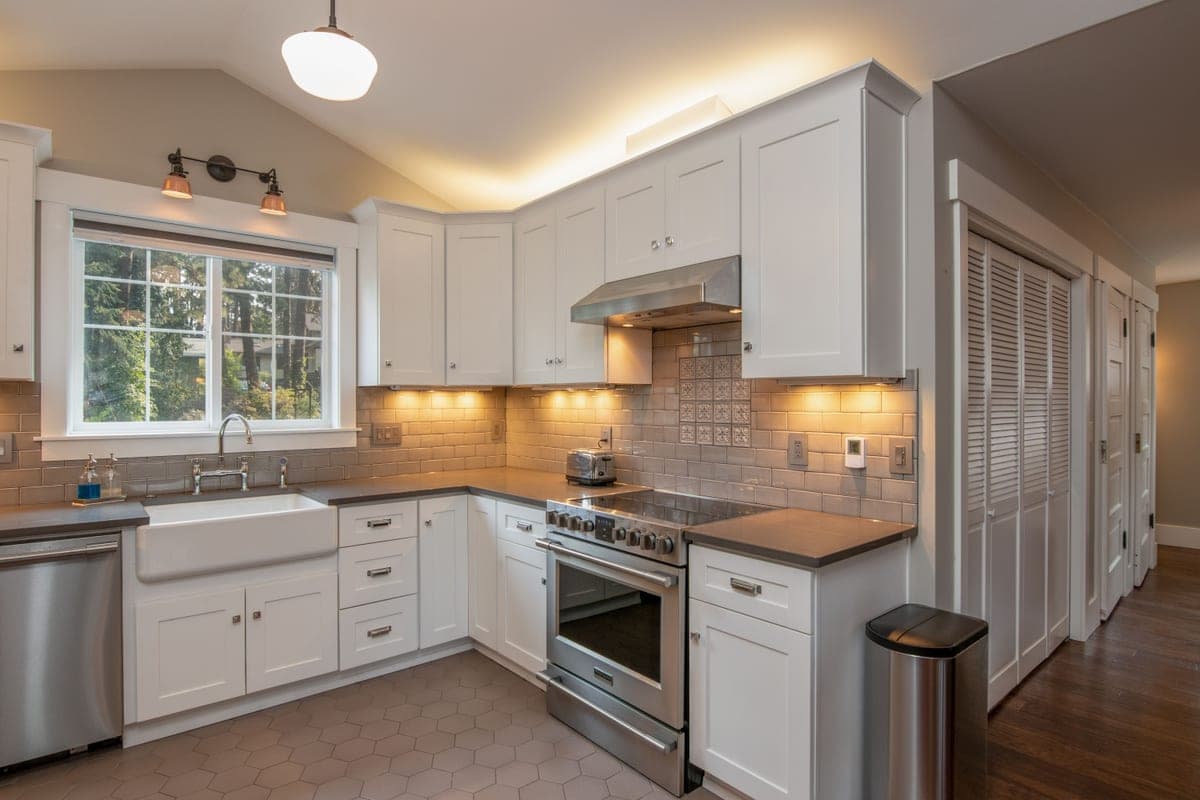
Apron-front dimensions, the cabinet modification involved, and why self-trimming is the detail that decides the difficulty.
Best kitchen sink
Best kitchen sinks
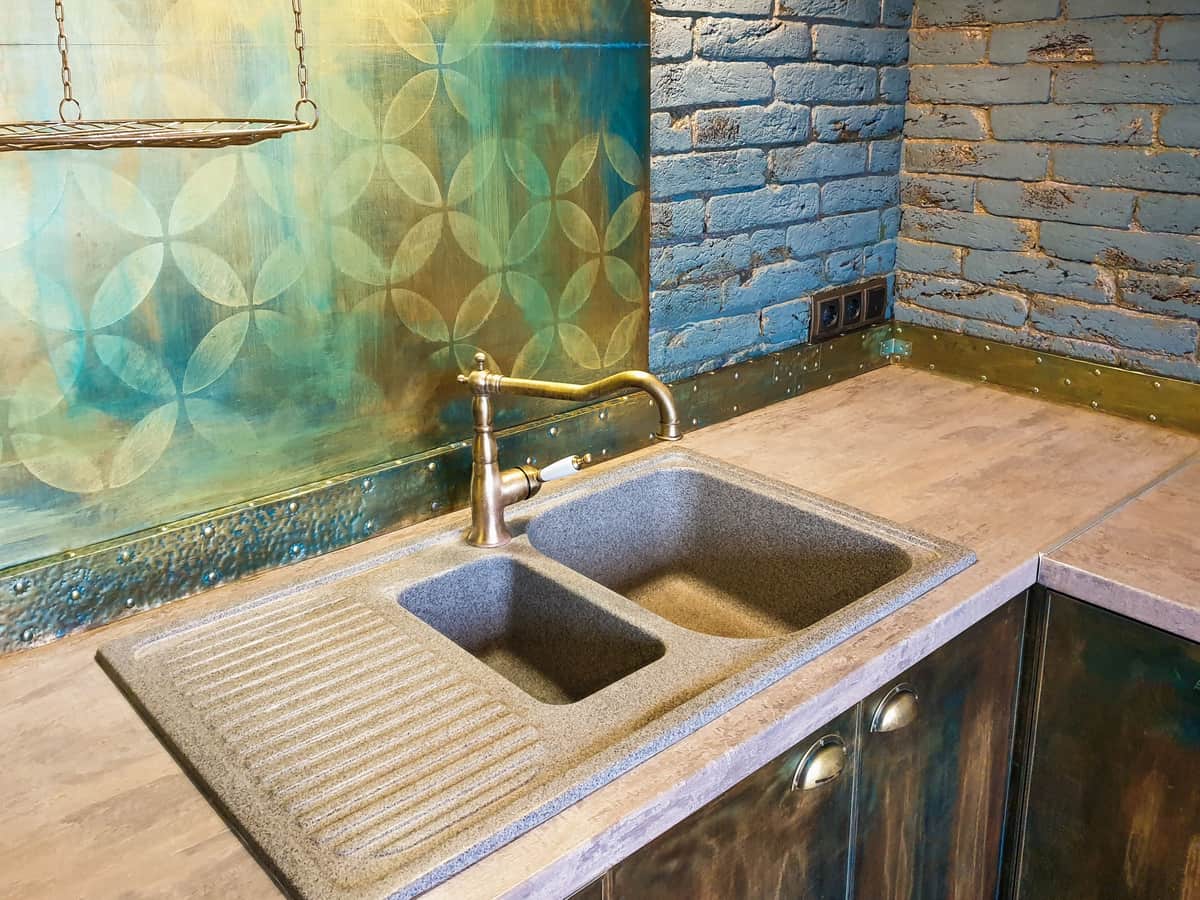
Five sinks across the four materials, compared on sourced dimensions, cabinet requirements and how each one fails.
Guide
Disposal sizing and fit
A height chart for common units, the two measurements to take first, and what thin or deep sinks change.
Found something out of date, or a figure you can source better than we did? Tell us — corrections get read first. Our methodology explains how picks are made, and contact is one click away.