Guides
What tools do you need to install a kitchen faucet?
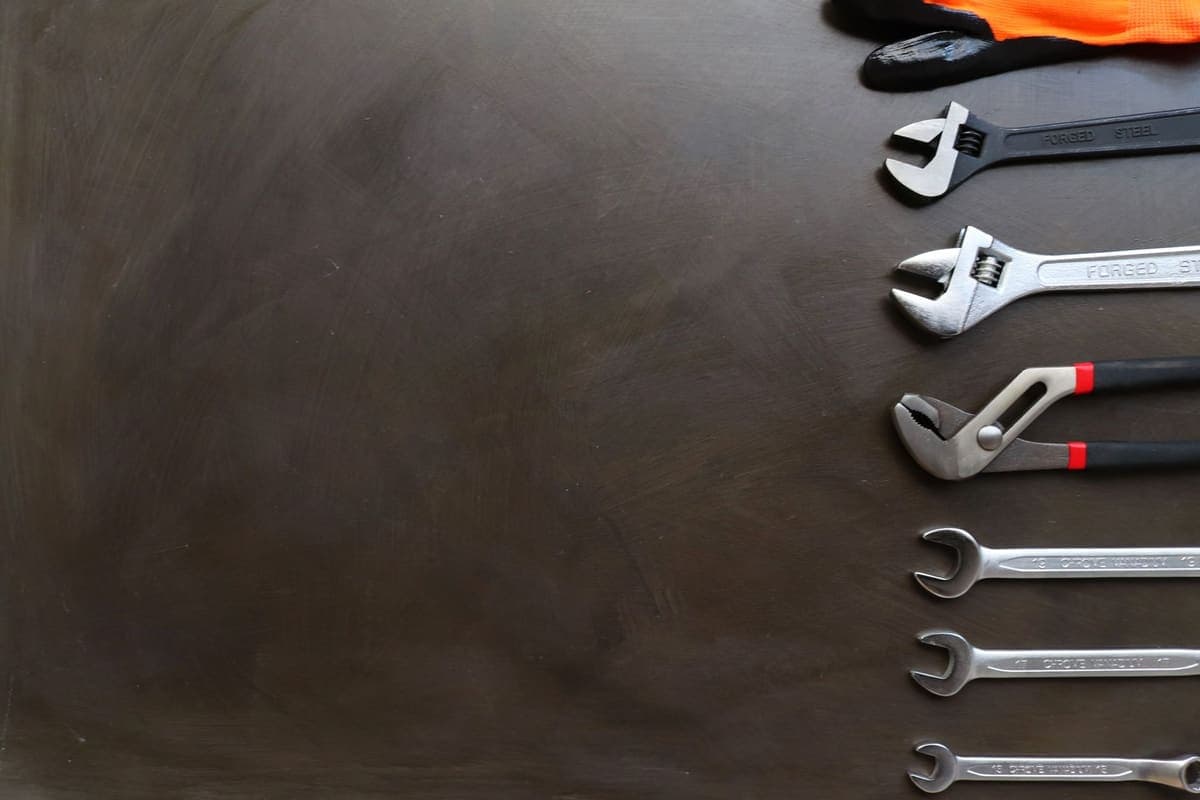
The list is short and one item on it is non-negotiable. The rest is about not having to stop halfway through with the water off.
Disclosure: we earn a commission if you buy through the Amazon links on this page, at no extra cost to you. Commission never decides a verdict or a ranking position — read our editorial policy and affiliate disclosure.
How we assessed these: this page lists tools and supplies, not prices or timings. No manufacturer publishes how long a faucet installation takes and we will not estimate one. Every product specification here is linked to the maker's own page.
Short answer
Six tools: a basin wrench, an adjustable wrench, a bucket and towels, penetrating oil, a flashlight or headlamp, and a utility knife. Three supplies: plumber's putty or silicone if the faucet ships without a gasket, new braided supply lines if the existing ones are old, and PTFE tape for threaded fittings. The basin wrench is the one that decides whether this is a two-hour job or a six-hour one — the mounting nuts sit behind the sink bowl where no ordinary wrench reaches.
Faucet installation is one of the few plumbing jobs where the tool list is genuinely short, and the reason people still end up stuck is that two of the items on it only matter at the one moment you discover you do not have them. Lay everything out on the counter before you close the shut-off valves. The water is off for the whole job, and a trip to the store with a sink full of disconnected plumbing is how an afternoon becomes a weekend.
The six tools
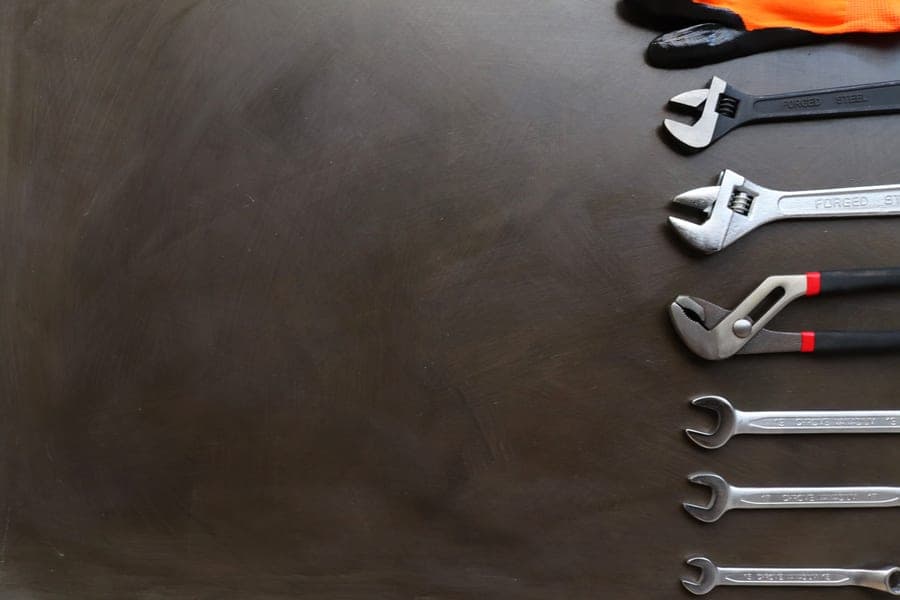
- A basin wrench. Non-negotiable. Faucet mounting nuts sit directly behind the sink bowl in a space nothing else reaches, and a basin wrench's spring-loaded head ratchets one-handed up there. Without one, people reach in with pliers, round the nut, and then genuinely do need a plumber.
- An adjustable wrench. For the supply-line connections at the shut-off valves, which are normal hex fittings in open space. One of a reasonable size is enough; two is better if you want to hold the valve while you turn the nut.
- A bucket and towels. There is water in the supply lines after the valves are shut, and there is water in the trap. Both will find you.
- Penetrating oil. For a mounting nut that has had thirty years of hard water on it. Spray it, go and do something else for twenty minutes, then try. This is the cheapest thing on the list and the one that most often saves the job.
- A flashlight or headlamp. A headlamp, if you have the choice. You will be on your back with one hand on a wrench and the other on the faucet body, and there is no third hand for a torch.
- A utility knife. For cutting away an old bead of silicone, opening packaging without climbing back out of the cabinet, and trimming a gasket if one needs it.
Why the basin wrench is the whole argument
A kitchen faucet is held down by nuts that sit on threaded shanks directly behind the bowl, usually 10 to 16 inches up inside a dark cabinet with a disposal or a garbage bin in the way. The access is the job. A basin wrench exists for exactly this: a long shank with a spring-loaded jaw on a pivoting head, so you push it up, it grabs, and it ratchets as you turn.
RIDGID publishes the specifications that matter on the Model 1017: a telescoping shank from 10 to 17 inches, jaw capacity from 3/8 to 1-1/4 inches, and a tension plug that holds the head at any angle up to 90 degrees. The telescoping shank is what lets one tool cover a shallow bathroom vanity and a deep kitchen base cabinet; the head angle is how you reach a nut sitting behind a disposal.
If a plumber is doing the work, skip it — they own one, and you would use yours perhaps twice a decade. Do you need a plumber to install a kitchen faucet sets out where that line falls, and it is not where most people think.
Photograph shows the product category, not this specific unit. We do not republish manufacturer product photography.
1. The one that decides the job
RIDGID Model 1017 telescoping basin wrench
RIDGID · Best for any faucet removal or install
The one tool that decides whether a faucet swap is a two-hour job or a six-hour one. Faucet mounting nuts sit behind the sink where no normal wrench reaches; a basin wrench's spring-loaded head ratchets one-handed in that space. The telescoping shank is what gets you from a shallow vanity to a deep kitchen cabinet.
Published specifications
What works
- The 10-to-17-inch telescoping shank covers both a shallow bathroom vanity and a deep kitchen base cabinet
- One-handed ratcheting matters, because the other hand is holding a flashlight
- Alloy steel jaws grip a plastic mounting nut without crushing it
- The head locks at an angle, which is how you reach a nut behind a disposal
What does not
- A single-purpose tool that lives in a drawer between faucet jobs
- A badly corroded nut still needs penetrating oil and patience, not a better wrench
- No substitute for clearing the cabinet out before you start
Skip it if
Skip it if a plumber is fitting the faucet — they own one, and you would use yours perhaps twice a decade.
#ad Affiliate link · We publish no price; Amazon shows the current one
Raw specifications: RIDGID’s own page for the RIDGID Model 1017 telescoping basin wrench.

Photograph shows the product category, not this specific unit. We do not republish manufacturer product photography.
2. Fewest joints to make
Delta Leland 9178-AR-DST
Delta · Best for most kitchens, one or three holes
The pull-down we would fit in most kitchens, because the two parts that usually fail first on a pull-down are the two Delta engineered around: the docking mechanism and the valve. MagnaTite pulls the wand back into the spout with a magnet instead of relying on a friction collar, and Diamond Seal keeps water off the valve. It ships with a deck plate, so it covers a three-hole sink or mounts through one.
Published specifications
- Flow rate
- 1.8 gpm source
- Spout height
- 7-7/8" deck to outlet source
- Spout reach
- 9-3/16" source
- Overall height
- 14-7/8" source
- Mounting
- Single hole; deck plate included for three-hole sinks source
- Supply lines
- Integrated InnoFlex PEX, pre-attached at the valve source
- Connection
- 3/8" compression source
- Warranty
- Delta limited lifetime source
- Lead compliance
- Meets NSF/ANSI 61 source
What works
- MagnaTite docking is a magnet, not a friction fit — a wand that stops seating is the most common pull-down complaint, and a magnet does not wear the way a plastic collar does
- Spout reach of 9-3/16" clears the far side of a standard 22-inch front-to-back sink
- Diamond Seal keeps water off the valve, which is what the lifetime warranty is really protecting
- Deck plate in the box, so a three-hole sink needs no extra part
What does not
- 1.8 gpm is higher than the 1.5 gpm most competitors now ship, which matters if your area caps flow rate
- Zinc body rather than brass — normal at this price, but this is not a forever faucet
- No independent lab publishes durability figures for this model, so we cannot tell you how the finish looks at year five
Skip it if
Skip it if your sink is a shallow bar sink: at 14-7/8" overall the arc will splash in a basin under about seven inches deep.
#ad Affiliate link · We publish no price; Amazon shows the current one
Raw specifications: Delta’s own page for the Delta Leland 9178-AR-DST.

Photograph shows the product category, not this specific unit. We do not republish manufacturer product photography.
3. Easiest hose connection
Moen Method 7585C
Moen · Best for wide double bowls and long reach
The longest reach of any faucet in this registry at 10.2 inches, on a pull-out body with a 68-inch hose. That combination is specifically what a wide double-bowl sink needs: enough reach to serve the far bowl from a centered faucet hole, and enough hose to take the water anywhere else.
Published specifications
What works
- 10.2 inches of reach is the longest here, and reach is the measurement that decides double-bowl usability
- A 68-inch hose is nine inches longer than the Sombra's, which matters for filling things on the floor
- Duralock quick connect makes the supply connection a push-fit rather than a wrench job
- 1.5 gpm with a two-function head — no third mode nobody uses
What does not
- A 9.04-inch spout is mid-height; very tall pots still need filling at an angle
- Moen does not publish a warranty term on this product page, so we do not state one
- Chrome shows water spotting more than the spot-resist finishes do
Skip it if
Skip it if your sink is a single bowl under 30 inches — you are paying for reach that will overshoot the drain.
#ad Affiliate link · We publish no price; Amazon shows the current one
Raw specifications: Moen’s own page for the Moen Method 7585C.
The supplies people forget
- A sealant, if the faucet has no gasket. Most modern faucets ship with a rubber or foam gasket under the base and need nothing. If yours does not, you need plumber's putty or silicone — and which one depends on the surface. Plumber's putty vs silicone has the rule.
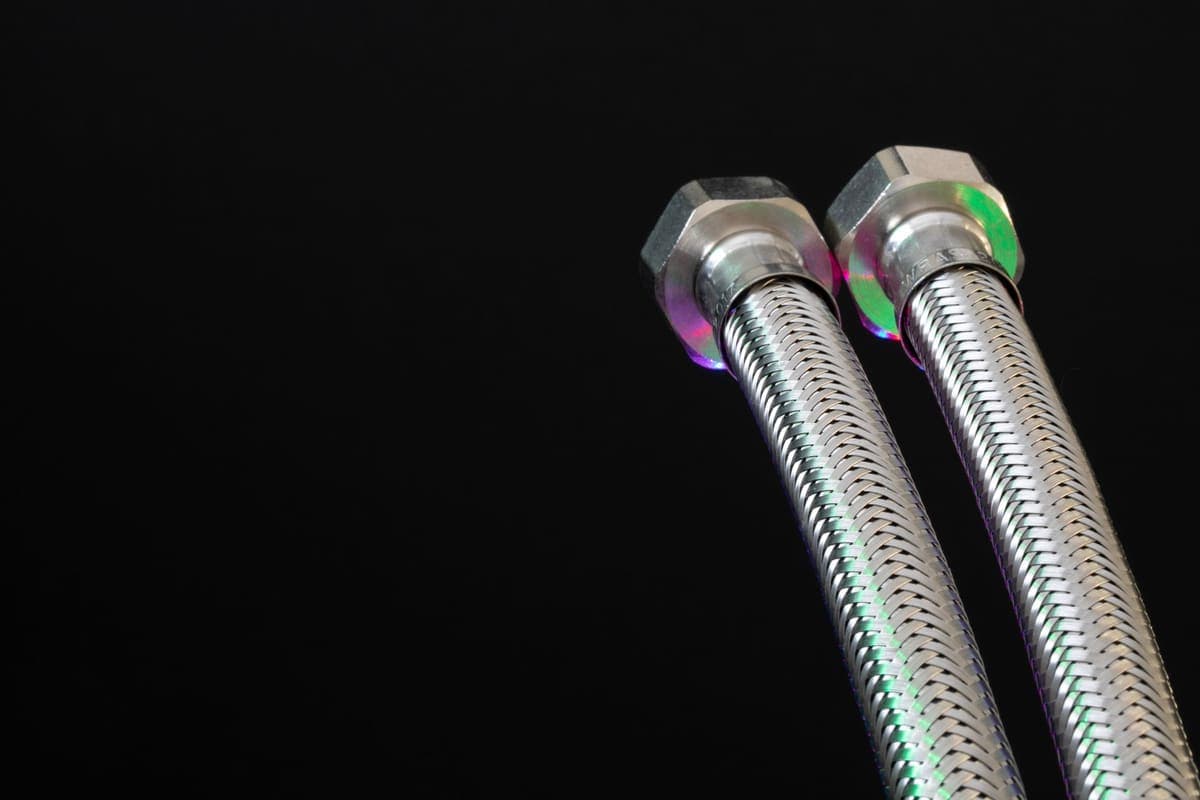
- New supply lines, if the old ones are old. Braided stainless lines are cheap and they are the one component whose failure floods a cabinet. If the existing ones are not obviously recent, replace them while everything is apart. What size are kitchen faucet supply lines covers what to buy.
- PTFE tape. For threaded pipe connections only — never on a compression fitting, where the seal is made by metal on metal and tape does nothing but confuse the next person.
- A new sink strainer or disposal gasket, if you are disturbing the drain at the same time. Old gaskets do not re-seat.
The supply lines are the one worth being strict about. They sit under pressure, permanently, in a cupboard nobody looks in. Replacing a pair while the cabinet is already empty costs very little; discovering a perished one has been weeping behind a bin for a month costs a floor.
What the faucet itself should bring
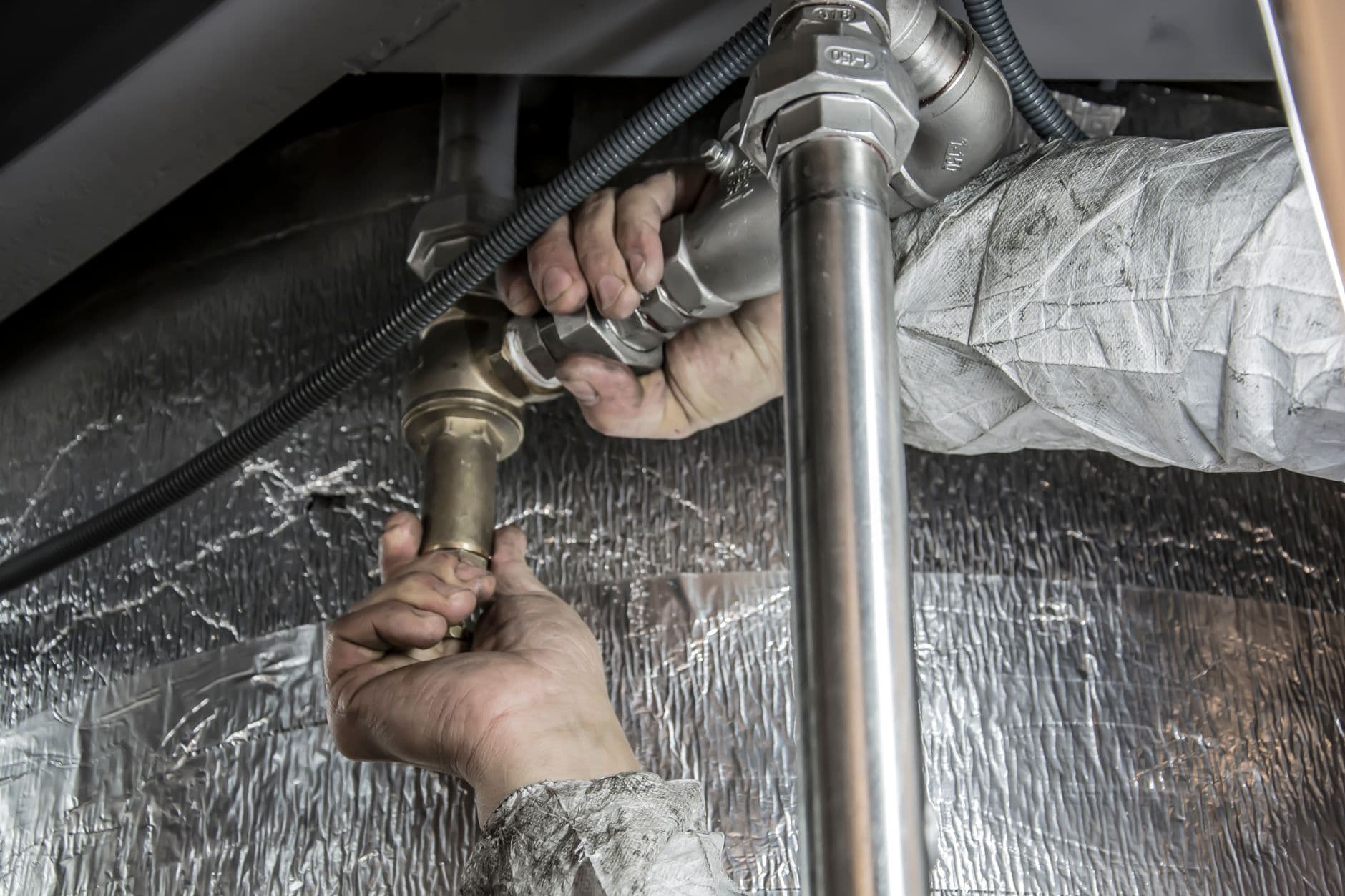
Two published features remove most of the tool list, and both are stated on the manufacturer's page before you buy. The first is how the supply lines connect. Delta ships integrated InnoFlex PEX lines pre-attached at the valve on the Leland 9178, with a 3/8-inch compression connection at the other end, so that is two joints you never make blind at the back of a cabinet.
The second is the hose connection on a pull-down or pull-out. Moen publishes Duralock quick connect on the Method 7585C and the Arbor 7594: the hose joins the valve body by push-fit rather than a coupling you tighten by feel, lying on your back. Both of those faucets also include a deck plate, which means a single-hole faucet covers an existing three-hole sink with no extra order and no new holes. Easiest kitchen faucets to install ranks the market on exactly these connections.
What you do not need
- A pipe wrench. Too big for anything in this job and capable of crushing a plastic nut you then cannot remove.
- A torch or solder. A faucet swap happens entirely between the two shut-off valves. If you are soldering, the job has changed and it is not this one.
- A faucet installation kit. The thing sold under that name is usually a basin wrench and a tube of sealant in a blister pack. Buy the wrench on its own; it will be a better wrench.
- Teflon tape on a compression fitting. It does nothing. Compression fittings seal with a brass ferrule crushed between the nut and the pipe.
One real exception: if the mounting nuts will not move even after penetrating oil, the tool that finishes the job is a nut splitter, and the price of using it is destroying the old faucet. If the old faucet is going in the bin anyway, that is not a price at all — and it is what a plumber would reach for without hesitating.
Before you shut the water off
- Open and close both shut-off valves while the old faucet still works. A valve that will not close changes the job entirely.
- Clear the cabinet completely and put down a towel.
- Lay out all six tools and all three supplies within reach of the cabinet.
- Open the new faucet's box and read what is in it, specifically whether there is a gasket and a deck plate.
- Count the holes in your sink and check them against the faucet. Faucet hole configurations covers what fits what.
- Spray penetrating oil on the old mounting nuts now, so it has twenty minutes to work while you do everything else.
Then the procedure: how to remove a kitchen faucet takes the old one out and how to install a kitchen faucet puts the new one in, with branches for single-hole and three-hole sinks.
What to take away
- Six tools: basin wrench, adjustable wrench, bucket and towels, penetrating oil, headlamp, utility knife.
- The basin wrench is the one that decides the job. Mounting nuts sit where nothing else reaches.
- Spray penetrating oil on the old nuts before you do anything else, so it has time to work.
- Replace the supply lines while the cabinet is empty — they are cheap and they are what floods a cupboard.
- A faucet with pre-attached supply lines and quick-connect hoses removes most of the fiddly work.
- PTFE tape belongs on threaded pipe, never on a compression fitting.
How we sourced this page
Every figure on this page came from one of the following. Where a manufacturer or an independent lab does not publish a number, we say so rather than estimate it.
Common questions
- Do I need a basin wrench to install a kitchen faucet?
- In practical terms yes, unless the sink is out of the counter and sitting on a bench. The mounting nuts are behind the bowl where no ordinary wrench fits, and the common alternative — reaching up with pliers — rounds the nut and turns a simple job into a difficult one.
- What supplies do I need to replace a kitchen faucet?
- New braided supply lines if the old ones are not recent, plumber's putty or silicone if the faucet ships without a gasket, and PTFE tape for any threaded pipe connection. If you are disturbing the drain or the disposal at the same time, add a fresh gasket for that too — old ones do not re-seat.
- Can I install a kitchen faucet without a basin wrench?
- Sometimes. Some modern faucets use a hand-tightened mounting nut or a bracket reached from the front, and a few ship with a plastic wrench sized for their own hardware. The old faucet is the problem: whatever is coming out was fitted with a conventional nut, and that is the one that will be seized.
- Is a kitchen faucet installation kit worth buying?
- Usually not. What is sold under that name is generally a basic basin wrench and a tube of sealant packaged together, and buying a proper telescoping basin wrench on its own gets you a tool that works better and lasts. Buy the wrench; buy the sealant when you know which one the faucet needs.
- Do you need plumber's tape to install a kitchen faucet?
- Only on threaded pipe connections, and most faucet installations have none — supply lines use compression fittings, which seal with a brass ferrule rather than tape. Putting tape on a compression fitting does nothing useful and misleads whoever opens it next.
More in Guides
Organized by task, not by date, because a faucet install guide does not go stale and should not get buried under a blog feed. Every guide includes the honest point at which to call a plumber.
Read next

How to
Install a kitchen faucet
Ten steps, branched by hole configuration, with the tools and parts list up front and the when-to-stop line stated plainly.
How to
How to remove a faucet
The removal procedure step by step, the three things that seize, and what to do when the mounting nut will not turn.
Guide
Do you need a plumber?
When a faucet swap is genuinely a DIY afternoon, the five conditions that make it a trade call, and the tool that decides which.
Easiest faucet to install
Easiest to install
Four faucets chosen on the connections you actually have to make under the sink, plus the one tool none of them removes the need for.
Guide
Faucet supply line sizes
Which end of a supply line decides the size you buy, what every faucet in this registry publishes, and how to choose a length that is not too short.

Guide
Plumber's putty vs silicone
Where each sealant belongs on a sink, the three surfaces that rule putty out, and why most modern faucets need neither.
Found something out of date, or a figure you can source better than we did? Tell us — corrections get read first. Our methodology explains how picks are made, and contact is one click away.