Guides
How to clean a granite composite sink
Composite is the one sink material where the wrong cleaner does damage you cannot buff out. Both makers who publish care guidance agree on what that cleaner is.

Disclosure: we earn a commission if you buy through the Amazon links on this page, at no extra cost to you. Commission never decides a verdict or a ranking position — read our editorial policy and affiliate disclosure.
How we assessed these: every method here is published manufacturer care guidance for granite or quartz composite sinks, read from Blanco's own SILGRANIT care page and Kraus's own Quarza product page on 2026-10-26 and linked at the instruction. We have not run cleaning trials, no independent laboratory publishes comparable stain-removal data for composite basins, and we name no cleaning product that a sink manufacturer has not named first.
Short answer
Clean a granite composite sink with a soft sponge, warm water and a mild ammonia-free dish soap, then rinse and dry the basin with a microfiber cloth after every use - drying is what prevents the water spots and clouding owners mistake for staining. Never use bleach, chlorine, ammonia, drain cleaner, solvents or any abrasive cleaner: all of them damage the resin permanently.
A composite sink is crushed stone held in an acrylic resin. The stone is extremely hard; the resin at the surface is not, and it is the part every cleaning decision affects. That is the whole reason this material needs its own page rather than the general advice that works on stainless. On steel, an abrasive cream is a legitimate tool. On composite it removes the resin, and the dull patch it leaves is permanent.
Quick picks
Tap any row to jump to the full write-up. There are no scores here because we run no test lab — how picks are chosen is published in full on our methodology page.
| # | Product | Best for | Our read | Price |
|---|---|---|---|---|
| 1 | 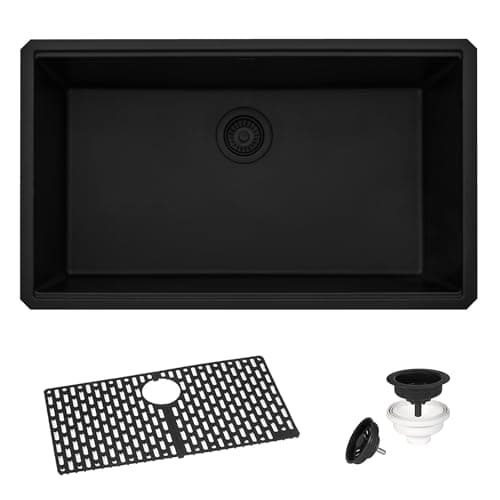 Ruvati epiGranite RVG2080 Prevention beats cleaning | Undermount installs where the mix matters | Ships with the silicone rinse grid that stops the marks in the first place | $349.00 · View on Amazon #ad Affiliate link · Price as of October 26, 2026 |
| 2 | 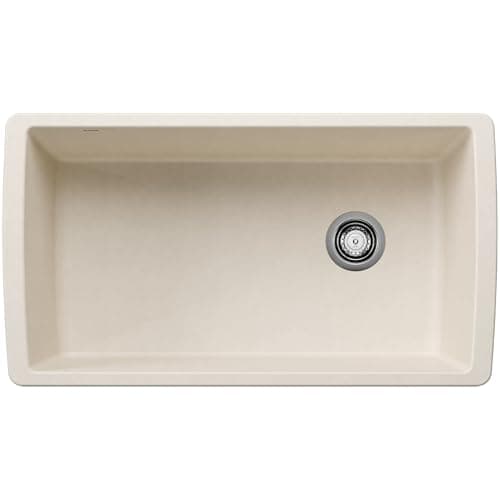 Blanco Diamond Silgranit super single Easiest composite to keep clean | Hard water and visible sinks | Color runs through the material, and the maker documents the routine | $584.35 · View on Amazon #ad Affiliate link · Price as of October 26, 2026 |
The daily routine, which is shorter than you think
Kraus's own care guidance for the Quarza line is specific about this: rinse and wipe the inside of the sink with a microfiber cloth after every use, to prevent water spots, clouding and discoloration. That is the entire daily job, and it is the one step that decides how the sink looks in two years. Composite does not spot the way stainless does, but minerals left to dry on it will cloud the surface, and cloudiness is what people then try to scrub off with the wrong product.
After every use
Rinse the basin
Run warm water around the whole basin, including the back wall behind the faucet, which is where splashes dry unnoticed.
Wipe with a soft sponge and mild soap
Kraus specifies water and a mild liquid soap detergent that is ammonia-free, applied with a soft sponge. Blanco's daily method is the same idea: mild dish soap on the soft side of a sponge, in small circular movements.
Rinse again with lukewarm water
Get all the soap off. Dried soap film is itself a cause of the dull look people blame on the sink.
Dry with a microfiber cloth
This is the step that matters. Kraus states it explicitly as the way to prevent water spots, clouding and discoloration. Blanco's method ends the same way.
Limescale, and the one place a mild acid belongs
Hard water leaves mineral deposits that discolor the surface and give later stains something to grip. Blanco's published guidance treats limescale as the first thing to deal with and names its own product - DailyClean+ - as the first step for it, left on the surface for a minute or two before being wiped off with a wet cloth or soft sponge, then rinsed and dried with microfiber.
If you would rather not buy a branded product, the principle is a mild acid rather than an abrasive. A dilute white vinegar or lemon solution, left briefly and then rinsed thoroughly, works on the same chemistry. Two cautions, both of which follow from what the makers publish: rinse completely, because acid left to dry on resin is not doing the surface any favors, and never combine it with any chlorine or bleach product. The best kitchen sinks for hard water is the page to read if scale is a constant battle rather than an occasional one.
Metal scuffs: the mark every composite owner gets
Drag an aluminum pan across a composite basin and it leaves a gray streak. It looks like a scratch in the sink. It usually is not - it is metal transferred onto the surface, which is why the standard instinct of attacking it with a scouring cream is both unnecessary and harmful.
Removing a metal scuff mark
Wet a sponge and add cooking oil
Blanco's published method: apply cooking oil to the soft side of a wet sponge.
Work the mark in circular motions
Light pressure, circular movements over the gray streak. The oil lifts the transferred metal; the sponge's soft side does not abrade the resin.
Rinse thoroughly with warm water
Get the oil off completely, with a little mild soap if needed.
Dry with a microfiber cloth
As with every other job on this page.
The deep clean, a couple of times a year
Over months, a composite basin picks up an even film from soap, food oils and minerals, and the sink looks flat rather than dirty. Blanco publishes a two-step answer: DailyClean+ for the limescale layer first, then its DeepClean Silgranit Set for the stains underneath. Kraus's product-page guidance for tough stains names third-party products instead - a melamine foam eraser and a scum and mineral deposit remover - rather than selling its own.
The honest summary across both makers is that a deep clean is a long soak and a gentle agent, never a hard scrub. Fill or wet the basin, let a mild detergent sit and do the work for a while, then rinse thoroughly and dry. If you cannot get a stain out with time and a mild product, more force is not the answer - it is how the surface gets damaged.
What never to put in a composite sink
Blanco and Kraus publish overlapping do-not-use lists. Together they come to this:
- Bleach, diluted bleach, and anything containing a bleaching agent. Blanco lists these first. This includes the bleach-based sprays sold for kitchen surfaces.
- Chlorine-based cleaners. Named by both makers.
- Ammonia. Kraus names ammonia specifically, and specifies that even the mild dish soap you use daily should be ammonia-free.
- Drain cleaners. Blanco lists these explicitly. A caustic drain cleaner sitting in the basin while it works is exactly the exposure the resin cannot take.
- Lyes and solvents. Blanco's list again. This sweeps in oven cleaner, paint thinner and most garage chemicals.
- Abrasive cleaners. Both makers. Scouring powders, abrasive creams and steel wool all remove resin from the surface, and that is not recoverable.
There is a practical consequence for anyone with a disposal: do not reach for a chemical drain opener when the sink is slow. Garbage disposal smells and the best disposal cleaners cover products made for the chamber rather than the basin, and kitchen sink gurgling diagnosis is the right starting point for a slow drain.
Heat is a cleaning problem, not just a cooking one
Thermal shock is composite's real limit, and it shows up as cleaning damage: a discolored or dulled patch where something hot sat. Kraus states the Quarza KGD-412B is heat safe up to 500°F, and adds in its own guidance that placing hot items straight from the stove or oven into the sink may cause surface discoloration, recommending a trivet or rolling mat. Note that Kraus states 600°F on its 33-inch Quarza page - the same material line, two figures - so treat either as indicative rather than a specification.
Blanco publishes no temperature figure at all for Silgranit and instead gives the instruction directly: do not place hot pans into the sink straight from the heat source; let them cool on a mat or a board first. That is more conservative than any number, and it is the advice we would follow. Boiling water poured down the drain is not the same risk as a dry pan set down on the resin - it is the hot metal in contact with the surface that does the damage.
Color changes how much of this you will notice
Light composite sinks show tea, coffee and turmeric more than dark ones. That is not a difference in the material's stain resistance, it is contrast - and it means the daily rinse-and-dry routine matters more on a white or putty basin than on a black one. If you are still choosing, it is worth factoring in honestly rather than assuming a light composite will behave like a light fireclay.
The other half of prevention is a grid. A silicone rinse grid or mat in the bottom of the basin stops pans from making contact with the surface at all, which addresses metal scuffs, chips and heat marks in one object. The Ruvati epiGranite ships with one, which is why it is the first pick on this page; are sink grids worth it answers the question properly if you need to buy one separately.
Product photograph supplied by Amazon for this listing, used under the Associates program.
1. Prevention beats cleaning
Ruvati epiGranite RVG2080
Ruvati · Best for undermount installs where the mix matters
The composite sink that publishes the figure the others leave out: 80% crushed natural granite, stated on Ruvati's own product page rather than described as stone-like. It is undermount only, 32 inches wide with a 30-1/4 inch basin, which is an unusually high share of the outside dimension given over to usable bowl.
Published specifications
- Overall size
- 32" wide x 19-1/4" front to back source
- Basin size
- 30-1/4" x 16-3/4" x 9-1/2" deep source
- Material
- 80% crushed natural granite in a proprietary resin source
- Mounting
- Undermount source
- Minimum cabinet
- 36" source
- Drain
- Standard 3-1/2" opening; matching strainer included source
- Certification
- cUPC certified by IAPMO to US and Canadian plumbing standards source
- Included
- Silicone rinse grid, strainer drain assembly, cut-out template, mounting clips, installation guide source
- Warranty
- Ruvati limited lifetime source
What works
- 80% crushed granite is published on the product page, so the material claim is checkable rather than atmospheric
- A 30-1/4 inch basin inside a 32-inch sink is the best bowl-to-footprint ratio of the composite sinks here
- A silicone rinse grid in the box, which protects the one surface composite does not forgive
- Single bowl at 9-1/2 inches deep takes a sheet pan flat
What does not
- Undermount only — there is no drop-in version of this model, so a laminate counter rules it out
- Ruvati's product page and its retail copy state different heat-resistance figures, so we quote neither
- No weight published, and a 32-inch composite undermount needs real support under the counter
- Ruvati's parts channel is smaller than Blanco's or Kohler's if a strainer or grid needs replacing in five years
Skip it if
Skip it if your countertop is laminate or butcher block — this sink has no drop-in rim, and an undermount on a wood-based core is a water problem waiting to happen.
#ad Affiliate link · Price as of October 26, 2026
Raw specifications: Ruvati’s own page for the Ruvati epiGranite RVG2080.
Product photograph supplied by Amazon for this listing, used under the Associates program.
2. Easiest composite to keep clean
Blanco Diamond Silgranit super single
Blanco · Best for hard water and visible sinks
The granite composite sink that answers the material's usual objection. Silgranit is up to 80% ground granite in an acrylic binder, and what it does better than stainless is hide everything: no water spots, no visible scratch pattern, no dent from a dropped pan. What it does worse is take a screaming-hot pan straight off the burner.
Published specifications
What works
- Hides limescale and water spotting better than any stainless finish — the reason to choose it in hard water
- Color runs through the material, so a scratch does not expose a different substrate
- Quieter than stainless without added pads, because the mass does the damping
- A 9-1/2" bowl is deep enough to lay a sheet pan flat
What does not
- Composite is not stainless: thermal shock is a real limit, so a very hot pan goes on a trivet
- Light colors show tea and turmeric staining more than dark ones
- Blanco publishes no thermal-limit figure, so we will not print one
Skip it if
Skip it if you routinely dump hot pans and boiling stock straight into the sink. Stainless tolerates that; composite is the wrong tool for it.
#ad Affiliate link · Price as of October 26, 2026
What we do not know
No independent laboratory publishes comparable stain-removal or abrasion data for composite sink surfaces, and no maker publishes a test method behind its stain-resistance claim. So there is no ranked list of cleaners for this material, from us or from anyone citing measurements. Everything above is published manufacturer care guidance, and where Blanco and Kraus differ - on whether to name a branded product or a third-party one, on whether to quote a heat figure - this page reports the difference rather than resolving it.
If you want to know which makers document their material properly before you buy one, the best granite composite sink brands ranks them on exactly that. The best granite composite kitchen sinks ranks the models themselves.
What to take away
- Rinse, wipe with mild ammonia-free soap, rinse again and dry with microfiber after every use. The drying step is what prevents clouding.
- Limescale wants a mild acid, not an abrasive - Blanco names its own DailyClean+; dilute vinegar or lemon works on the same chemistry if rinsed thoroughly.
- Gray streaks from pans are usually transferred metal, not scratches. Blanco's fix is cooking oil on a wet sponge in circular motions.
- Never use bleach, chlorine, ammonia, drain cleaner, lyes, solvents or any abrasive cleaner. All of them damage the resin permanently.
- Deep cleaning is a long soak with a mild agent, twice a year. If time and a gentle product will not shift a stain, more force is not the answer.
- Let hot pans cool on a mat or board before they go in the sink. Blanco publishes that instruction and no temperature figure; Kraus publishes 500°F on one Quarza page and 600°F on another.
- A silicone grid in the basin prevents metal scuffs, chips and heat marks at once, and is cheaper than any of them.
How we sourced this page
Every figure on this page came from one of the following. Where a manufacturer or an independent lab does not publish a number, we say so rather than estimate it.
- BLANCO - cleaning and care of SILGRANIT sinks (manufacturer care guidance)
- Kraus Quarza KGD-412B product page - care and cleaning guidance (manufacturer)
- Kraus Quarza KGD-433B 33-inch 50/50 double-bowl granite composite sink product page (published specifications)
- Blanco Diamond Silgranit super single bowl sink — manufacturer listing
- Ruvati epiGranite RVG2080 undermount granite composite sink product page (published specifications)
Common questions
- What is the best cleaner for a granite composite sink?
- A mild, ammonia-free liquid dish soap for daily use, which is what Kraus specifies. For limescale, Blanco names its own DailyClean+, and a dilute white vinegar or lemon solution works on the same chemistry if it is rinsed off thoroughly. There is no composite-specific cleaner we can rank, because no independent lab publishes comparable results.
- Can you use bleach on a granite composite sink?
- No. Blanco's published care guidance lists bleach, diluted bleach and anything containing a bleaching agent among the products to avoid, and Kraus names bleach and chlorine as capable of damaging the sink surface. The damage is to the resin and it is not repairable.
- Can you use Bar Keepers Friend or a scouring cream on composite?
- Not an abrasive one. Both makers list abrasive cleaners among the products to avoid, because abrasives remove resin from the surface and leave a dull patch that cannot be buffed out. If a product describes itself as a scouring powder or cream, it is the wrong product for this material.
- How do you get white marks or cloudiness off a composite sink?
- That is almost always limescale or dried soap film rather than damage. Treat it with a mild acid - Blanco's DailyClean+, or a dilute vinegar or lemon solution left briefly and rinsed thoroughly - then dry the basin with a microfiber cloth. Drying after every use is what stops it coming back.
- How do you remove gray metal marks from a composite sink?
- Blanco publishes the method: cooking oil on the soft side of a wet sponge, worked over the mark in circular motions, then rinsed with warm water and dried with microfiber. The marks are metal transferred from pans, so the oil lifts them without touching the surface.
- Can you pour boiling water into a granite composite sink?
- Water from a kettle is a much smaller risk than hot metal in contact with the surface. The published caution from both makers is about pans: Kraus recommends a trivet or rolling mat for extremely hot items, and Blanco instructs owners to cool a pan on a mat or board before it goes in the sink.
- Will a composite sink stain from coffee or turmeric?
- Light-colored basins show tea, coffee and turmeric more than dark ones, which is contrast rather than a difference in the material. Rinsing and drying the basin after use is the prevention; a long soak with a mild detergent, never a scrub, is the cure.
More in Guides
Organized by task, not by date, because a faucet install guide does not go stale and should not get buried under a blog feed. Every guide includes the honest point at which to call a plumber.
Read next
How to
Clean a stainless steel sink
The weekly method, what causes brown marks, and the products that permanently damage a brushed finish.
Best composite sink brand
Composite sink brands
Blanco, Ruvati and Kraus ranked on published mineral content, heat-figure consistency, cabinet minimums, what ships in the box and who documents care.
Best granite composite sink
Best composite sinks
Percent granite, bowl depth, minimum cabinet size and published heat limits for four composite sinks - plus the figures makers leave out.
Guide
Are sink grids worth it
What a bottom grid actually does for a stainless, composite or fireclay sink, the drawbacks nobody mentions, and four sinks that ship one in the box.
How to
Fix kitchen sink scratches
Material-by-material scratch repair: what blends out, what improves, and what should be left alone.
Best sink for hard water
Best sinks for hard water
Four sinks compared on how limescale behaves on each surface, with the honest note on which one still needs wiping dry.
Found something out of date, or a figure you can source better than we did? Tell us — corrections get read first. Our methodology explains how picks are made, and contact is one click away.