Guides
How to clean a stainless steel sink
Most stainless sink damage is done by cleaning products. Get the method right and a ten-year-old sink looks like a two-year-old one.
Disclosure: we earn a commission if you buy through the Amazon links on this page, at no extra cost to you. Commission never decides a verdict or a ranking position — read our editorial policy and affiliate disclosure.
Short answer
Wash with warm water and mild detergent, rinse, then dry with a cloth — drying is what prevents water spots. For dullness or marks, make a paste of baking soda and water, work it along the grain, rinse, then wipe with a little vinegar and rinse again. Never use steel wool or a scouring pad.
Stainless steel is not stain-proof, it is stain-resistant, and nearly all the damage people attribute to age is actually done by cleaning. The method below is deliberately dull, because dull is what works.
The weekly method
Clear the sink and rinse it down
Warm water, top to bottom, to shift loose debris before anything abrasive is anywhere near the surface.
Wash with mild detergent and a soft cloth or sponge
Work along the grain of the brushed finish — the fine directional lines — rather than across it or in circles.
Pay attention to the drain and the corners
That is where deposits build. A soft brush around the flange does what a scouring pad would, without the damage.
Rinse thoroughly
Detergent left to dry is its own dull film.
Dry the whole basin with a cloth
This is the step that does the most work. A dry basin cannot form a water spot, and spotting is what makes a sink look neglected.
Baking soda and vinegar, in the right order
The popular advice is to combine them, which mostly produces an entertaining fizz and a neutral solution that does neither job. Use them in sequence instead. Baking soda first: make a paste with water, work it along the grain with a cloth, and it lifts light marks and dulling without scratching, because the particles are softer than stainless. Rinse it off.
Then vinegar, sparingly: a little on a cloth, wiped over the basin, dissolves mineral deposits and leaves the surface brighter. Rinse it off promptly — vinegar is a mild acid and it does not want to sit on the finish or the drain seals.
Why a stainless sink turns brown
Almost always iron deposits rather than the sink itself rusting. Grade 304 stainless resists rust; what happens is that iron particles land on it — from steel wool, from a cast-iron pan left to drain, from a tin can standing in the basin, or from iron in the water supply — and those particles rust in place. It looks exactly like the sink corroding.
The fix is a baking soda paste, worked along the grain, then a vinegar wipe. The prevention is not leaving cast iron or tins standing in the basin, and never introducing steel wool to it.
Quick picks
Tap any row to jump to the full write-up. There are no scores here because we run no test lab — how picks are chosen is published in full on our methodology page.
| # | Product | Best for | Our read | Price |
|---|---|---|---|---|
| 1 |  OXO Good Grips silicone sink strainer Prevention beats cleaning | Catching scraps without plumbing | Stops the grounds and rice that stain and clog | Check price on Amazon #ad Affiliate link · We publish no price; Amazon shows the current one |
| 2 | 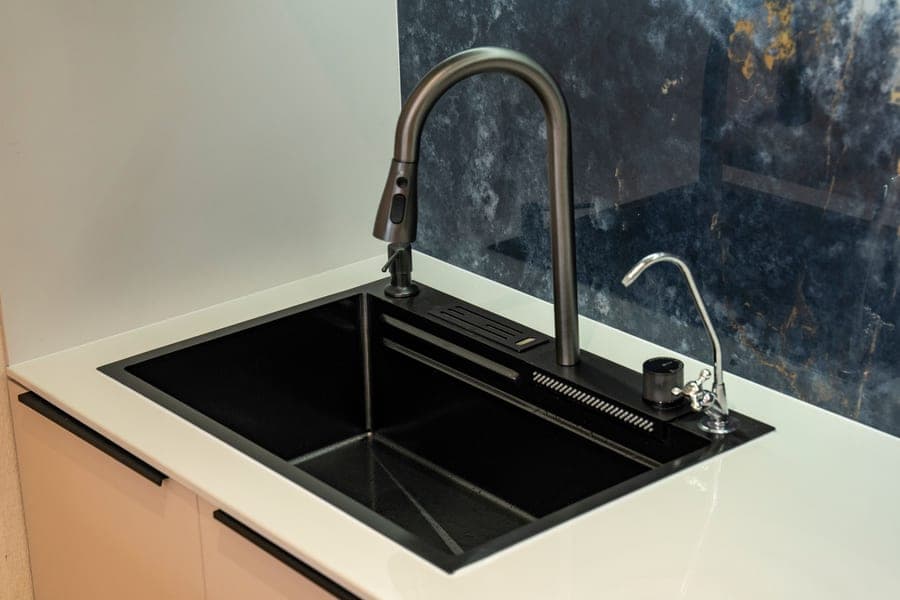 Kraus Kore KWU110-30 workstation sink Easiest stainless to keep clean | Small kitchens that need counter space | Tight radius corners and a rear-offset drain | Check price on Amazon #ad Affiliate link · We publish no price; Amazon shows the current one |
Scratches, and what to do about them
A brushed stainless sink acquires a fine uniform patina over a couple of years and most people stop seeing it. A single deep scratch across the grain is different, and it can be improved — carefully, with the grain, using a fine non-woven abrasive pad matched to the finish. It is a real technique with a real risk of making things worse, and it is covered properly on how to fix kitchen sink scratches.
Habits that keep a sink looking new
- Dry it at the end of the day. One cloth, thirty seconds, and it is most of the battle.
- Do not leave cast iron, tins or steel utensils standing in the basin.
- Rinse away anything salty or acidic rather than letting it sit — brine and citrus are harder on a sink than hot water is.
- Use a bottom grid. It keeps cookware off the base, which is where scratches concentrate.
- Fit a drain strainer, so coffee grounds and rice never reach the trap — see best sink strainers.
Photograph shows the product category, not this specific unit. We do not republish manufacturer product photography.
1. Prevention beats cleaning
OXO Good Grips silicone sink strainer
OXO · Best for catching scraps without plumbing
The right answer for most people asking about a sink strainer: a flexible silicone basket that drops into a standard drain, lifts out by a handle, and goes in the dishwasher. It is the cheapest way to stop the two things that actually clog a kitchen drain — coffee grounds and rice.
This manufacturer does not publish a specification table for this product. Rather than repeat figures we cannot source, the assessment here is limited to what the product category and the manufacturer's own listing genuinely establish.
What works
- Drops in and lifts out — no tools, no plumbing, no commitment
- Silicone flexes, so you can invert it over the bin instead of picking debris out
- Dishwasher safe, which is the difference between a strainer you empty and one you avoid
- Fits standard drain openings, including over a disposal
What does not
- Does not hold water for soaking — it is a screen, not a stopper
- Sits visibly in the sink, which some people dislike
- Silicone eventually stains from turmeric and tomato
Skip it if
Skip it if the drain assembly itself is failing or leaking — that needs a basket strainer replacement, not a screen.
#ad Affiliate link · We publish no price; Amazon shows the current one
Raw specifications: OXO’s own page for the OXO Good Grips silicone sink strainer.
Photograph shows the product category, not this specific unit. We do not republish manufacturer product photography.
2. Easiest stainless to keep clean
Kraus Kore KWU110-30 workstation sink
Kraus · Best for small kitchens that need counter space
The workstation sink we would buy, and the clearest case for 16-gauge steel anywhere in this category: a ledge sink is the one configuration where basin flex is genuinely audible, because accessories rest on the rim and transmit it. Ten inches deep, rear-offset drain, and the grid, mat, board and strainer are in the box rather than a $200 upsell.
Published specifications
- Overall size
- 30" x 19" source
- Bowl size
- 28" x 16" source
- Bowl depth
- 10" source
- Gauge
- 16-gauge stainless steel source
- Minimum cabinet
- 33" left to right, 24" front to back source
- Drain
- Rear offset, 3-1/2" opening source
- Sound damping
- NoiseDefend pads covering over 80% of the basin, plus undercoating source
- Warranty
- Kraus limited lifetime source
What works
- The integrated ledge turns a 30-inch sink into prep counter, the best single trade available in a small kitchen
- Rear-offset drain leaves usable cabinet space under the front of the sink
- Genuine 16-gauge with pads over 80% of the basin — gauge and damping do different jobs, and this sink has both
- A 3-1/2" drain opening takes a standard disposal flange with no adapter
What does not
- Needs a 33-inch cabinet for a 30-inch sink — measure before ordering
- A 10-inch deep bowl is a long reach for a shorter person
- The accessories are the reason to buy it and also the reason it costs more than a plain undermount
Skip it if
Skip it if your run of counter is already generous — you would be paying for prep space you do not need, and a plain 18-gauge undermount will serve.
#ad Affiliate link · We publish no price; Amazon shows the current one
Raw specifications: Kraus’s own page for the Kraus Kore KWU110-30 workstation sink.
What about proprietary stainless cleaners?
Many are good and they are mostly doing two things: a mild abrasive to lift marks and an oil or polymer to leave a water-shedding film. That film is genuinely useful in hard water, because it delays droplets drying into spots. What to avoid is anything that markets itself on removing rust and limescale effortlessly, which usually means a strong acid — fine on tile grout, wrong on a finished sink and its seals.
What to take away
- Drying the basin is the single most effective habit, and it is free.
- Use baking soda then vinegar in sequence, not mixed together.
- Brown marks are almost always iron deposits, not the sink rusting.
- Steel wool and bleach cause permanent damage. Nothing else on the shelf is as harmful.
How we sourced this page
Every figure on this page came from one of the following. Where a manufacturer or an independent lab does not publish a number, we say so rather than estimate it.
Common questions
- How do I make my stainless steel sink shine?
- Wash with mild detergent, rinse, then work a baking soda paste along the grain to lift dulling, rinse again, wipe with a little vinegar and rinse. Finally dry the whole basin with a cloth. The drying step is what produces the shine, and skipping it is why sinks look dull.
- How do I clean a stainless steel sink that has turned brown?
- Those marks are almost always iron deposits rather than the sink rusting — from steel wool, a cast-iron pan left to drain, a tin standing in the basin, or iron in the water. A baking soda paste worked along the grain, followed by a vinegar wipe and a thorough rinse, removes them.
- Can I use baking soda and vinegar together on a sink?
- You can, but they largely neutralize each other, so you get fizz instead of cleaning. Use baking soda first as a gentle abrasive along the grain, rinse it off, then use a little vinegar to dissolve mineral deposits and rinse again.
- How do I clean a stainless steel sink without scratching it?
- Soft cloth or sponge, mild detergent, and always work along the grain of the brushed finish rather than across it. For stubborn marks use a baking soda paste, which is softer than stainless. Never use steel wool or a scouring pad: both scratch across the grain permanently and steel wool leaves iron particles that rust in place.
More in Guides
Organized by task, not by date, because a faucet install guide does not go stale and should not get buried under a blog feed. Every guide includes the honest point at which to call a plumber.
Read next

How to
Fix kitchen sink scratches
Material-by-material scratch repair: what blends out, what improves, and what should be left alone.
Guide
Sink materials compared
Five materials compared on heat, impact, noise and repairability, with the honest failure mode of each one.
Head to head
16 gauge vs 18 gauge
16 gauge is 25% thicker steel. What that buys, what it does not buy, and why sound-deadening coverage is the spec nobody advertises.
Guide
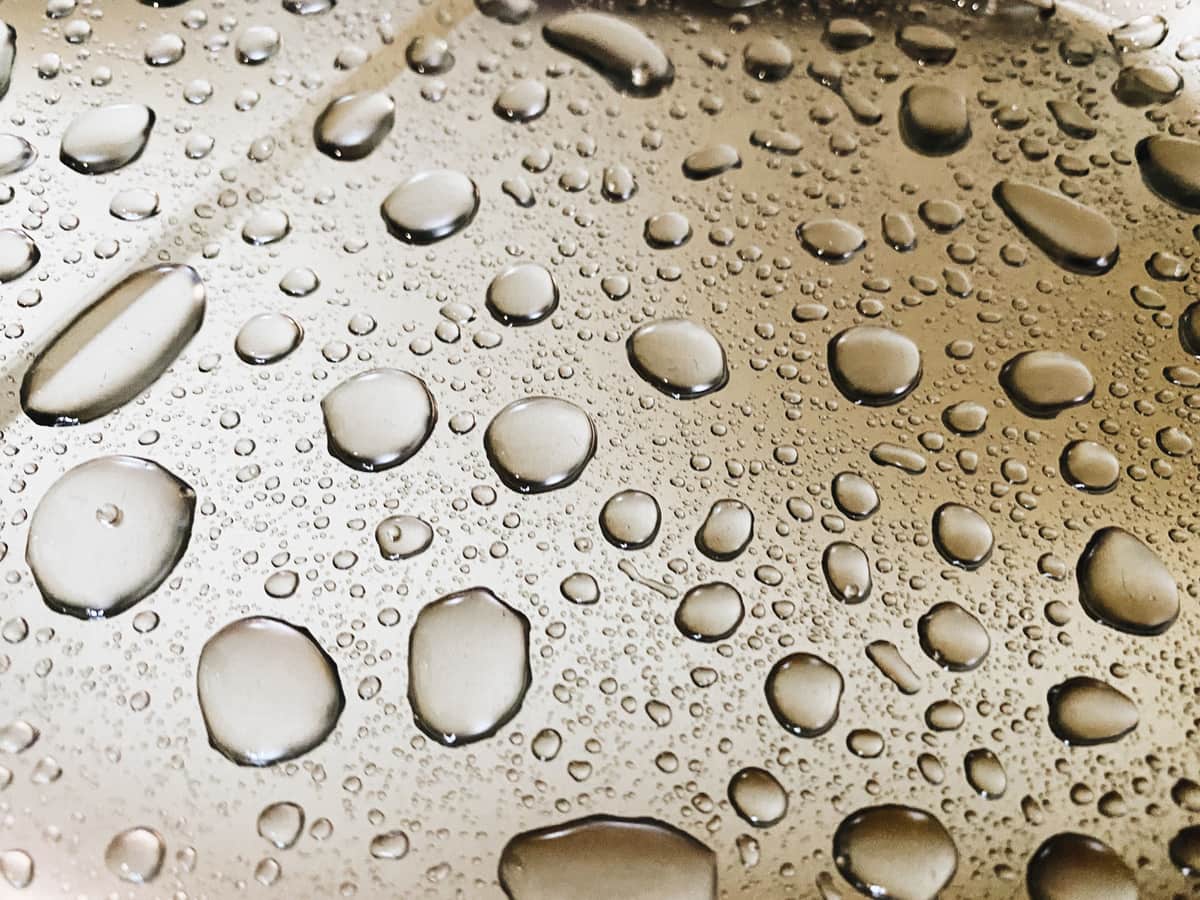
Which finish hides water spots
A ranked answer to the hard-water finish question, and why texture rather than brand decides what you see.

Best sink strainer
Best sink strainers
Basket strainer or drop-in screen — what each does, which fits a disposal, and the two worth buying.
Found something out of date, or a figure you can source better than we did? Tell us — corrections get read first. Our methodology explains how picks are made, and contact is one click away.