Guides
Why your kitchen sink gurgles, and how to stop it
A gurgle is the sound of air finding a way into the drain through the water seal. Find out where the air should be coming from instead.
Disclosure: we earn a commission if you buy through the Amazon links on this page, at no extra cost to you. Commission never decides a verdict or a ranking position — read our editorial policy and affiliate disclosure.
How we assessed these: this is a diagnostic sequence based on how drain and vent plumbing works, not on measurements. We publish no labor rates and no repair timings. Product specifications are linked to the maker's own page at every figure, and anything involving opening a wall, a roof vent or a sewer line is a licensed-plumber job we tell you to hand over rather than guess at.
Short answer
A gurgling kitchen sink is the sound of air being pulled backwards through the water in your P-trap, because the drain cannot get air from where it is supposed to — the vent. The four causes, in order of likelihood, are a partial blockage in the trap or trap arm, a blocked or frozen vent, a failed air admittance valve, and a dishwasher or disposal discharge that is fighting the drain. Start by filling and releasing a full sink of water: if the gurgle only happens under that load, it is a restriction; if it gurgles on a small amount too, suspect the vent.
The mechanism is worth understanding because it tells you where to look. Every drain has a P-trap holding a small plug of water, which is what keeps sewer gas out of your kitchen. When water runs down the pipe it pushes air ahead of it and pulls a partial vacuum behind it. The vent — a pipe running up through the roof, or a valve under the sink — lets outside air in to fill that vacuum.
If the vent cannot supply that air, the vacuum takes it from the only other place available: back through the trap water, from the room. That is the gurgle. It is not a cosmetic noise — a trap that keeps getting pulled through can lose its seal, and then you get a drain smell as well.
1. A partial blockage, in the trap or the trap arm
This is the commonest cause and the one you can deal with yourself. A restriction in the trap or the horizontal arm running to the wall makes the water column move faster and fuller through a narrower space, which deepens the vacuum behind it. The result is a gurgle on a big release of water — emptying a full bowl — and usually a slow drain as well.
- Fill the sink, pull the plug, and listen. A gurgle only under a full load points at a restriction.
- Clear the basket strainer and look down the drain. Then put a bucket under the trap, unscrew the slip nuts and clean it out by hand.
- Check the trap arm — the horizontal section to the wall — with a hand auger or a short drain snake. A grease-and-coffee-ground sleeve in the arm is the classic finding.
- Do not pour a caustic drain product in before you open the trap. If you then open it, you are working in caustic water.
- If the trap and arm are clear and it still gurgles, stop looking at the drain and look at the vent.
2. A blocked vent
A vent stack runs from your drain line up through the roof. Leaves, a bird's nest, a wasp nest, debris or — in cold climates — a frost plug can close it, and then no fixture on that stack can breathe. The signature is gurgling that happens even on modest amounts of water, often in more than one fixture, and sometimes a faint drain smell as traps lose their seal.
Checking a roof vent means going on the roof, and clearing one means working down it. If you are not confident doing that safely, this is the point to call a plumber — it is a standard job for them and a fall risk for you. Tell them you suspect a blocked vent and what you have already ruled out; it will save them an hour.
3. A failed air admittance valve
Many kitchen islands and some remodeled sinks are vented not through the roof but by an air admittance valve — a spring-loaded one-way valve under the sink, often called by the brand name Studor. It opens to let air in when the drain pulls a vacuum, and closes to keep sewer gas out.
They fail stuck shut, and when they do you get textbook gurgling from a sink that was fine for years. Look under the sink for a vertical pipe stub, usually a couple of inches across, capped with a plastic dome. If you have one, it is cheap and quick to replace, and it is the single highest-yield check on an island sink. Note that local plumbing codes differ on where these valves are permitted — check yours, or let a plumber specify the replacement.
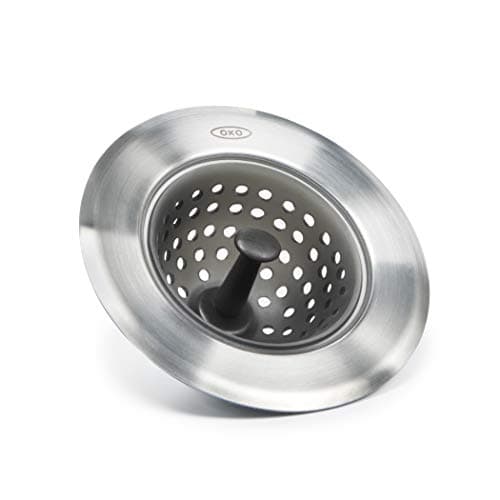
Product photograph supplied by Amazon for this listing, used under the Associates program.
1. Best prevention
OXO Good Grips silicone sink strainer
OXO · Best for catching scraps without plumbing
The right answer for most people asking about a sink strainer: a flexible silicone basket that drops into a standard drain, lifts out by a handle, and goes in the dishwasher. It is the cheapest way to stop the two things that actually clog a kitchen drain — coffee grounds and rice.
This manufacturer does not publish a specification table for this product. Rather than repeat figures we cannot source, the assessment here is limited to what the product category and the manufacturer's own listing genuinely establish.
What works
- Drops in and lifts out — no tools, no plumbing, no commitment
- Silicone flexes, so you can invert it over the bin instead of picking debris out
- Dishwasher safe, which is the difference between a strainer you empty and one you avoid
- Fits standard drain openings, including over a disposal
What does not
- Does not hold water for soaking — it is a screen, not a stopper
- Sits visibly in the sink, which some people dislike
- Silicone eventually stains from turmeric and tomato
Skip it if
Skip it if the drain assembly itself is failing or leaking — that needs a basket strainer replacement, not a screen.
#ad Affiliate link · Price as of October 17, 2026
Raw specifications: OXO’s own page for the OXO Good Grips silicone sink strainer.
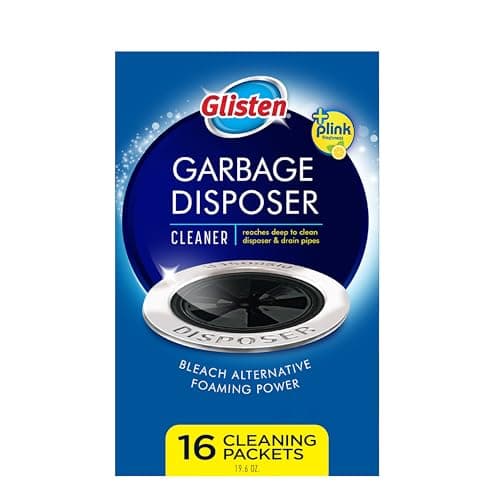
Product photograph supplied by Amazon for this listing, used under the Associates program.
2. Best for a fouled disposal
Glisten Disposer Care foaming cleaner
Glisten (Summit Brands) · Best for odor from the chamber walls
The product to reach for when a disposal smells, because the foam is the mechanism: the odor lives in the film on the chamber walls and the underside of the splash guard, where running water never reaches. A foaming cleaner expands into that space. Ice cubes and lemon peel scour the impellers, which are not where the smell is.
Published specifications
What works
- Foam reaches the upper chamber and the baffle underside, where the odor actually is
- Takes two minutes and no disassembly
- Single-use packets, so there is no part-used bottle under the sink
- Safe for the disposal itself, unlike a caustic drain opener
What does not
- It is a cleaner, not a repair: a smell that returns in two days is a trapped-food or trap problem
- Cost per use is high compared with removing the splash guard and scrubbing it
- The manufacturer publishes no independent efficacy testing, and we have measured none
Skip it if
Skip it if the smell comes back within a day or two — that is a blocked trap or food caught above the baffle, and cleaner fixes neither.
#ad Affiliate link · Price as of October 17, 2026
Raw specifications: Glisten (Summit Brands)’s own page for the Glisten Disposer Care foaming cleaner.
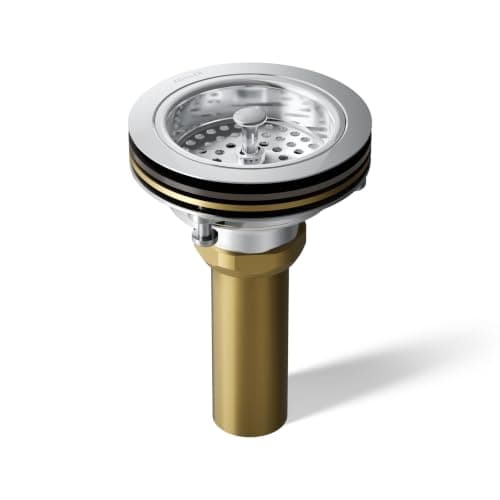
Product photograph supplied by Amazon for this listing, used under the Associates program.
3. Best drain replacement
Kohler Duostrainer K-8801
Kohler · Best for replacing a failed sink drain
The permanent answer rather than the drop-in one: a full basket-strainer assembly with the tailpiece included, so it replaces the drain hardware instead of sitting in it. The basket both catches debris and holds water for soaking, which is the pair of jobs a silicone mesh screen cannot do.
Published specifications
What works
- Brass body rather than plated steel, which is what makes a drain assembly last
- Tailpiece included, so the install is one part rather than three
- The stopper seals well enough to soak a pan, which a mesh screen cannot
- Fits both 3-1/2" and 4" outlets, covering nearly every stainless sink
What does not
- It is a drain replacement, not an accessory — budget thirty minutes and plumber's putty
- Finish matching to a faucet is approximate across brands
- Overkill if your existing drain is sound and you only want to catch peelings
Skip it if
Skip it if your drain works and you only want to keep food out of the disposal. Buy the silicone screen and keep the difference.
#ad Affiliate link · Price as of October 17, 2026
Raw specifications: Kohler’s own page for the Kohler Duostrainer K-8801.
4. The disposal or dishwasher is fighting the drain
A garbage disposal discharges a slug of water and ground waste all at once, which is a harder load on a drain than a tap. If the drain and vent are marginal, that slug is what tips it into gurgling. The same goes for a dishwasher pumping out through the disposal's inlet.
Two specific things to check. The disposal's own chamber and grind ring can foul with a fat-and-fiber layer that effectively narrows the outlet — a foaming cleaner addresses that, and garbage disposal smells covers the same build-up from the odor side. And the dishwasher drain hose must be looped high under the counter; a hose that sags lets water sit and makes the gurgling worse. How to install a garbage disposal shows the hose routing and the inlet plug.
| What you hear | Most likely cause | First thing to do |
|---|---|---|
| Gurgles only when a full sink drains | Partial blockage in trap or trap arm | Open and clean the trap, then auger the arm |
| Gurgles on small amounts too | Blocked vent or failed air admittance valve | Check under the sink for an AAV; otherwise the roof vent |
| Gurgles in two or more fixtures | Blocked main vent stack | Call a plumber - this is a roof and stack job |
| Gurgles only when the disposal or dishwasher runs | Marginal drain plus a slug load | Clean the disposal chamber; check the dishwasher hose loop |
| Gurgles and smells | Trap seal being pulled, so sewer gas is entering | Treat as a vent problem and get it looked at promptly |
| Gurgles and water backs up into the other bowl | Blockage downstream of the tee | Clear the shared section, not the individual traps |
This table maps symptoms to the plumbing behavior that produces them. It is a diagnostic sequence, not a set of measurements - there is nothing here to cite a figure for, and we have not invented one.
When to stop and call someone
Hand the job over if the gurgling appears in more than one fixture, if it comes with sewage smell or any backing up, if the vent work means going on a roof, or if your sink is on an island and you cannot find an air admittance valve under it. All four of those are either a shared-stack problem or a working-at-height problem, and neither is a place to experiment.
What is squarely yours is the trap, the trap arm, the strainer, the disposal chamber and the dishwasher hose. Those four cover most gurgling sinks and none of them needs a trade. If you are also dealing with a slow drain or a leak, garbage disposal leaking diagnosis and kitchen faucet leaking diagnosis are the companion sequences.
What to take away
- A gurgle is air being pulled back through the trap water because the vent cannot supply it.
- Fill and release a full sink: gurgling only under that load means a restriction, not a vent.
- Open and clean the trap by hand before using any caustic product - not after.
- On an island sink, check for a failed air admittance valve under the cabinet first. It is the highest-yield fix.
- Gurgling in two or more fixtures means the shared vent stack, which is a plumber's job.
- Gurgling plus a smell means the trap seal is being pulled - get that looked at promptly.
How we sourced this page
Every figure on this page came from one of the following. Where a manufacturer or an independent lab does not publish a number, we say so rather than estimate it.
Common questions
- Why does my kitchen sink gurgle when it drains?
- Because the draining water is pulling a vacuum behind it and cannot get air from the vent, so it pulls air back through the water in your P-trap instead. That is the gurgle. The cause is usually a partial blockage in the trap or trap arm, or a vent that cannot supply air.
- Is a gurgling sink serious?
- It is worth fixing rather than ignoring. The gurgle itself is harmless, but a trap that keeps getting pulled through can lose its water seal, and then sewer gas enters the kitchen. Gurgling together with a smell, or gurgling in more than one fixture, should be looked at promptly.
- Can a garbage disposal cause a sink to gurgle?
- It can expose a problem rather than cause one. A disposal discharges a slug of water and ground waste all at once, which is a harder load than a tap, so a drain or vent that is already marginal will gurgle under it. Clean the disposal chamber and check the dishwasher hose loop first.
- How do you fix a gurgling sink on a kitchen island?
- Island sinks are often vented by an air admittance valve under the cabinet rather than through the roof, and those fail stuck shut. Look for a vertical pipe stub capped with a plastic dome; replacing it is cheap and quick. Check your local code on where those valves are permitted, or have a plumber specify it.
More in Guides
Organized by task, not by date, because a faucet install guide does not go stale and should not get buried under a blog feed. Every guide includes the honest point at which to call a plumber.
Read next
Troubleshooting
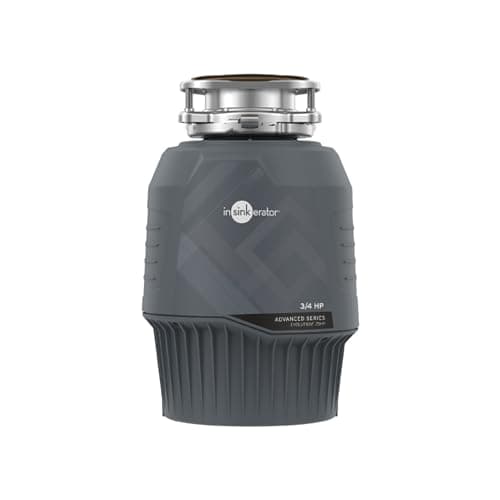
Disposal leaking diagnosis
Three leak locations on a disposal, what each one means, and which of them is terminal.
Troubleshooting
Disposal smells
Where the odor actually lives, the free method that fixes it, and what a smell returning in a day really means.
Guide
What not to put in a disposal
Twelve things to keep out, the specific reason for each, and which are jam risks versus slow-building drain risks.
How to
Install a garbage disposal
Flange, mounting ring, trap and electrical — plus the dishwasher inlet plug that stops a new install draining.
Best sink strainer
Best sink strainers
Basket strainer or drop-in screen — what each does, which fits a disposal, and the two worth buying.
Troubleshooting
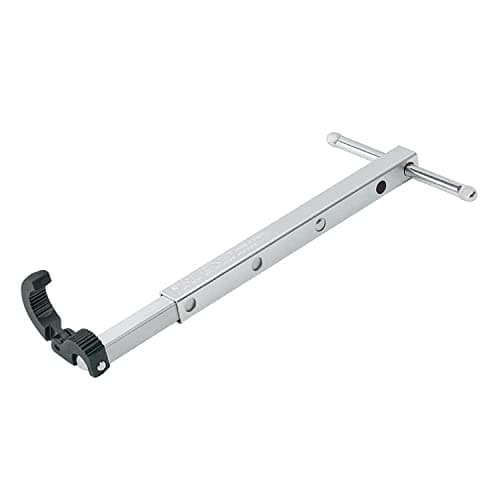
Faucet leaking diagnosis
Four leak locations, four different causes, ranked by how common each one actually is.
Found something out of date, or a figure you can source better than we did? Tell us — corrections get read first. Our methodology explains how picks are made, and contact is one click away.