Guides
Can you install a garbage disposal in any sink?
Mostly yes, and the exceptions are specific rather than vague. Four measurements decide it, and all four can be taken in ten minutes.
Disclosure: we earn a commission if you buy through the Amazon links on this page, at no extra cost to you. Commission never decides a verdict or a ranking position — read our editorial policy and affiliate disclosure.
How we assessed these: this page covers physical compatibility between sinks and disposals, using only dimensions each manufacturer publishes for the named model numbers. Local plumbing codes and building rules vary and we do not interpret them — check with your building department or landlord where this page says to.
Short answer
Almost any kitchen sink will take a disposal, and four things decide it: the drain opening must be the standard size a disposal flange is made for, the sink material and wall thickness must suit that flange, the cabinet must have enough height between the sink bowl and the trap arm, and the drain layout must give the discharge somewhere to go. The commonest reason a disposal does not fit is cabinet height, not the sink.
The question gets asked because disposals look like they bolt to the sink, and in a sense they do — the whole unit hangs from the sink flange. So it is reasonable to assume the sink has to be built for it. In practice, the American standard is settled enough that most sinks accept a disposal without any special provision, and the exceptions are specific and checkable.
Check one: the drain opening
A disposal flange is made for a 3-1/2-inch sink drain opening, which is the American standard and what nearly every kitchen sink sold here is drilled or formed for. Kraus publishes a 3-1/2-inch opening on the Kore workstation sink and Elkay publishes the same on the Lustertone Classic LRS33222, which is a good illustration of how universal it is across price points.
Where it goes wrong is bar sinks, prep sinks, imported sinks and some older bowls, which can have a smaller opening. Measure the hole itself — not the strainer sitting in it — across its widest point. If it is not 3-1/2 inches, a disposal is not a straightforward fit and you want to confirm compatibility with the sink's maker rather than assuming an adapter exists.
Check two: material and wall thickness
A disposal flange clamps to the sink from both sides, and the hardware has a limited range for how thick the sink deck can be at the drain. Stainless is thin and never a problem. Thick ceramic, fireclay, enameled cast iron and some composites can be thick enough at the bowl floor that a standard flange will not reach through, and the answer is a flange extension kit.
This is worth checking per sink rather than per material, because makers differ. BOCCHI states that the Classico 30 fireclay farmhouse sink takes a standard disposal flange with no extension needed — a small detail that saves a trip to the store on install day, and one BOCCHI publishes precisely because buyers expect ceramic to need one. Fireclay vs stainless steel sinks covers the other practical differences between those two.
Check three: cabinet height
This is the one that actually stops installations. Measure from the underside of the sink bowl down to the top of the trap arm — the horizontal pipe running toward the wall. The disposal body plus its discharge elbow has to sit above that pipe, and in older kitchens and apartments the gap is frequently smaller than people expect.
The spread between units is significant. InSinkErator publishes 11-1/2 inches overall for the Badger 5, 12.25 for the Evolution .75HP, 13 for the 1 HP Evolution Excel and 14.95 for the batch-feed Evolution Cover Control. That is three and a half inches between the shortest and the tallest, which is often the difference between fits and does not. Garbage disposal sizing and fit has the full measuring procedure, and best garbage disposals for apartments is the shortlist when height is the binding constraint.
A deep bowl eats this allowance from the top. A 10-inch sink bowl in a standard cabinet leaves materially less room underneath than a 7-1/2-inch one, which is one reason the fashionable deep basin is not free. If you are choosing both at once, choose them together.

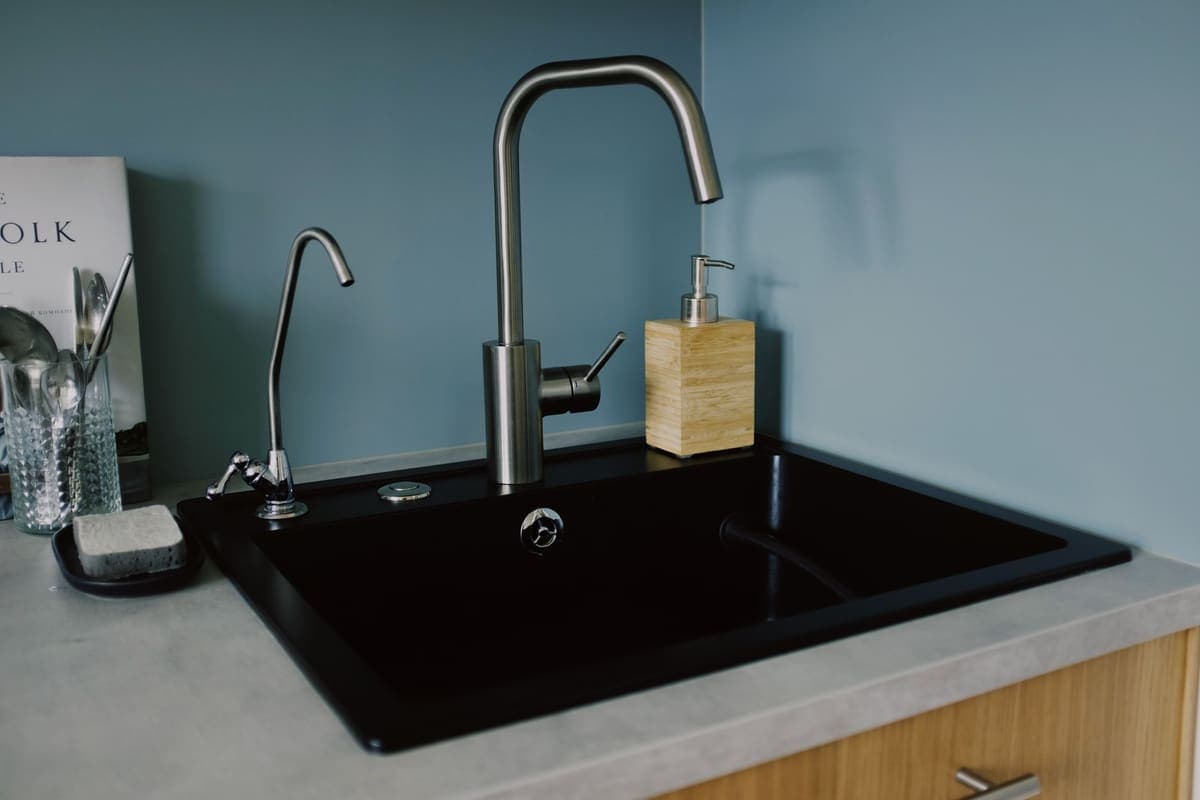
Photograph shows the product category, not this specific unit. We do not republish manufacturer product photography.
1. Fits the most cabinets
InSinkErator Badger 5
InSinkErator · Best for one or two people, tight cabinets
The baseline every other disposal is measured against, and an honest buy for a small household as long as you know what you are getting: half a horsepower, one grind stage, and galvanized steel grind components rather than stainless. It is short at 11-1/2", which is often the deciding factor in a shallow cabinet.
Published specifications
What works
- Shortest unit here at 11-1/2" — it fits cabinets a 1 HP unit cannot
- Cheapest route to a working disposal from the brand with the best parts availability
- Genuinely adequate for soft scraps: peelings, plate scrapings, coffee grounds
- In-home warranty service rather than ship-it-back
What does not
- Galvanized grind components, not stainless — this is the real difference between Badger and Evolution
- One grind stage, so fibrous waste like celery and corn husks is where it stalls
- No sound insulation of any kind, and the product page makes no noise claim
Skip it if
Skip it if you cook for four or more, or if anything fibrous goes down the drain. Buy 3/4 HP with three stages instead.
#ad Affiliate link · We publish no price; Amazon shows the current one
Raw specifications: InSinkErator’s own page for the InSinkErator Badger 5.
Photograph shows the product category, not this specific unit. We do not republish manufacturer product photography.
2. Best all-round fit
InSinkErator Evolution .75HP
InSinkErator · Best for households of three to five
The disposal we would fit in most houses. Three-quarters of a horsepower with three-stage grinding and stainless grind components is the point on the range where fibrous waste stops being a gamble, and SoundSeal makes it noticeably quieter than a Badger. The nine-year in-home warranty is the longest of any InSinkErator continuous-feed unit we checked.
Published specifications
- Motor
- 3/4 HP Dura-Drive induction source
- Grind stages
- Three-stage MultiGrind source
- Grind components
- Stainless steel source
- Overall height
- 12.25" source
- Sound
- SoundSeal — quieter than a standard disposal source
- Septic
- Safe for properly maintained septic tanks source
- Warranty
- 9-year We Come to You limited service warranty source
What works
- Three grind stages and stainless components — the two specs that decide whether fibrous scraps jam
- Only three-quarters of an inch taller than a Badger 5, so it fits most cabinets that took one
- Nine-year in-home warranty, which is a real statement about expected service life
- EZ Connect cord and hardwire adapter in the box, so it suits either wiring situation
What does not
- InSinkErator publishes no decibel figure, and neither do we — SoundSeal is a comparison, not a measurement
- 3/4 HP still stalls on bones and fruit pits; no domestic disposal is a bone grinder
- Chamber capacity is not published for this model
Skip it if
Skip it if you are one or two people who scrape plates and little else — you would be paying for capability you will not use.
#ad Affiliate link · We publish no price; Amazon shows the current one
Raw specifications: InSinkErator’s own page for the InSinkErator Evolution .75HP.
Photograph shows the product category, not this specific unit. We do not republish manufacturer product photography.
3. Sink that takes one without thinking
Kraus Kore KWU110-30 workstation sink
Kraus · Best for small kitchens that need counter space
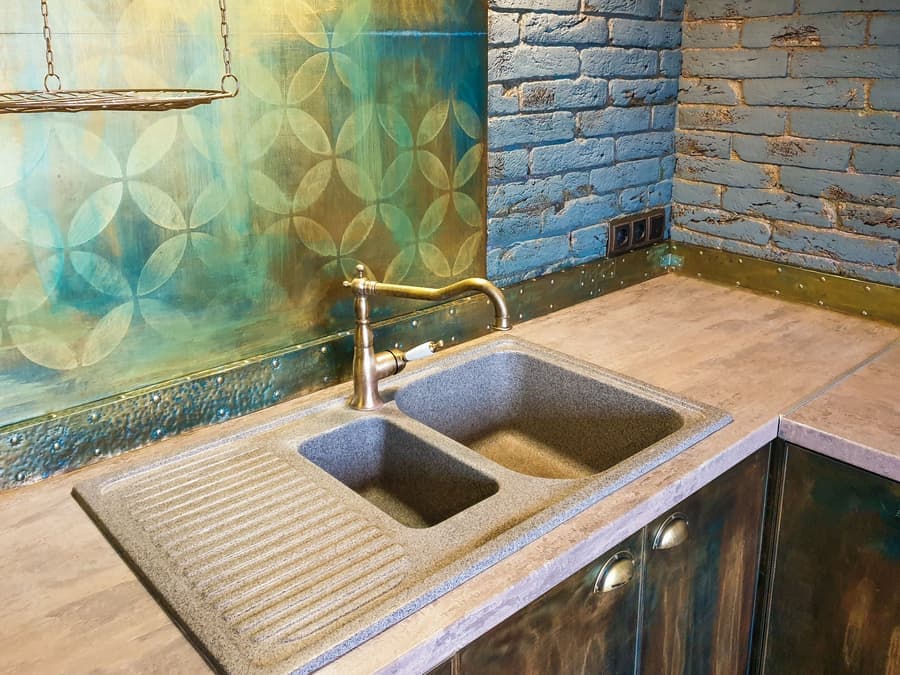
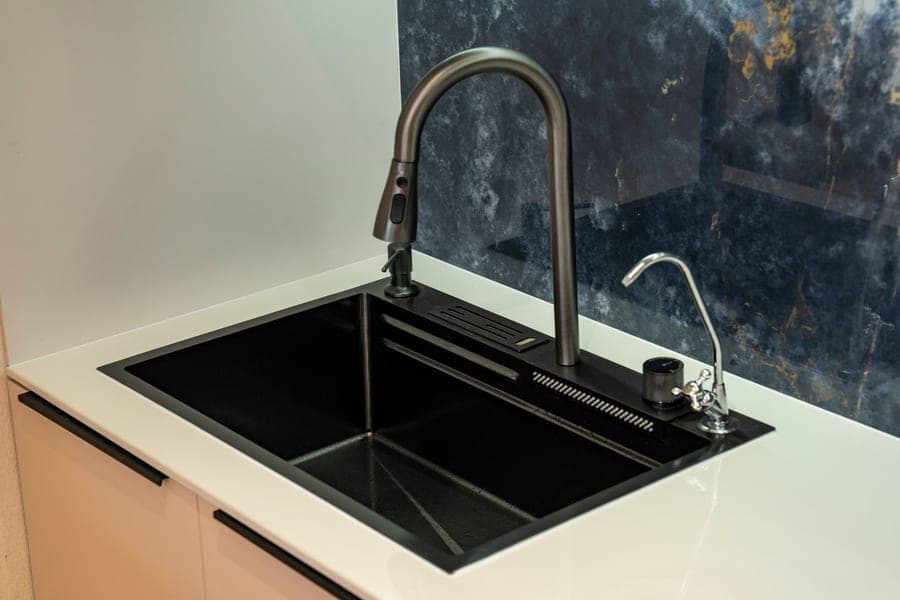
The workstation sink we would buy, and the clearest case for 16-gauge steel anywhere in this category: a ledge sink is the one configuration where basin flex is genuinely audible, because accessories rest on the rim and transmit it. Ten inches deep, rear-offset drain, and the grid, mat, board and strainer are in the box rather than a $200 upsell.
Published specifications
- Overall size
- 30" x 19" source
- Bowl size
- 28" x 16" source
- Bowl depth
- 10" source
- Gauge
- 16-gauge stainless steel source
- Minimum cabinet
- 33" left to right, 24" front to back source
- Drain
- Rear offset, 3-1/2" opening source
- Sound damping
- NoiseDefend pads covering over 80% of the basin, plus undercoating source
- Warranty
- Kraus limited lifetime source
What works
- The integrated ledge turns a 30-inch sink into prep counter, the best single trade available in a small kitchen
- Rear-offset drain leaves usable cabinet space under the front of the sink
- Genuine 16-gauge with pads over 80% of the basin — gauge and damping do different jobs, and this sink has both
- A 3-1/2" drain opening takes a standard disposal flange with no adapter
What does not
- Needs a 33-inch cabinet for a 30-inch sink — measure before ordering
- A 10-inch deep bowl is a long reach for a shorter person
- The accessories are the reason to buy it and also the reason it costs more than a plain undermount
Skip it if
Skip it if your run of counter is already generous — you would be paying for prep space you do not need, and a plain 18-gauge undermount will serve.
#ad Affiliate link · We publish no price; Amazon shows the current one
Raw specifications: Kraus’s own page for the Kraus Kore KWU110-30 workstation sink.
Photograph shows the product category, not this specific unit. We do not republish manufacturer product photography.
4. Ceramic sink that still fits
BOCCHI Classico 30-inch fireclay farmhouse sink
BOCCHI · Best for farmhouse style, lighter than cast iron
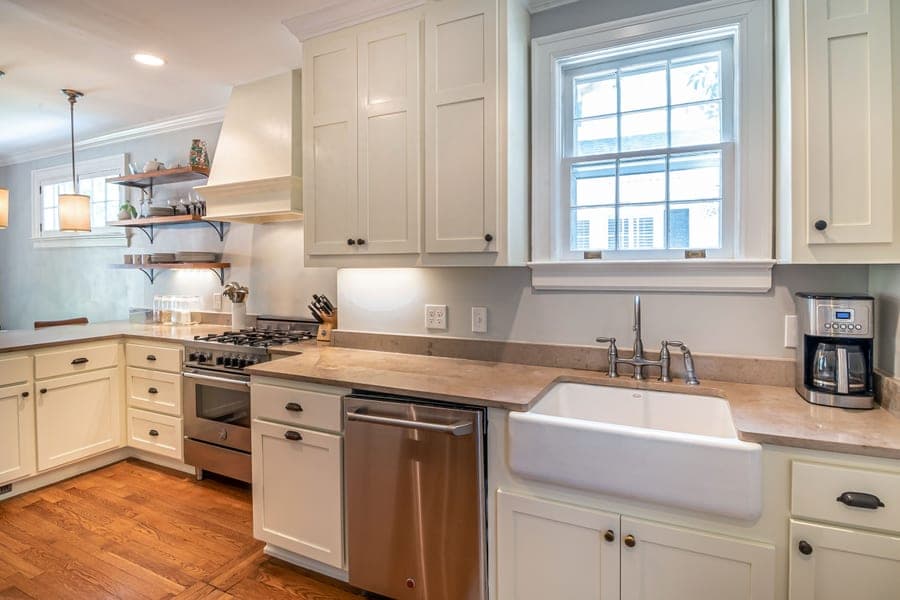
Fireclay's argument against cast iron is the surface: the glaze is fired onto clay at very high temperature and is non-porous, rather than an enamel layer bonded to metal. This one ships with the bottom grid and strainer, and needs no flange extension for a disposal — a small detail that saves a trip to the store on install day.
Published specifications
What works
- Non-porous glaze, so staining is a cleaning problem rather than a permanent one
- Lighter than an equivalent enameled cast-iron sink, which simplifies cabinet support
- Grid and strainer in the box — the grid is what protects the glaze from dropped cast iron
- Takes a standard disposal flange without an extension kit
What does not
- Fireclay is a ceramic: a hard impact chips it, and a chip is not repairable the way a scratch in stainless is
- Hand-made dimensions vary slightly batch to batch, so cut the cabinet to the sink you received
- No independent lab publishes chip-resistance testing for fireclay sinks, so the material claims here are the manufacturer's
Skip it if
Skip it if your household is hard on a sink — dropped pots and ceramic do not mix. Choose 16-gauge stainless instead.
#ad Affiliate link · We publish no price; Amazon shows the current one
Check four: the drain layout
A disposal discharges sideways through an elbow into the trap, so it needs the trap in a sensible place relative to the bowl. A rear-offset drain, which Kraus publishes on the Kore and the ADA workstation sink, tends to help twice: it leaves usable cabinet space under the front of the sink, and it puts the discharge closer to where the waste pipe already is.
On a double bowl, the disposal goes under one side only, and you decide which before you plumb it. Both bowls then share a trap through a tee, and the geometry of that assembly is where double-bowl installations get fiddly. Kraus publishes two drain assemblies with the KHT302-33 double-bowl sink, which saves two purchases but does not change the layout question. Single bowl vs double bowl covers the wider decision.
One more connection to plan: if you have a dishwasher, its drain hose connects to the disposal's inlet, and most new disposals ship with that inlet plugged by a knockout that has to be removed first. Forgetting it is the most common and most comic disposal installation error there is.
The sinks that genuinely will not take one
- Sinks with a drain opening that is not 3-1/2 inches, typically bar and prep sinks or imported bowls.
- Sinks in cabinets with a high trap arm, where even the shortest unit will not clear — this is a plumbing alteration, not a sink problem.
- Shallow ADA-compliant sinks in tight cabinets, sometimes: a 5.5-inch bowl helps on height but these are usually fitted where the plumbing is constrained in the first place.
- Any sink in a building that prohibits disposals. Some municipalities and many apartment buildings do, and no measurement changes that answer.
The last one is not a technical constraint and it is the one most worth checking first. If you rent, you need written permission anyway. If you are on a septic system, the question is different again and garbage disposals and septic systems sets out what actually matters there.
The ten-minute check
- Measure the drain opening across its widest point. You want 3-1/2 inches.
- Note the sink material and, if it is ceramic or cast iron, look up what its maker says about flange extensions.
- Measure from the underside of the bowl to the top of the trap arm.
- Look at where the waste pipe enters the cabinet relative to the drain.
- Check whether there is a live outlet under the sink, and whether anything switches it.
- If you rent, get written permission; if you are in a condo or an apartment, check the building rules.
With those six answers you can buy with confidence. How to install a garbage disposal is the procedure, and do you need a garbage disposal is the honest version of the question if you have not committed yet.
What to take away
- A 3-1/2-inch drain opening is the American standard, and nearly every kitchen sink sold here has one.
- Thick ceramic, fireclay and cast iron sinks sometimes need a flange extension — check the maker, not the material.
- Cabinet height stops more installations than the sink does. Measure bowl underside to trap arm.
- Disposal heights run from 11-1/2 to 14.95 inches across this registry, which is often the deciding difference.
- On a double bowl the disposal lives under one side; decide which before plumbing it.
- Remove the dishwasher inlet knockout before mounting the disposal if a dishwasher drains into it.
- Building rules and landlord permission are the first check, not the last.
How we sourced this page
Every figure on this page came from one of the following. Where a manufacturer or an independent lab does not publish a number, we say so rather than estimate it.
- InSinkErator Badger 5 product page (published specifications)
- InSinkErator Evolution .75HP product page (published specifications)
- InSinkErator Evolution Excel specification sheet (PDF)
- Kraus Kore KWU110-30 specification sheet (PDF)
- BOCCHI Classico 30-inch fireclay farmhouse sink — manufacturer listing
- Elkay Lustertone Classic LRS33222 drop-in sink product page (published specifications)
Common questions
- Does a garbage disposal fit any kitchen sink?
- Nearly every American kitchen sink, yes, because disposal flanges are made for the standard 3-1/2-inch drain opening those sinks have. The exceptions are bar and prep sinks with smaller openings, some imported bowls, and thick ceramic or cast-iron sinks that need a flange extension kit.
- Can you put a garbage disposal in a fireclay or cast iron sink?
- Usually yes, sometimes with a flange extension to deal with the thicker sink wall at the drain. BOCCHI states that its Classico fireclay farmhouse sink takes a standard flange with no extension, which is the sort of detail worth confirming on any ceramic sink before install day.
- What size drain opening does a garbage disposal need?
- Three and a half inches, which is the standard American kitchen sink drain opening — Kraus and Elkay both publish it on their sinks. Measure the hole in the sink rather than the strainer sitting in it, across the widest point, before buying a disposal.
- Can you install a garbage disposal in a double bowl sink?
- Yes, under one bowl. The two bowls then share a trap through a tee, and the disposal discharges into that assembly. Decide which side it goes under before plumbing, because moving it later means redoing the whole drain run under the sink.
- Why will a garbage disposal not fit under my sink?
- Almost always height: there is not enough room between the underside of the sink bowl and the top of the trap arm for the disposal body plus its discharge elbow. A deep bowl makes it worse. The shortest unit here is 11-1/2 inches overall and the tallest is 14.95, so the model choice matters as much as the cabinet.
More in Guides
Organized by task, not by date, because a faucet install guide does not go stale and should not get buried under a blog feed. Every guide includes the honest point at which to call a plumber.
Read next
Guide
Disposal sizing and fit
A height chart for common units, the two measurements to take first, and what thin or deep sinks change.
How to
Install a garbage disposal
Flange, mounting ring, trap and electrical — plus the dishwasher inlet plug that stops a new install draining.
Best disposal for an apartment
Best disposals for apartments
Four disposals compared on overall height, weight, noise control and whether you need a wall switch — plus the lease question to settle first.

Guide
Do you need a disposal?
The honest yes-and-no, the dishwasher question answered properly, and what the no-disposal alternative costs.
Head to head
Single vs double bowl
What a divider costs you, who genuinely benefits from two bowls, and what is involved in swapping a double for a single.

Best for septic systems
Disposals and septic systems
What septic-safe actually means, why grind fineness matters more than a badge, and how it changes your pumping interval.
Found something out of date, or a figure you can source better than we did? Tell us — corrections get read first. Our methodology explains how picks are made, and contact is one click away.