Kitchen Sinks
Fireclay vs stainless steel sinks
One is a ceramic with a fired-on glaze; the other is a formed sheet of metal. They fail in opposite directions, and that is the whole decision.

Disclosure: we earn a commission if you buy through the Amazon links on this page, at no extra cost to you. Commission never decides a verdict or a ranking position — read our editorial policy and affiliate disclosure.
How we assessed these: we compared published manufacturer specifications for the named model numbers, read from each maker's own product page or specification sheet and linked at every figure. We have not tested these sinks and we do not own them. No independent laboratory publishes chip, stain or scratch testing for residential kitchen sinks, so material claims here are the manufacturer's and are labeled as such.
Short answer
Buy fireclay if you want the farmhouse look and a surface nothing stains, and you can accept that a hard impact chips it permanently. Buy stainless if you want a sink that dents rather than breaks, weighs a third as much, and can be scratched without being ruined. The deciding question is not which material is better — it is whether the damage you are more likely to cause is a chip or a scratch.
These two materials get compared because they sit at opposite ends of almost every attribute a kitchen sink has. Fireclay is clay fired with a glaze onto its surface at very high temperature: hard, non-porous, heavy and brittle. Stainless is a formed sheet of metal: light, ductile, repairable and noisy. Everything else in the comparison follows from those two sentences.
What fireclay actually is
Clay shaped into a sink, glazed, and fired. BOCCHI publishes firing temperatures up to 2000°F for the Classico, and describes the resulting surface as a non-porous glaze that resists stains, scratches and thermal shock. Non-porous is the specification that matters day to day: there is nowhere for tea, turmeric, wine or limescale to get into, so staining is a cleaning problem rather than a permanent one.
Fireclay is often confused with enameled cast iron, and they are genuinely different. Cast iron is metal with a vitreous enamel bonded to it; fireclay is ceramic all the way through with the glaze fired onto it. The practical difference is weight and what happens at a chip — a chip in enamel exposes iron, which can rust. Fireclay vs cast iron sinks is the full version of that argument.
What stainless actually is
Type 304 steel, formed and welded, in a gauge that decides how stiff it is. Lower gauge numbers mean thicker metal: 16-gauge is thicker than 18-gauge. Kraus publishes TRU16 gauge on the Kore workstation sink; Elkay publishes 18-gauge Type 304 on the Lustertone Classic. Thickness buys stiffness, which buys quiet and resistance to flexing under a dropped pan.
Gauge is only half the noise story, though, and the half people over-weight. Damping pads do the other half, and they vary more between sinks than the steel does. Kraus publishes NoiseDefend pads covering over 80% of the Kore's basin plus an undercoating; Elkay publishes bottom pads only on the LRS33222, which is why an 18-gauge flat-bottomed bowl drums audibly. 16 gauge vs 18 gauge takes that apart properly.
| Attribute | Fireclay (BOCCHI Classico 30) | 16-gauge stainless (Kraus Kore KWU110-30) |
|---|---|---|
| Material | Fireclay, fired up to 2000°F | TRU16 gauge stainless steel |
| Surface | Non-porous glaze; resists stains, scratches and thermal shock | Satin-finish steel; scratches blend into the grain |
| Typical damage | Chips from impact, not repairable | Scratches and dents, cosmetic and often blendable |
| Noise control | Mass of the ceramic | NoiseDefend pads over 80% of the basin plus undercoating |
| Minimum cabinet | 33" | 33" left to right, 24" front to back |
| Bowl depth | Not published as a single figure | 10" |
| Drain | Takes a standard disposal flange with no extension | Rear offset, 3-1/2" opening |
| In the box | Stainless bottom grid and chrome strainer | Grid, mat, cutting board and strainer |
| Warranty | Limited lifetime | Kraus limited lifetime |
Every figure comes from BOCCHI's or Kraus's own product page for that model number, listed in the sources below. Cells reading "not published" mean we did not find the figure stated for that model. No independent laboratory publishes chip or scratch testing for either material, so the damage descriptions are mechanical descriptions rather than measurements.
The damage test: a chip against a scratch
This is the question to answer honestly about your own kitchen. Fireclay is a ceramic, and a hard impact — a dropped cast-iron pan, a heavy stoneware dish from the drainer — chips it. A chip is not repairable the way a scratch in stainless is; you live with it or you replace the sink. The glaze itself is extremely hard, so what you are protecting against is impact, not wear.
Stainless fails in the opposite direction. It scratches, and on a satin grain light scratches blend into the finish rather than standing out. It dents under a real impact, and a dent is cosmetic. Neither failure ends the sink. If your household is hard on a sink, that is the material argument, and it is why the bottom grid both of these sinks include is not an accessory — it is the thing that keeps pans off the surface.
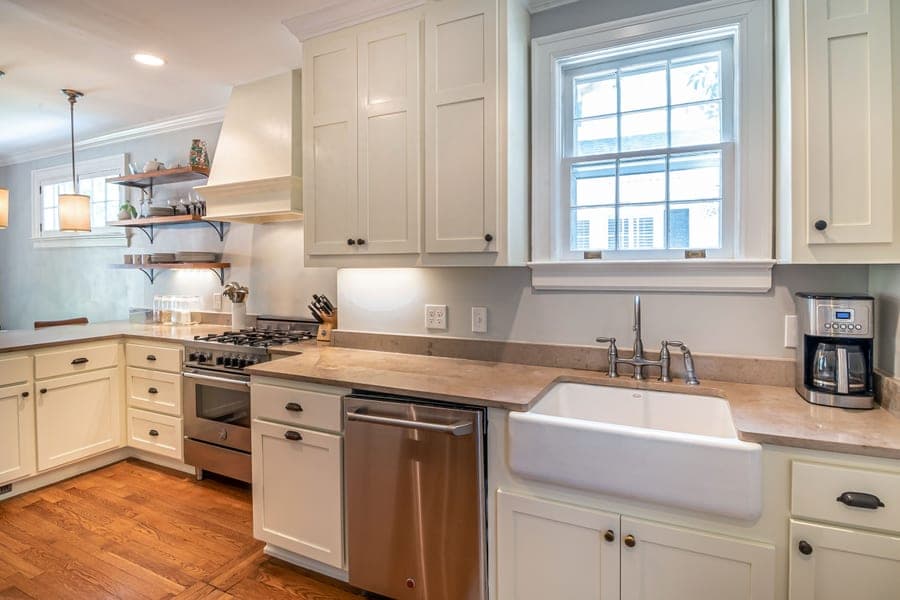
Photograph shows the product category, not this specific unit. We do not republish manufacturer product photography.
1. Best fireclay
BOCCHI Classico 30-inch fireclay farmhouse sink
BOCCHI · Best for farmhouse style, lighter than cast iron
Fireclay's argument against cast iron is the surface: the glaze is fired onto clay at very high temperature and is non-porous, rather than an enamel layer bonded to metal. This one ships with the bottom grid and strainer, and needs no flange extension for a disposal — a small detail that saves a trip to the store on install day.
Published specifications
What works
- Non-porous glaze, so staining is a cleaning problem rather than a permanent one
- Lighter than an equivalent enameled cast-iron sink, which simplifies cabinet support
- Grid and strainer in the box — the grid is what protects the glaze from dropped cast iron
- Takes a standard disposal flange without an extension kit
What does not
- Fireclay is a ceramic: a hard impact chips it, and a chip is not repairable the way a scratch in stainless is
- Hand-made dimensions vary slightly batch to batch, so cut the cabinet to the sink you received
- No independent lab publishes chip-resistance testing for fireclay sinks, so the material claims here are the manufacturer's
Skip it if
Skip it if your household is hard on a sink — dropped pots and ceramic do not mix. Choose 16-gauge stainless instead.
#ad Affiliate link · We publish no price; Amazon shows the current one
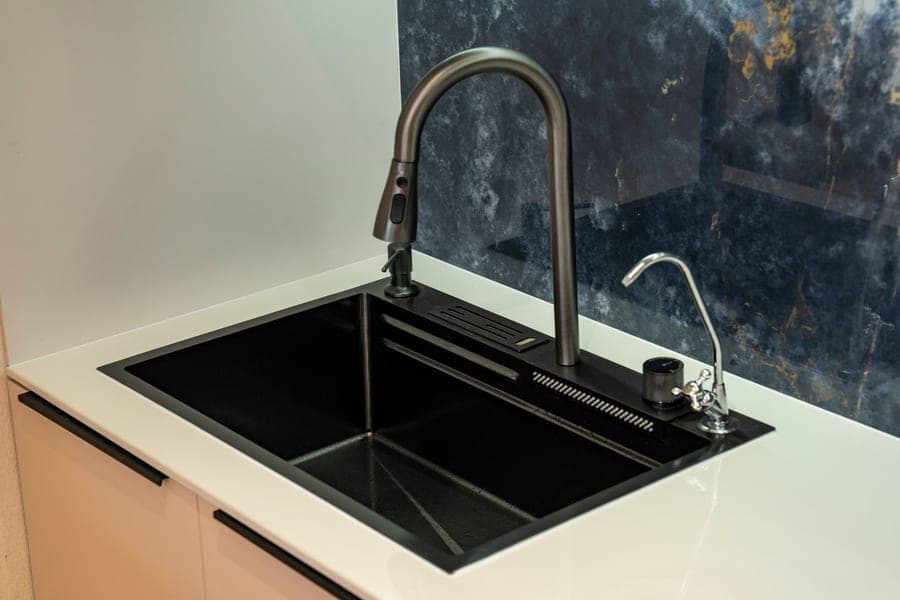
Photograph shows the product category, not this specific unit. We do not republish manufacturer product photography.
2. Best stainless
Kraus Kore KWU110-30 workstation sink
Kraus · Best for small kitchens that need counter space
The workstation sink we would buy, and the clearest case for 16-gauge steel anywhere in this category: a ledge sink is the one configuration where basin flex is genuinely audible, because accessories rest on the rim and transmit it. Ten inches deep, rear-offset drain, and the grid, mat, board and strainer are in the box rather than a $200 upsell.
Published specifications
- Overall size
- 30" x 19" source
- Bowl size
- 28" x 16" source
- Bowl depth
- 10" source
- Gauge
- 16-gauge stainless steel source
- Minimum cabinet
- 33" left to right, 24" front to back source
- Drain
- Rear offset, 3-1/2" opening source
- Sound damping
- NoiseDefend pads covering over 80% of the basin, plus undercoating source
- Warranty
- Kraus limited lifetime source
What works
- The integrated ledge turns a 30-inch sink into prep counter, the best single trade available in a small kitchen
- Rear-offset drain leaves usable cabinet space under the front of the sink
- Genuine 16-gauge with pads over 80% of the basin — gauge and damping do different jobs, and this sink has both
- A 3-1/2" drain opening takes a standard disposal flange with no adapter
What does not
- Needs a 33-inch cabinet for a 30-inch sink — measure before ordering
- A 10-inch deep bowl is a long reach for a shorter person
- The accessories are the reason to buy it and also the reason it costs more than a plain undermount
Skip it if
Skip it if your run of counter is already generous — you would be paying for prep space you do not need, and a plain 18-gauge undermount will serve.
#ad Affiliate link · We publish no price; Amazon shows the current one
Raw specifications: Kraus’s own page for the Kraus Kore KWU110-30 workstation sink.

Photograph shows the product category, not this specific unit. We do not republish manufacturer product photography.
3. Best plain stainless swap
Elkay Lustertone Classic LRS33222
Elkay · Best for a like-for-like swap in an existing cutout
The plain, serviceable American drop-in, and the one most likely to be a direct swap for what is already in your counter: 33 by 22 inches, 7-5/8 inches deep, two faucet holes, 18-gauge Type 304 steel. Elkay's U-channel mounting is the detail that matters on install day — the clips go into the channel before the sink goes in, so you spend less time on your back.
Published specifications
- Overall size
- 33" x 22" x 7-5/8" source
- Bowl size
- 28" x 16" x 7-1/2" deep source
- Gauge
- 18 gauge, Type 304 stainless steel source
- Faucet holes
- 2 (1-, 3-, 4- and MR2-hole versions are separate model numbers) source
- Drain opening
- 3-1/2" source
- Minimum cabinet
- 36" source
- Sound damping
- Bottom pads only source
- Mounting
- U-channel — clips are set in the channel before installation source
- Shipping weight
- 27 lb source
- Origin
- Made in the USA source
What works
- 7-5/8 inches deep, which is the depth most older cabinets and shallow trap arms were built around
- U-channel mounting is the easiest clip system to work with single-handed
- Elkay sells the same bowl in five hole drillings, so you can match an existing three-hole counter exactly
- Type 304 steel with a repairable satin grain — light scratches blend rather than stand out
What does not
- Sound deadening is bottom pads only rather than full-side pads, so you will hear this sink more than a pad-wrapped 16-gauge one
- 18-gauge flexes more than 16-gauge under a dropped pan, and this is a flat-bottomed bowl, so the drumming is audible
- Elkay publishes a list price far above typical street price, so the number on the spec page is not a useful guide to what you will pay
Skip it if
Skip it if you want a deep modern basin. At 7-1/2 inches the bowl will not take a sheet pan laid flat.
#ad Affiliate link · We publish no price; Amazon shows the current one
Raw specifications: Elkay’s own page for the Elkay Lustertone Classic LRS33222.

Photograph shows the product category, not this specific unit. We do not republish manufacturer product photography.
4. The third option
Kohler Whitehaven K-6489
Kohler · Best for farmhouse looks without a custom cabinet
The enameled cast-iron farmhouse sink to buy, mainly for one structural reason: the self-trimming apron overhangs the cabinet face, so installation is a rough cut rather than a cabinetmaker's fit. That detail is the difference between a weekend job and a trade job. It is also heavy enough that the cabinet needs real support.
Published specifications
What works
- Self-trimming apron means a rough cabinet cut, not a precision one
- Enameled cast iron resists chipping, cracking and heat in a way composite does not
- The 2-degree slope and offset drain genuinely reduce standing water
- Kohler stocks matching drains and accessories, so the sink does not orphan
What does not
- Cast iron is heavy — the cabinet needs a proper support frame, and that is the real installation cost
- Enamel dulls under abrasive cleaners, and a dropped cast pan will chip it
- Kohler does not publish a unit weight on the range page, so plan support using your retailer's shipping weight
Skip it if
Skip it if you are installing alone, or over an existing base cabinet you cannot reinforce. Weight decides this one, not looks.
#ad Affiliate link · We publish no price; Amazon shows the current one
Raw specifications: Kohler’s own page for the Kohler Whitehaven K-6489.
Weight, and what your cabinet has to carry
Fireclay is heavy. Not cast-iron heavy — BOCCHI's argument for the Classico is precisely that it is lighter than an equivalent enameled cast-iron sink, which simplifies cabinet support — but far heavier than steel. Elkay publishes a 27 lb shipping weight for the 33-inch Lustertone Classic, which a single person can lift into a counter. A fireclay farmhouse sink of the same size is a two-person job and the cabinet underneath it needs a proper support frame.
That matters most for an apron-front installation, where the sink's weight is carried by the cabinet rather than the countertop. Neither BOCCHI nor Kraus publishes a unit weight on the pages we read, so plan the lift and the support using your retailer's shipping weight rather than a figure we would have to invent. Farmhouse sinks covers the cabinet work that goes with an apron front.
Fitting: the detail that catches people out
Fireclay is a hand-made ceramic, and BOCCHI states that dimensions vary slightly batch to batch. The rule is to cut the cabinet or the countertop to the sink you actually received, not to the published dimensions. That is a real constraint on ordering a counter before the sink arrives, and it is the main reason a fireclay installation goes wrong.
Stainless does not have that problem: a pressed steel sink is the size the spec sheet says, every time, which is why dual-mount stainless like the Kraus KHT300-33 can be sold with a cut-out template in the box. If you are replacing a sink without touching the countertop, that predictability is worth a lot. Drop-in vs undermount covers which mounting your counter will take, and kitchen sink sizes and cabinet fit has the arithmetic.
Hard water, heat and the things that stain
Fireclay's non-porous glaze is the better surface in hard water for the same reason it is better against coffee and turmeric: there is nowhere for anything to get in. Scale sits on top and wipes off. A white glazed sink does show what is sitting on it, though, so a hard-water house trades invisible staining for visible deposits that want wiping. Best kitchen sinks for hard water ranks the materials on exactly that.
On heat, both materials tolerate a hot pan better than a composite does — BOCCHI states thermal shock resistance for the Classico's glaze, and steel simply conducts heat away. This is the one place where both of these beat granite composite, which has a real thermal limit that nobody publishes as a number. Granite composite vs stainless steel covers that third material.
Which one to buy
- Buy fireclay if you want an apron front, a surface nothing stains, and you can reinforce the cabinet — and if dropped cast iron is not a feature of your kitchen.
- Buy 16-gauge stainless if you want the quietest, most forgiving sink that will still look the same in fifteen years, and you care more about function than about the sink being seen.
- Buy 18-gauge stainless if this is a like-for-like replacement in an existing cutout and the shallower bowl suits your trap arm — it is the cheapest route to a sound sink.
- Buy enameled cast iron if you want the farmhouse look with more mass and a self-trimming apron, and weight is not the constraint.
If you are still choosing a format rather than a material, how to choose a kitchen sink works through the whole decision in order, and kitchen sink materials covers everything this page does not.
What to take away
- Fireclay chips and cannot be repaired; stainless scratches and dents, and neither ends the sink.
- A non-porous fired glaze means staining is a cleaning problem rather than a permanent one.
- Stainless noise is gauge plus damping pads, and the pads vary more between sinks than the steel does.
- Fireclay dimensions vary batch to batch — cut the counter to the sink you received, not the spec sheet.
- Fireclay is lighter than cast iron and far heavier than steel; apron-front installations need cabinet support.
- Use the bottom grid both sinks include. It is the single most effective protection either material has.
How we sourced this page
Every figure on this page came from one of the following. Where a manufacturer or an independent lab does not publish a number, we say so rather than estimate it.
- BOCCHI Classico 30-inch fireclay farmhouse sink — manufacturer listing
- Kraus Kore KWU110-30 specification sheet (PDF)
- Kraus Kore KWU110-30 product page (published specifications)
- Elkay Lustertone Classic LRS33222 drop-in sink product page (published specifications)
- Kohler Whitehaven apron-front sink range (published specifications)
Common questions
- Is fireclay better than stainless steel for a kitchen sink?
- Neither is better in general. Fireclay gives you a non-porous glazed surface that nothing stains and a farmhouse look, at the cost of weight and a chip risk that cannot be repaired. Stainless gives you a light, forgiving sink that scratches instead of breaking. Pick the failure mode you can live with.
- Do fireclay sinks chip easily?
- They chip from impact rather than from use. The glaze itself is extremely hard and resists scratching, but it is fired onto a ceramic body, so a dropped cast-iron pan or a heavy stoneware dish can take a piece out of the rim or the base. A bottom grid removes most of that risk, and both sinks on this page include one.
- Are stainless steel sinks noisier than fireclay?
- A thin, poorly damped stainless sink is, and that is the complaint people remember. A 16-gauge sink with pads over 80% of the basin and an undercoating is much quieter than an 18-gauge bowl with pads on the bottom only. Fireclay is quiet by mass, with nothing to add.
- Can you put a garbage disposal in a fireclay sink?
- Yes. BOCCHI states that the Classico takes a standard disposal flange with no extension kit, which is a detail worth confirming on any ceramic sink because thicker sink walls sometimes need one. Check the drain opening size against the disposal's flange before install day either way.
- Which lasts longer, fireclay or stainless steel?
- Both outlive most kitchens if nothing dramatic happens to them, and nobody publishes service-life testing for either. The realistic difference is what ends them: a fireclay sink is ended by a chip you cannot live with, and a stainless sink is usually replaced because the kitchen changed, not because the sink failed.
More in Kitchen Sinks
Three specifications settle almost every kitchen sink question: how thick the steel is, how it meets the counter, and what it is made of. Get those right and brand barely matters.
Read next

Guide
Sink materials compared
Five materials compared on heat, impact, noise and repairability, with the honest failure mode of each one.
Head to head
Fireclay vs cast iron
The same white farmhouse look from two different materials. What the substrate under the glaze changes about weight, chipping and installation.
Head to head
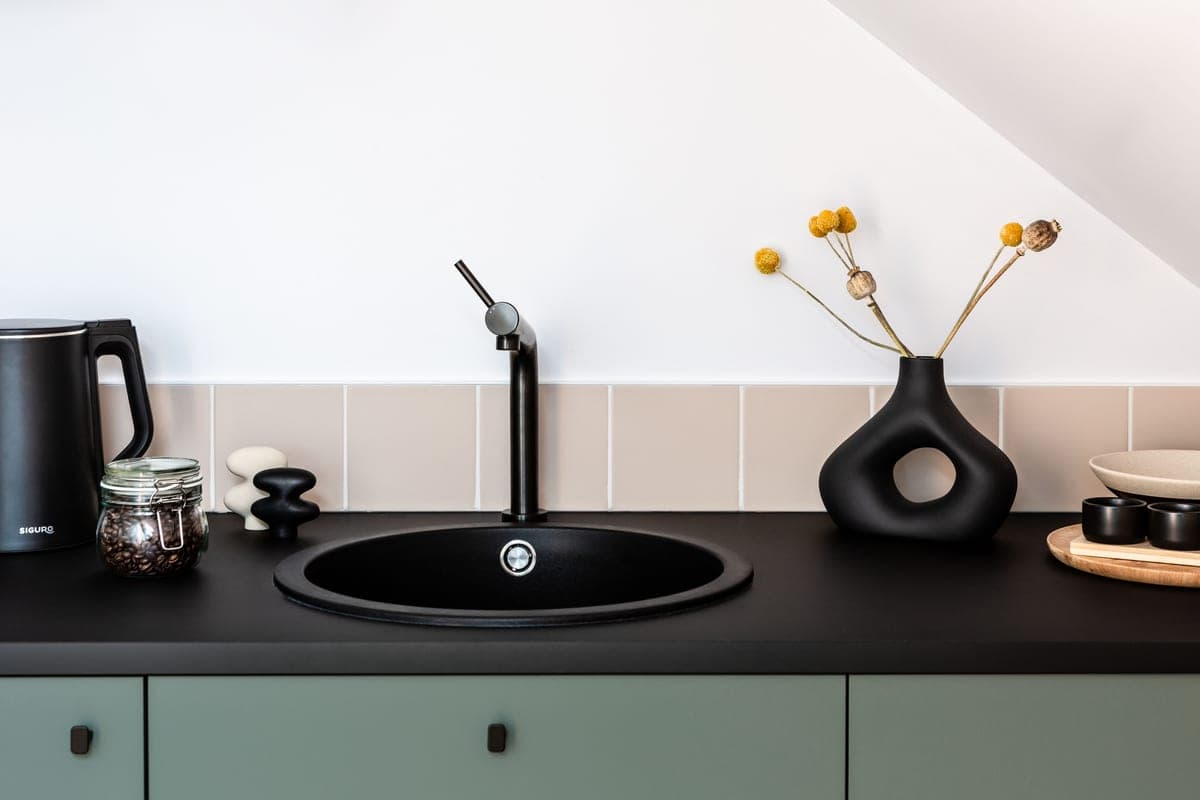
Granite composite vs stainless
Two materials that fail in opposite ways: heat tolerance against appearance. Plus what quartz composite actually is.
Head to head
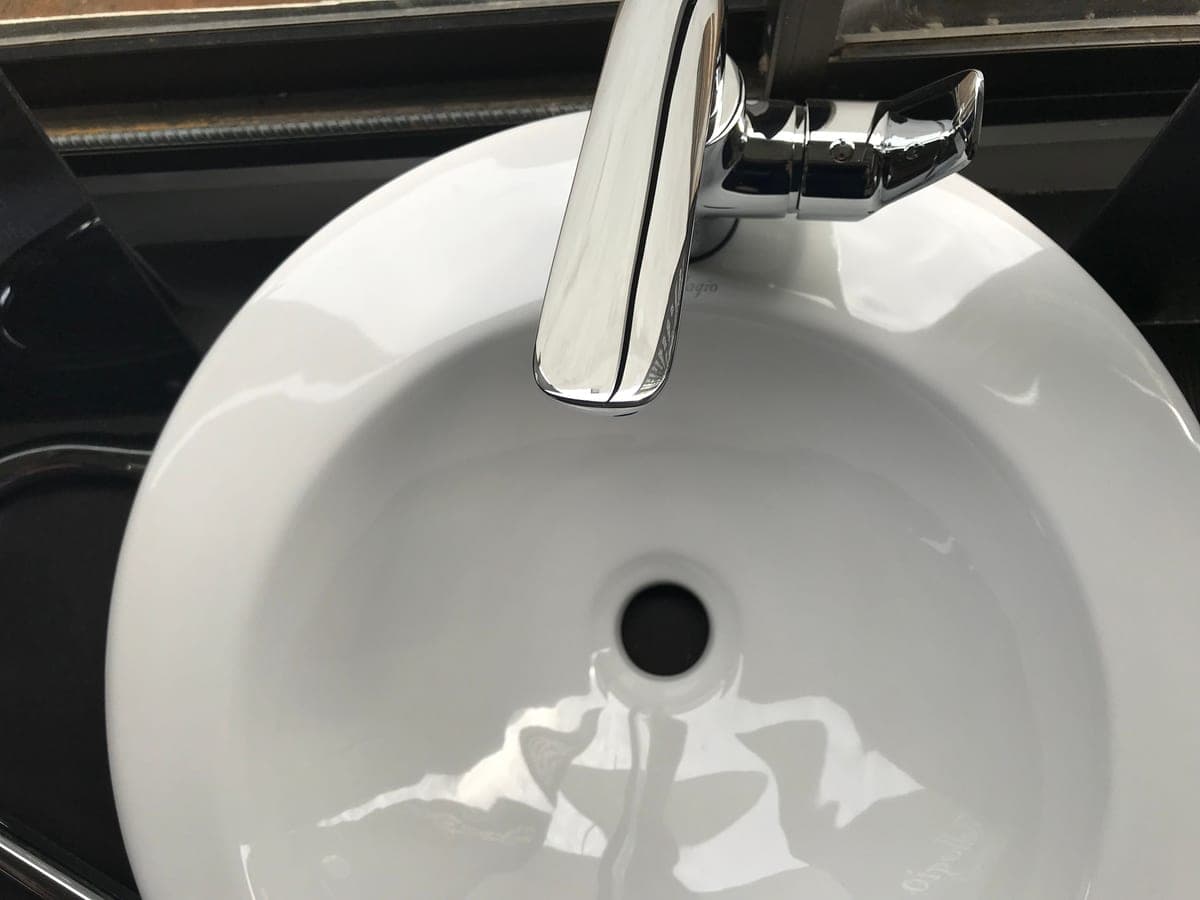
16 gauge vs 18 gauge
16 gauge is 25% thicker steel. What that buys, what it does not buy, and why sound-deadening coverage is the spec nobody advertises.
Best sink for hard water
Best sinks for hard water
Four sinks compared on how limescale behaves on each surface, with the honest note on which one still needs wiping dry.
Guide
How to choose a sink
The six decisions in the order that actually works, each with the measurement that settles it — and what to do when two of them conflict.
Found something out of date, or a figure you can source better than we did? Tell us — corrections get read first. Our methodology explains how picks are made, and contact is one click away.