Garbage Disposals
Garbage disposals and septic systems
A septic-safe badge is not the whole answer. What matters is how fine the output is and how often you have the tank pumped.

Disclosure: we earn a commission if you buy through the Amazon links on this page, at no extra cost to you. Commission never decides a verdict or a ranking position — read our editorial policy and affiliate disclosure.
How we assessed these: specifications come from each manufacturer's own published page or spec sheet, linked at every figure. We have not tested these products. Where the useful measurement does not exist publicly, the page says so instead of estimating.
Short answer
Some disposals are rated septic safe by their manufacturers and some are not — InSinkErator states the Evolution .75HP is safe for properly maintained septic tanks. But every disposal adds solids to the tank, so the questions that matter are how fine the output is (more grind stages means finer) and how often you have the tank pumped.
A septic system is a settling tank followed by a drainfield. Solids settle as sludge, oils float as scum, and the liquid in between drains out to the field. A garbage disposal increases the rate at which the sludge layer builds. That is the entire mechanism, and everything else follows from it.
Quick picks
Tap any row to jump to the full write-up. There are no scores here because we run no test lab — how picks are chosen is published in full on our methodology page.
| # | Product | Best for | Our read | Price |
|---|---|---|---|---|
| 1 |  InSinkErator Evolution .75HP Best for septic | Households of three to five | Three grind stages, and rated septic safe by the maker | Check price on Amazon #ad Affiliate link · We publish no price; Amazon shows the current one |
| 2 |  InSinkErator Badger 5 The compact option, with a caveat | One or two people, tight cabinets | One grind stage, so output is coarser | Check price on Amazon #ad Affiliate link · We publish no price; Amazon shows the current one |
| 3 |  OXO Good Grips silicone sink strainer The cheapest septic upgrade | Catching scraps without plumbing | Keeps solids out of the tank in the first place | Check price on Amazon #ad Affiliate link · We publish no price; Amazon shows the current one |
What "septic safe" actually means
It is a manufacturer's statement that the unit is suitable for use with a properly maintained septic system, not a certification from an independent body. Some manufacturers add an enzyme-injection feature intended to accelerate breakdown in the tank; the EPA's own guidance on septic care does not endorse additive-based approaches, and its emphasis throughout is on reducing what enters the tank and on regular inspection and pumping.
So treat the badge as a compatibility statement rather than a solution. Two disposals both described as septic safe can put very differently sized particles into your tank, and that difference is the one that matters.
Why grind stages matter more here than anywhere else
In a municipal sewer, output fineness affects how likely your own drain line is to clog. In a septic system it also affects how quickly the sludge layer grows, because finer particles are more available to the bacteria doing the digesting and settle differently from coarse fragments.
That is why a three-stage unit is the better septic choice than a single-stage one at the same horsepower: InSinkErator describes its MultiGrind technology as three stages of grind against one in a standard disposer. It is also why a high-rpm single-stage motor, which is excellent at throughput, is not automatically the right answer on septic — see InSinkErator vs Waste King.
How a disposal changes your pumping interval
Guidance for septic tanks is typically to inspect every one to three years and pump based on household size, tank size and usage. Adding a garbage disposal increases solids loading, and the common professional recommendation is to shorten the interval accordingly. We are not going to give you a multiplier, because it depends on tank volume, household size and how much you actually grind — and no authority publishes a single figure.
What we can say plainly: if you fit a disposal on a septic system and do not shorten the inspection interval, you are running the tank closer to the point where solids carry over into the drainfield. A blocked drainfield is the expensive failure in a septic system, and it is the one that a disposal makes more likely.
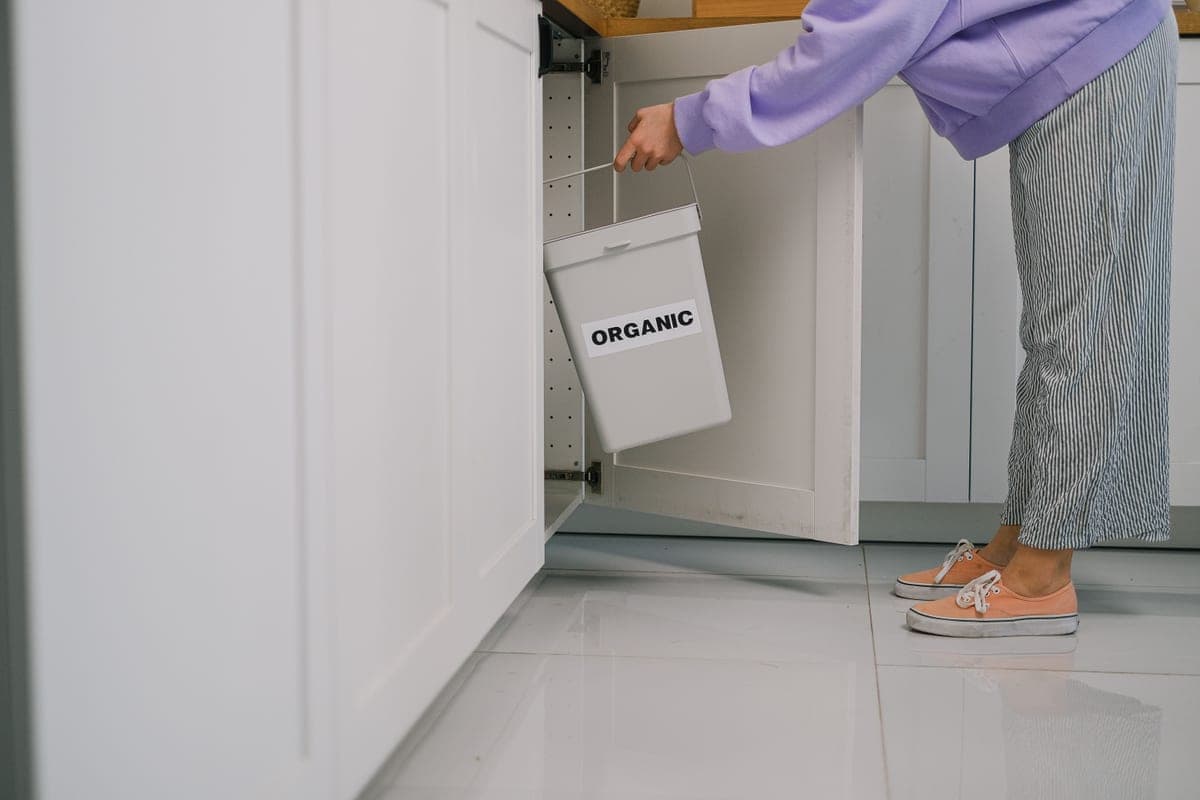
Photograph shows the product category, not this specific unit. We do not republish manufacturer product photography.
1. Best for septic
InSinkErator Evolution .75HP
InSinkErator · Best for households of three to five
The disposal we would fit in most houses. Three-quarters of a horsepower with three-stage grinding and stainless grind components is the point on the range where fibrous waste stops being a gamble, and SoundSeal makes it noticeably quieter than a Badger. The nine-year in-home warranty is the longest of any InSinkErator continuous-feed unit we checked.
Published specifications
- Motor
- 3/4 HP Dura-Drive induction source
- Grind stages
- Three-stage MultiGrind source
- Grind components
- Stainless steel source
- Overall height
- 12.25" source
- Sound
- SoundSeal — quieter than a standard disposal source
- Septic
- Safe for properly maintained septic tanks source
- Warranty
- 9-year We Come to You limited service warranty source
What works
- Three grind stages and stainless components — the two specs that decide whether fibrous scraps jam
- Only three-quarters of an inch taller than a Badger 5, so it fits most cabinets that took one
- Nine-year in-home warranty, which is a real statement about expected service life
- EZ Connect cord and hardwire adapter in the box, so it suits either wiring situation
What does not
- InSinkErator publishes no decibel figure, and neither do we — SoundSeal is a comparison, not a measurement
- 3/4 HP still stalls on bones and fruit pits; no domestic disposal is a bone grinder
- Chamber capacity is not published for this model
Skip it if
Skip it if you are one or two people who scrape plates and little else — you would be paying for capability you will not use.
#ad Affiliate link · We publish no price; Amazon shows the current one
Raw specifications: InSinkErator’s own page for the InSinkErator Evolution .75HP.
Photograph shows the product category, not this specific unit. We do not republish manufacturer product photography.
2. The compact option, with a caveat
InSinkErator Badger 5
InSinkErator · Best for one or two people, tight cabinets
The baseline every other disposal is measured against, and an honest buy for a small household as long as you know what you are getting: half a horsepower, one grind stage, and galvanized steel grind components rather than stainless. It is short at 11-1/2", which is often the deciding factor in a shallow cabinet.
Published specifications
What works
- Shortest unit here at 11-1/2" — it fits cabinets a 1 HP unit cannot
- Cheapest route to a working disposal from the brand with the best parts availability
- Genuinely adequate for soft scraps: peelings, plate scrapings, coffee grounds
- In-home warranty service rather than ship-it-back
What does not
- Galvanized grind components, not stainless — this is the real difference between Badger and Evolution
- One grind stage, so fibrous waste like celery and corn husks is where it stalls
- No sound insulation of any kind, and the product page makes no noise claim
Skip it if
Skip it if you cook for four or more, or if anything fibrous goes down the drain. Buy 3/4 HP with three stages instead.
#ad Affiliate link · We publish no price; Amazon shows the current one
Raw specifications: InSinkErator’s own page for the InSinkErator Badger 5.
Photograph shows the product category, not this specific unit. We do not republish manufacturer product photography.
3. The cheapest septic upgrade
OXO Good Grips silicone sink strainer
OXO · Best for catching scraps without plumbing
The right answer for most people asking about a sink strainer: a flexible silicone basket that drops into a standard drain, lifts out by a handle, and goes in the dishwasher. It is the cheapest way to stop the two things that actually clog a kitchen drain — coffee grounds and rice.
This manufacturer does not publish a specification table for this product. Rather than repeat figures we cannot source, the assessment here is limited to what the product category and the manufacturer's own listing genuinely establish.
What works
- Drops in and lifts out — no tools, no plumbing, no commitment
- Silicone flexes, so you can invert it over the bin instead of picking debris out
- Dishwasher safe, which is the difference between a strainer you empty and one you avoid
- Fits standard drain openings, including over a disposal
What does not
- Does not hold water for soaking — it is a screen, not a stopper
- Sits visibly in the sink, which some people dislike
- Silicone eventually stains from turmeric and tomato
Skip it if
Skip it if the drain assembly itself is failing or leaking — that needs a basket strainer replacement, not a screen.
#ad Affiliate link · We publish no price; Amazon shows the current one
Raw specifications: OXO’s own page for the OXO Good Grips silicone sink strainer.
The honest alternative
On a septic system the case for not fitting a disposal is stronger than anywhere else. A drop-in strainer plus a compost bin keeps solids out of the tank entirely, costs a few dollars, and removes a variable from a system where the failure mode is expensive and slow to appear.
If you want a disposal anyway — and there are good reasons, especially in a household that generates a lot of unavoidable food waste — buy multi-stage, keep fats and fibrous waste out, run plenty of cold water, and shorten your pumping interval. Our do you need a garbage disposal page takes the question seriously in both directions.
What to take away
- Septic safe is a manufacturer's compatibility statement, not an independent certification.
- Grind fineness matters more on septic than anywhere else, so multi-stage beats high-rpm single stage here.
- Every disposal adds solids. Shorten your inspection and pumping interval if you fit one.
- Fats, oils, grease and bulk fibrous waste stay out of the drain regardless of the model.
How we sourced this page
Every figure on this page came from one of the following. Where a manufacturer or an independent lab does not publish a number, we say so rather than estimate it.
Common questions
- Are all garbage disposals septic safe?
- No. Some manufacturers state their units are suitable for properly maintained septic systems and others do not, and the statement is a compatibility claim rather than an independent certification. Even a septic-safe disposal adds solids to the tank, which is the part that matters.
- Will a garbage disposal ruin my septic system?
- Not on its own, but it increases the rate at which the sludge layer builds, which brings forward the point at which solids can carry over into the drainfield. The mitigations are a multi-stage disposal, keeping fats and fibrous waste out, and shortening your inspection and pumping interval.
- How often should I pump my septic tank if I have a disposal?
- More often than without one. General guidance is to inspect every one to three years and pump based on household size, tank size and usage; a disposal increases solids loading, so the interval should shorten. No authority publishes a single multiplier, and we will not invent one — ask the contractor who pumps your tank what they see in it.
- What should I never put down a disposal on septic?
- Fats, oils and grease, which float as scum and do not break down; and bulk fibrous or starchy waste like corn husks, celery strings and rice, which resist digestion. Coffee grounds and eggshells are also worth keeping out — they settle rather than digesting.
More in Garbage Disposals
Horsepower is the number on the box and it is not the number that decides whether your disposal jams. Grind stages and component material do. Here is how the three fit together.
Read next

Guide
Do you need a disposal?
The honest yes-and-no, the dishwasher question answered properly, and what the no-disposal alternative costs.
Best garbage disposal
Best garbage disposals
Five disposals compared on the three specs that actually predict performance — and the height measurement that decides fit.

Guide
What not to put in a disposal
Twelve things to keep out, the specific reason for each, and which are jam risks versus slow-building drain risks.

Best sink strainer
Best sink strainers
Basket strainer or drop-in screen — what each does, which fits a disposal, and the two worth buying.

Guide
Disposal horsepower guide
A horsepower-to-household table, what the number measures, and why grind stages predict jamming better than horsepower.
Found something out of date, or a figure you can source better than we did? Tell us — corrections get read first. Our methodology explains how picks are made, and contact is one click away.