Kitchen Sinks
Single bowl vs double bowl kitchen sink
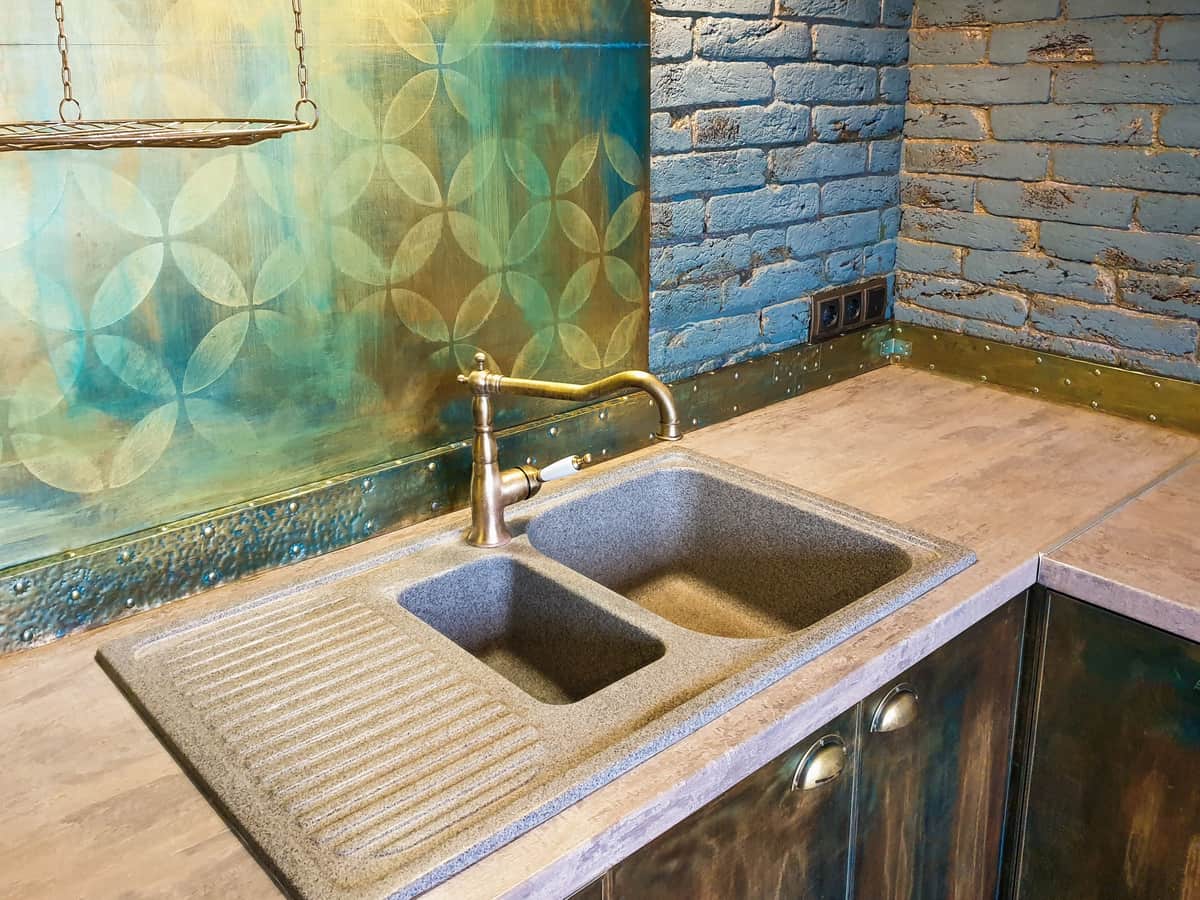
A divider costs you the ability to lay anything large flat. Whether that matters depends entirely on whether you own a dishwasher.
Disclosure: we earn a commission if you buy through the Amazon links on this page, at no extra cost to you. Commission never decides a verdict or a ranking position — read our editorial policy and affiliate disclosure.
How we assessed these: product figures are from manufacturer specifications with source links. The workflow comparison is reasoning from those dimensions rather than a tested result.
Short answer
A single bowl gives you one large space that takes a sheet pan or a roasting tray flat; a double bowl gives you two smaller spaces so you can separate washing from draining. The dishwasher is what settled this argument: if you own one, the second bowl is mostly storage for the drying rack, and the single bowl is more useful.
The move toward single-bowl sinks over the last decade is not a fashion cycle. It follows from dishwashers becoming standard: the second bowl existed so you could wash in one side and rinse or drain in the other, and a dishwasher does that job.
What a divider actually costs you
Take a 33-inch double-bowl sink. After the cabinet sides and the divider, each bowl is roughly 14 to 15 inches wide. A half-sheet pan is 18 by 13; a roasting tray is bigger; the grill grate from an oven is bigger still. None of them lies flat in a 15-inch bowl, so every one of them gets washed at an angle with water running off the raised end onto the counter.
In a 30-inch single bowl — 28 inches of usable basin on the Kraus Kore — all of those lie flat with room to work around them. That is the single concrete, measurable difference, and for most households it is the one that decides it.
| Single bowl | Double bowl | |
|---|---|---|
| Largest item that lies flat | Sheet pans, roasting trays, oven racks | Dinner plates and small pans |
| Separating tasks | One space — use a tub or a rack | Genuinely separate, which some people prefer |
| Soaking while using the tap | Awkward unless you use a tub | Easy — one bowl soaks, one drains |
| Hand-washing without a dishwasher | Workable with a basin insert | The original use case, and still good at it |
| Disposal fitting | One drain, one disposal | Choose which side; the other needs its own trap route |
| Faucet reach needed | Standard | More — the faucet must serve the far bowl |
Who should still buy a double bowl
- Anyone without a dishwasher. Wash on one side, rinse and drain on the other — the configuration was designed for exactly this and it still works best.
- Households that separate raw-meat prep from everything else and want a physical division rather than a procedural one.
- Anyone who leaves things soaking for long periods and still wants a usable tap. A single bowl full of soaking pans is a sink you cannot use.
- Kitchens where the sink doubles as a place to put a washing-up bowl and a colander side by side, permanently.
The 60/40 compromise, and whether it works
An offset double bowl gives you a large main bowl and a small secondary one, and it is a genuine middle ground: the large side takes most pans, the small side takes a colander or a disposal. The catch is that the large side of a 60/40 in a 33-inch sink is around 18 inches, so a half-sheet pan fits diagonally rather than flat, and the small side is too small to wash anything in.
It works well if the small bowl has a clear job — put the disposal there and keep the main bowl clear. It works badly if you expected two usable bowls.
Quick picks
Tap any row to jump to the full write-up. There are no scores here because we run no test lab — how picks are chosen is published in full on our methodology page.
| # | Product | Best for | Our read | Price |
|---|---|---|---|---|
| 1 | 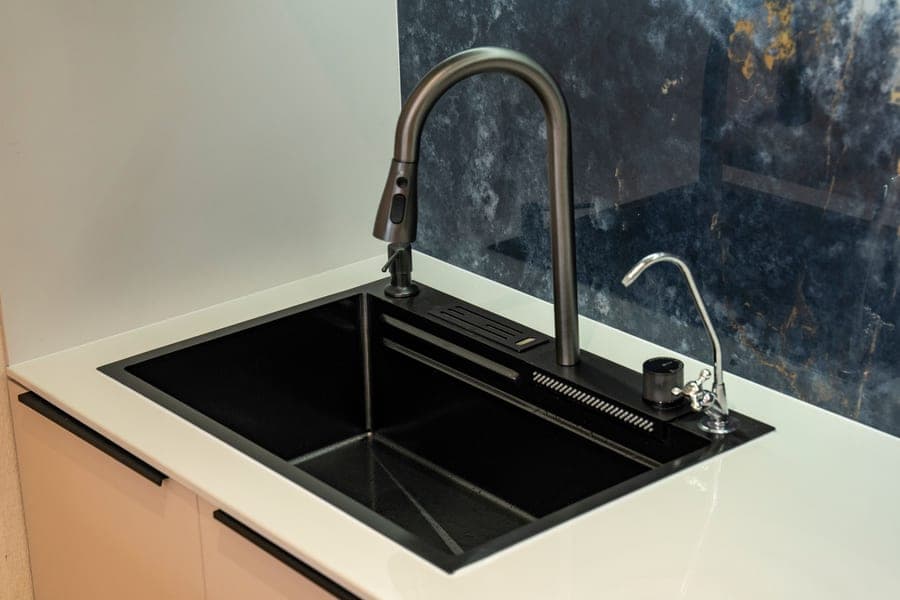 Kraus Kore KWU110-30 workstation sink Best single bowl | Small kitchens that need counter space | 28-inch bowl takes a full sheet pan flat | Check price on Amazon #ad Affiliate link · We publish no price; Amazon shows the current one |
| 2 | 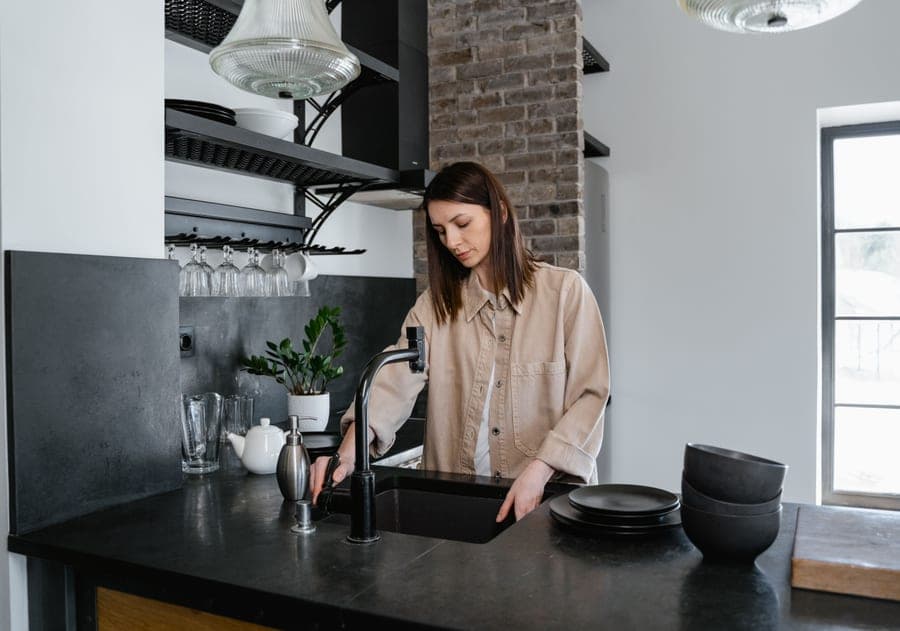 Blanco Diamond Silgranit super single Best large single in composite | Hard water and visible sinks | 30-1/2 inch bowl, 9-1/2 deep, quiet by mass | Check price on Amazon #ad Affiliate link · We publish no price; Amazon shows the current one |
| 3 |  OXO Good Grips silicone sink strainer Best single-bowl accessory | Catching scraps without plumbing | Does the job the second bowl used to do | Check price on Amazon #ad Affiliate link · We publish no price; Amazon shows the current one |
Replacing a double bowl with a single
This is a common upgrade and it is usually straightforward, with two things to check. First, the cutout: a single-bowl sink of the same overall width will normally cover the existing opening on a drop-in installation, and on an undermount it depends on the fabricator's cut. Second, the plumbing: a double-bowl sink has two drains joined by a tee, and a single bowl needs one drain aligned with the trap arm. Expect to re-plumb the tailpiece and possibly move the trap.
If there is a disposal in the plan, decide its position before you buy, because on a single bowl the disposal and the trap arm have to share the same vertical space — see disposal sizing and fit and, for the install itself, how to install a garbage disposal.
The accessory that replaces a second bowl
A single-bowl sink plus a bottom grid plus a drop-in colander or a washing-up tub does most of what a divider did, and you can take it out when you need the whole bowl. That flexibility is the real argument: a divider is permanent, a tub is not. Workstation sinks take this further by making the accessories slide on a ledge — see best workstation sinks.
Photograph shows the product category, not this specific unit. We do not republish manufacturer product photography.
1. Best single bowl
Kraus Kore KWU110-30 workstation sink
Kraus · Best for small kitchens that need counter space
The workstation sink we would buy, and the clearest case for 16-gauge steel anywhere in this category: a ledge sink is the one configuration where basin flex is genuinely audible, because accessories rest on the rim and transmit it. Ten inches deep, rear-offset drain, and the grid, mat, board and strainer are in the box rather than a $200 upsell.
Published specifications
- Overall size
- 30" x 19" source
- Bowl size
- 28" x 16" source
- Bowl depth
- 10" source
- Gauge
- 16-gauge stainless steel source
- Minimum cabinet
- 33" left to right, 24" front to back source
- Drain
- Rear offset, 3-1/2" opening source
- Sound damping
- NoiseDefend pads covering over 80% of the basin, plus undercoating source
- Warranty
- Kraus limited lifetime source
What works
- The integrated ledge turns a 30-inch sink into prep counter, the best single trade available in a small kitchen
- Rear-offset drain leaves usable cabinet space under the front of the sink
- Genuine 16-gauge with pads over 80% of the basin — gauge and damping do different jobs, and this sink has both
- A 3-1/2" drain opening takes a standard disposal flange with no adapter
What does not
- Needs a 33-inch cabinet for a 30-inch sink — measure before ordering
- A 10-inch deep bowl is a long reach for a shorter person
- The accessories are the reason to buy it and also the reason it costs more than a plain undermount
Skip it if
Skip it if your run of counter is already generous — you would be paying for prep space you do not need, and a plain 18-gauge undermount will serve.
#ad Affiliate link · We publish no price; Amazon shows the current one
Raw specifications: Kraus’s own page for the Kraus Kore KWU110-30 workstation sink.
Photograph shows the product category, not this specific unit. We do not republish manufacturer product photography.
2. Best large single in composite
Blanco Diamond Silgranit super single
Blanco · Best for hard water and visible sinks
The granite composite sink that answers the material's usual objection. Silgranit is up to 80% ground granite in an acrylic binder, and what it does better than stainless is hide everything: no water spots, no visible scratch pattern, no dent from a dropped pan. What it does worse is take a screaming-hot pan straight off the burner.
Published specifications
What works
- Hides limescale and water spotting better than any stainless finish — the reason to choose it in hard water
- Color runs through the material, so a scratch does not expose a different substrate
- Quieter than stainless without added pads, because the mass does the damping
- A 9-1/2" bowl is deep enough to lay a sheet pan flat
What does not
- Composite is not stainless: thermal shock is a real limit, so a very hot pan goes on a trivet
- Light colors show tea and turmeric staining more than dark ones
- Blanco publishes no thermal-limit figure, so we will not print one
Skip it if
Skip it if you routinely dump hot pans and boiling stock straight into the sink. Stainless tolerates that; composite is the wrong tool for it.
#ad Affiliate link · We publish no price; Amazon shows the current one
Photograph shows the product category, not this specific unit. We do not republish manufacturer product photography.
3. Best single-bowl accessory
OXO Good Grips silicone sink strainer
OXO · Best for catching scraps without plumbing
The right answer for most people asking about a sink strainer: a flexible silicone basket that drops into a standard drain, lifts out by a handle, and goes in the dishwasher. It is the cheapest way to stop the two things that actually clog a kitchen drain — coffee grounds and rice.
This manufacturer does not publish a specification table for this product. Rather than repeat figures we cannot source, the assessment here is limited to what the product category and the manufacturer's own listing genuinely establish.
What works
- Drops in and lifts out — no tools, no plumbing, no commitment
- Silicone flexes, so you can invert it over the bin instead of picking debris out
- Dishwasher safe, which is the difference between a strainer you empty and one you avoid
- Fits standard drain openings, including over a disposal
What does not
- Does not hold water for soaking — it is a screen, not a stopper
- Sits visibly in the sink, which some people dislike
- Silicone eventually stains from turmeric and tomato
Skip it if
Skip it if the drain assembly itself is failing or leaking — that needs a basket strainer replacement, not a screen.
#ad Affiliate link · We publish no price; Amazon shows the current one
Raw specifications: OXO’s own page for the OXO Good Grips silicone sink strainer.
What to take away
- A divider means nothing large lies flat. That is the concrete cost, and for most households the deciding one.
- If you have no dishwasher, a double bowl is still the better tool.
- A 60/40 works if the small bowl has one clear job, such as housing the disposal.
- Swapping a double for a single usually means re-plumbing the tailpiece and possibly the trap.
How we sourced this page
Every figure on this page came from one of the following. Where a manufacturer or an independent lab does not publish a number, we say so rather than estimate it.
Common questions
- What is a double bowl sink?
- A kitchen sink divided into two separate basins by an internal wall, each with its own drain. It was designed for washing in one side and rinsing or draining in the other, which is why it remains the better choice in a kitchen without a dishwasher.
- Is a single bowl or double bowl sink better?
- Single bowl if you have a dishwasher, because the whole basin takes sheet pans and roasting trays flat. Double bowl if you wash by hand, or if you want a permanent separation between tasks. The measurable difference is the largest item that lies flat.
- How do I replace a double bowl sink with a single bowl?
- Check that the new sink covers the existing cutout — usually fine on a drop-in of the same width — then re-plumb the drain, since a double bowl's two tailpieces and tee become one tailpiece that must align with the trap arm. Budget for new trap fittings and decide where a disposal will sit before buying.
- Can you put a garbage disposal in a double bowl sink?
- Yes, in one side. The other bowl drains into the same trap via a tee, and the usual convention is to put the disposal on the side away from the dishwasher connection. Remember that the disposal takes vertical space under that bowl, which is the constraint worth measuring first.
More in Kitchen Sinks
Three specifications settle almost every kitchen sink question: how thick the steel is, how it meets the counter, and what it is made of. Get those right and brand barely matters.
Read next

Guide
Sink sizes and cabinet fit
The cabinet-to-sink arithmetic, the four measurements to take, and how a disposal changes the numbers.
Best kitchen sink
Best kitchen sinks
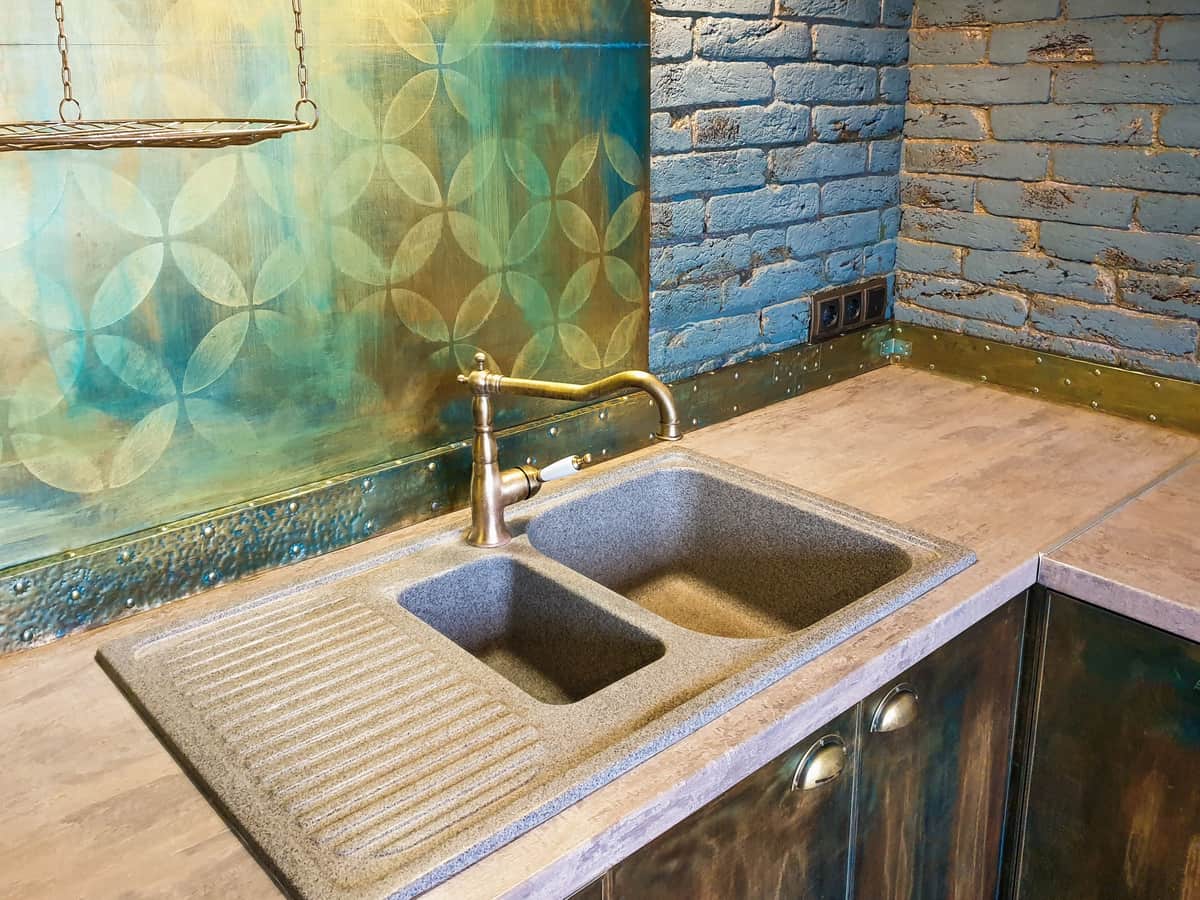
Five sinks across the four materials, compared on sourced dimensions, cabinet requirements and how each one fails.
Best workstation sink
Best workstation sinks
Ledge sinks reviewed on gauge, accessory quality and drain position, including the 33-inch and farmhouse-ledge options.
How to
Install a garbage disposal
Flange, mounting ring, trap and electrical — plus the dishwasher inlet plug that stops a new install draining.

Guide
Height and reach guide
Spout height, reach and overall height are three different numbers. Here is which one decides what, and how to measure yours.
Found something out of date, or a figure you can source better than we did? Tell us — corrections get read first. Our methodology explains how picks are made, and contact is one click away.