Kitchen Sinks
The best kitchen sink strainers, and which kind you actually need
Two completely different products share the name. One replaces your drain, the other drops into it, and the right answer depends on what is failing.

Disclosure: we earn a commission if you buy through the Amazon links on this page, at no extra cost to you. Commission never decides a verdict or a ranking position — read our editorial policy and affiliate disclosure.
How we assessed these: we compared published manufacturer specifications, read from each maker's own page or listing and linked at every figure. We have not installed or tested these products. Where a figure is not published, the page says so rather than estimating it.
Short answer
A basket strainer is the whole drain assembly — a body seated in the sink opening, a tailpiece to the trap, and a removable basket that catches debris and can hold water for soaking. A drop-in screen is a flexible insert that sits in an existing drain and catches scraps. If your drain leaks, you need the first; if food is the problem, you need the second.
Search "sink strainer" and you get two products that share almost nothing. It is worth twenty seconds to know which one you are shopping for, because one is a plumbing part and the other is a kitchen accessory.
Quick picks
Tap any row to jump to the full write-up. There are no scores here because we run no test lab — how picks are chosen is published in full on our methodology page.
| # | Product | Best for | Our read | Price |
|---|---|---|---|---|
| 1 | 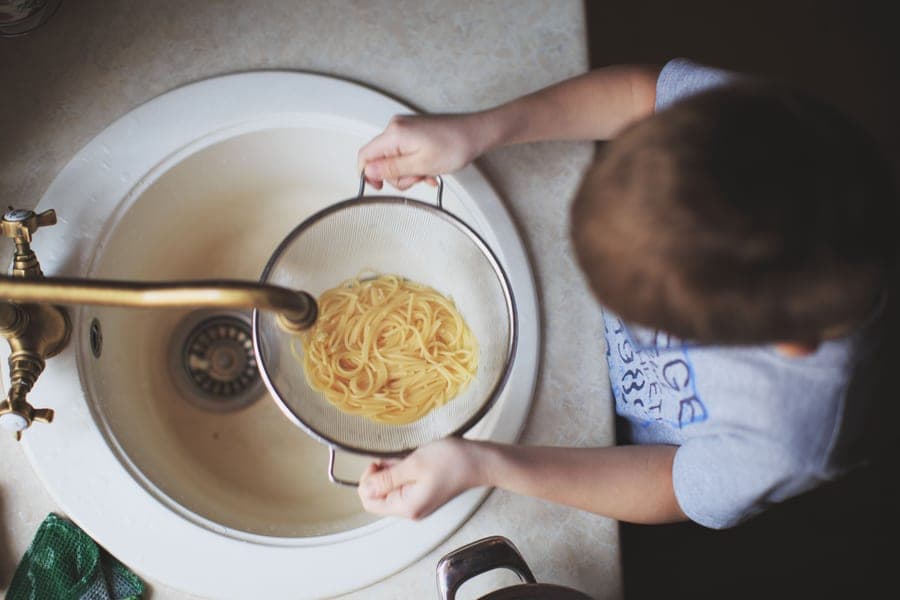 Kohler Duostrainer K-8801 Best basket strainer | Replacing a failed sink drain | Brass body, tailpiece included, fits 3-1/2 and 4 inch | Check price on Amazon #ad Affiliate link · We publish no price; Amazon shows the current one |
| 2 |  OXO Good Grips silicone sink strainer Best drop-in screen | Catching scraps without plumbing | Cheapest way to stop grounds and rice reaching the trap | Check price on Amazon #ad Affiliate link · We publish no price; Amazon shows the current one |
What a basket strainer actually is
The drain fitting in a sink without a garbage disposal is a basket strainer assembly. The body seats in the sink's drain opening on a bed of plumber's putty, a rubber gasket and locknut clamp it from below, and a tailpiece carries water down to the trap. The removable basket sits in the body: lift it out and you have an open drain, drop it in and close the stopper and the sink holds water.
Two things separate a good one from a cheap one. Material — a brass body will not corrode at the threads the way plated steel does — and whether the tailpiece is included, which turns the install from three parts into one. The Kohler Duostrainer covers both, and fits sink outlets of 3-1/2 or 4 inches, which is nearly every stainless sink made.
What a drop-in screen is for
A flexible silicone or mesh basket that sits in the drain opening and catches what you scrape into it. It does not replace anything, it does not hold water, and it costs a few dollars. What it does is stop the two things that genuinely clog kitchen drains: coffee grounds and rice. Both pass a disposal happily and then settle in the trap, which is where a blockage forms six months later.
It is the cheapest upgrade available to any kitchen drain, and it works over a disposal flange as well as over a basket strainer.
Photograph shows the product category, not this specific unit. We do not republish manufacturer product photography.
1. Best basket strainer
Kohler Duostrainer K-8801
Kohler · Best for replacing a failed sink drain
The permanent answer rather than the drop-in one: a full basket-strainer assembly with the tailpiece included, so it replaces the drain hardware instead of sitting in it. The basket both catches debris and holds water for soaking, which is the pair of jobs a silicone mesh screen cannot do.
Published specifications
What works
- Brass body rather than plated steel, which is what makes a drain assembly last
- Tailpiece included, so the install is one part rather than three
- The stopper seals well enough to soak a pan, which a mesh screen cannot
- Fits both 3-1/2" and 4" outlets, covering nearly every stainless sink
What does not
- It is a drain replacement, not an accessory — budget thirty minutes and plumber's putty
- Finish matching to a faucet is approximate across brands
- Overkill if your existing drain is sound and you only want to catch peelings
Skip it if
Skip it if your drain works and you only want to keep food out of the disposal. Buy the silicone screen and keep the difference.
#ad Affiliate link · We publish no price; Amazon shows the current one
Raw specifications: Kohler’s own page for the Kohler Duostrainer K-8801.
Photograph shows the product category, not this specific unit. We do not republish manufacturer product photography.
2. Best drop-in screen
OXO Good Grips silicone sink strainer
OXO · Best for catching scraps without plumbing
The right answer for most people asking about a sink strainer: a flexible silicone basket that drops into a standard drain, lifts out by a handle, and goes in the dishwasher. It is the cheapest way to stop the two things that actually clog a kitchen drain — coffee grounds and rice.
This manufacturer does not publish a specification table for this product. Rather than repeat figures we cannot source, the assessment here is limited to what the product category and the manufacturer's own listing genuinely establish.
What works
- Drops in and lifts out — no tools, no plumbing, no commitment
- Silicone flexes, so you can invert it over the bin instead of picking debris out
- Dishwasher safe, which is the difference between a strainer you empty and one you avoid
- Fits standard drain openings, including over a disposal
What does not
- Does not hold water for soaking — it is a screen, not a stopper
- Sits visibly in the sink, which some people dislike
- Silicone eventually stains from turmeric and tomato
Skip it if
Skip it if the drain assembly itself is failing or leaking — that needs a basket strainer replacement, not a screen.
#ad Affiliate link · We publish no price; Amazon shows the current one
Raw specifications: OXO’s own page for the OXO Good Grips silicone sink strainer.
If you have a garbage disposal
A sink with a disposal does not have a basket strainer — the disposal's mounting flange takes its place, and the removable splash guard is the closest equivalent. So if you have a disposal and want to catch debris, you want a drop-in screen that sits above the splash guard, not a basket strainer assembly.
Two related notes. The splash guard is a wear item and a cheap one, and replacing a tired one is also the cheapest disposal noise fix there is — see quietest garbage disposals. And the underside of that guard is where disposal smells actually live, which is covered on garbage disposal smells.
Fitting a basket strainer, in short
- Remove the old assembly: loosen the slip nut at the trap, then the locknut under the sink. Expect corrosion and use penetrating oil rather than force.
- Clean the sink opening completely. Old putty and sealant have to come off or the new seal will not sit flat.
- Roll plumber's putty into a rope, press it under the flange of the new strainer body, and seat it in the opening.
- Fit the gasket and locknut from below and tighten evenly — firm, not brutal. Putty squeezing out at the rim is the sign you are there.
- Connect the tailpiece to the trap, run water, and check the joints with a dry hand after five minutes.
What to take away
- Basket strainer = the drain assembly. Drop-in screen = an accessory that sits in it.
- Buy brass rather than plated steel for a basket strainer; the threads are what corrode.
- A sink with a disposal has no basket strainer — use a drop-in screen above the splash guard.
- Seal the flange with plumber's putty, never silicone.
How we sourced this page
Every figure on this page came from one of the following. Where a manufacturer or an independent lab does not publish a number, we say so rather than estimate it.
Common questions
- What is a basket strainer for a sink?
- The complete drain fitting for a sink without a garbage disposal: a body seated in the drain opening, a tailpiece running to the trap, and a removable basket that catches food and can close to hold water for soaking. It is a plumbing component rather than an accessory.
- Do I need a strainer if I have a garbage disposal?
- You cannot fit a basket strainer, because the disposal's mounting flange occupies that opening. A drop-in silicone screen above the splash guard is the right answer, and it is worth having: coffee grounds and rice pass through a disposal easily and then settle in the trap.
- How do I replace a kitchen sink basket strainer?
- Loosen the slip nut at the trap and the locknut under the sink, remove the old body, clean the opening thoroughly, bed the new flange on plumber's putty, tighten the locknut evenly from below and reconnect the tailpiece. Budget thirty minutes and expect the old locknut to fight you.
- Should I use silicone or plumber's putty under a sink strainer?
- Plumber's putty. It stays pliable, seals well under compression and comes away cleanly when the strainer is next replaced. Silicone sets hard and bonds to the sink, which makes the next removal much worse than it needed to be.
More in Kitchen Sinks
Three specifications settle almost every kitchen sink question: how thick the steel is, how it meets the counter, and what it is made of. Get those right and brand barely matters.
Read next

Best kitchen sink
Best kitchen sinks
Five sinks across the four materials, compared on sourced dimensions, cabinet requirements and how each one fails.
Guide
Sink sizes and cabinet fit
The cabinet-to-sink arithmetic, the four measurements to take, and how a disposal changes the numbers.

Guide
Do you need a disposal?
The honest yes-and-no, the dishwasher question answered properly, and what the no-disposal alternative costs.

Troubleshooting
Disposal smells
Where the odor actually lives, the free method that fixes it, and what a smell returning in a day really means.

How to
Clean a stainless steel sink
The weekly method, what causes brown marks, and the products that permanently damage a brushed finish.
Found something out of date, or a figure you can source better than we did? Tell us — corrections get read first. Our methodology explains how picks are made, and contact is one click away.